The « fully equipped » hotel gym is a marketing illusion; maintaining your training program on the road requires a rigorous, intelligence-led verification strategy.
- Effective preparation involves a digital reconnaissance protocol to see past misleading professional photos and confirm the presence of mission-critical equipment.
- Understanding the typical equipment gaps and having a pre-planned set of biomechanical alternatives is essential for ensuring program integrity.
Recommendation: Integrate your accommodation’s facility verification into your core travel preparation, treating it with the same seriousness as your nutrition or recovery plan.
For a competitive amateur athlete, the weeks leading up to an event are a carefully constructed sequence of training, nutrition, and recovery. Every session counts. Yet, one of the biggest variables that can derail this meticulous preparation is travel. The familiar anxiety of arriving at a hotel to discover the « state-of-the-art fitness centre » is a cramped, windowless room with a broken treadmill and a mismatched set of dumbbells is a reality for many. Standard advice— »just do bodyweight exercises » or « find a local gym »—often fails to appreciate that a specific, structured program is non-negotiable for maintaining peak performance.
The common approach is to leave it to chance, hoping the hotel’s website photos are accurate. This is a passive strategy doomed to failure. The real issue isn’t a lack of effort, but a lack of a strategic framework for verification and adaptation. The key to unlocking consistent training while traveling isn’t about finding a hotel *with* a gym. It’s about executing a proactive, intelligence-led protocol to ensure the facility meets the precise, non-negotiable demands of your training program, and having a ready-to-deploy plan B for the inevitable equipment shortfalls. This is not about finding a place to « get a sweat on »; it’s about protecting your performance investment.
This guide provides that strategic framework. We will move beyond hope and into a systematic process of verification, analysis, and adaptation. You’ll learn how to dissect a hotel’s fitness offering from afar, understand what’s really missing from most hotel gyms, and how to intelligently adapt your program to maintain its integrity, ensuring you arrive at your event ready to perform at your best.
Summary: Maintain Peak Athletic Performance: The Competitive Athlete’s Guide to Hotel Gyms
- Why Hotel Sports Areas Rarely Meet Serious Amateur Athletes’ Training Requirements
- How to Verify Sports Equipment Quality and Variety Before Confirming Booking
- What Does « Fully Equipped Gym » Include in Three-Star Versus Five-Star Hotels?
- The Missing Gym Equipment That Disrupts 60% of Athletes’ Training Programs
- When to Train in Hotel Gyms to Avoid Peak Occupancy and Equipment Waits
- How to Identify Hotel Pools Suitable for Lap Swimming Versus Leisure Only
- How to Select Body Care Treatments Targeting Your Specific Muscle Groups
- Integrating Aquatic Fitness Into Travel Through Adequate Pool Facilities
Why Hotel Sports Areas Rarely Meet Serious Amateur Athletes’ Training Requirements
The fundamental disconnect between an athlete’s needs and a hotel’s offering stems from a difference in purpose. For an athlete, a gym is a tool for performance. For many hotels, it’s a « checkbox amenity »—a feature required to achieve a certain star rating or meet market expectations, rather than a genuine wellness facility. This leads to investment decisions that prioritize the bare minimum over functional excellence. The focus is often on low-maintenance, general-use cardio machines, as they cater to the widest range of guests with the least amount of risk and oversight required. Consequently, equipment crucial for serious strength training, such as squat racks, a full range of free weights, and barbells, is frequently absent.
The « Checkbox Amenity » Phenomenon
An analysis from HotelGyms.com reveals a critical insight: star ratings are not reliable indicators of gym quality. A four-star hotel might have a cramped room with outdated machines, while a three-star property could surprise with a well-designed fitness center. The « checkbox mentality » is widespread; many properties install the bare minimum required equipment to earn classification points while keeping costs low. From a business perspective, investing in revenue-generating amenities like minibars often makes more financial sense than exceeding gym standards, creating the amenity illusion that plagues traveling athletes.
This business logic has tangible consequences for guests. Poorly maintained or broken equipment is a common complaint, and it’s not just an inconvenience; it can have a real impact on a hotel’s bottom line. Hospitality data shows that hotels can see a 14% decrease in booking rates due to negative reviews about their fitness facilities. For the competitive athlete, this translates to a high probability of encountering a facility that is fundamentally unequipped to support program integrity, forcing last-minute, suboptimal changes to a carefully planned training schedule.
How to Verify Sports Equipment Quality and Variety Before Confirming Booking
Leaving your training to chance is not an option. To counter the « amenity illusion, » you must become a digital detective, employing a rigorous Facility Verification Protocol before you even enter your credit card details. The first step is to approach all official hotel marketing with healthy scepticism. Professional photos are often taken years ago when the equipment was new and are expertly framed to hide wear, tear, or a lack of space. Your goal is to find recent, unfiltered evidence of the gym’s current state. This means going beyond the hotel’s website and gallery.
This paragraph introduces the concept of inspecting gym equipment. The visual below highlights the level of detail required for a thorough assessment.
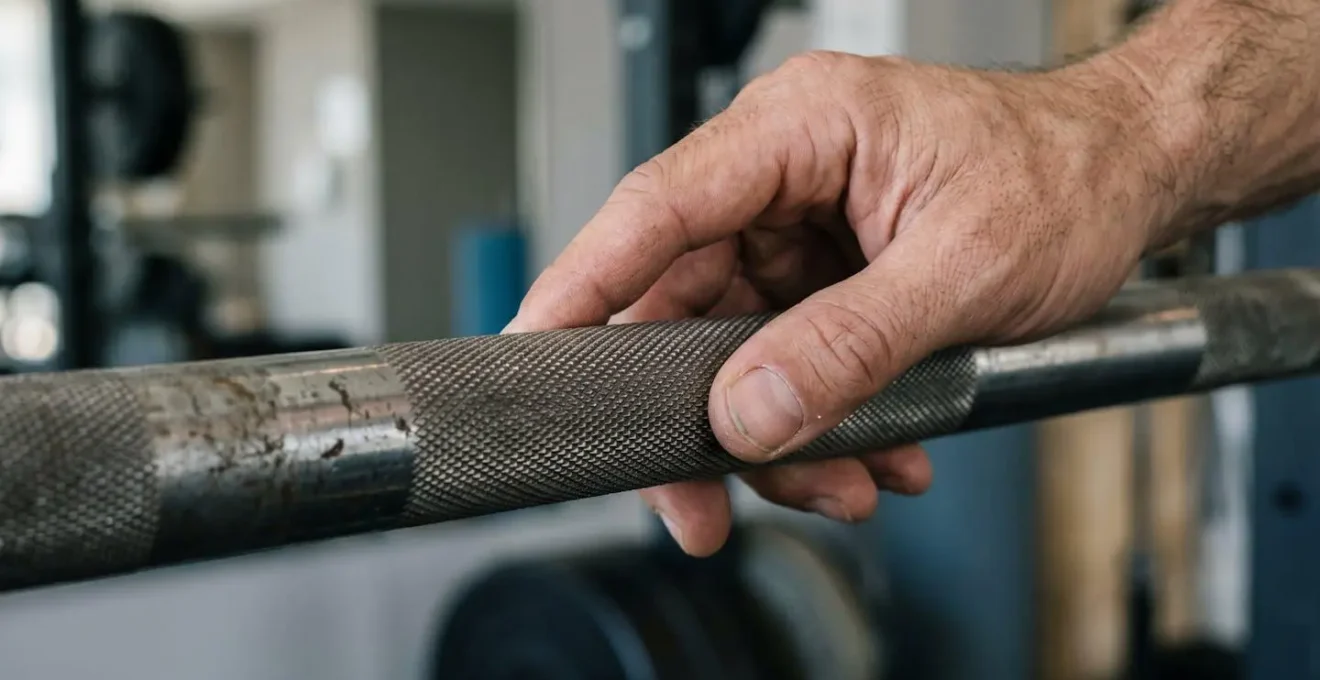
As the image suggests, quality is in the details—the knurling on a barbell, the condition of the weight plates, the stability of a bench. You can start this inspection remotely by searching for the hotel’s location tag on Instagram or the « User Photos » section on Google Maps. These platforms often provide a more realistic, time-stamped view of the gym from actual guests. If the visual intelligence is inconclusive, it’s time for direct contact. Do not settle for a « yes » to the question « Do you have a gym? ». You need specifics.
Action Plan: Your Digital Detective Gym Verification Checklist
- Critical Photo Analysis: Scrutinise hotel website photos, recognizing they may be outdated and strategically hide wear from high-traffic fitness spaces.
- Unfiltered Visual Intelligence: Use Instagram location tags and Google Maps « User Photos » to find recent, unfiltered pictures, bypassing misleading professional photography.
- Specific Equipment Inquiry: Contact the hotel directly and ask for exact equipment models, maximum dumbbell weights, and whether they have a power rack or only a Smith machine.
- Expert Contact: Ask to speak with the Fitness Center Manager or Head Concierge, who possesses detailed knowledge, rather than relying on general reservations agents.
- Request for Recent Proof: Politely request recent, unedited photos of the free-weight area and cardio zones, ideally taken within the last 30 days, to be sent via email.
What Does « Fully Equipped Gym » Include in Three-Star Versus Five-Star Hotels?
The term « fully equipped » is one of the most ambiguous phrases in the hotel industry. An athlete’s definition, centred on squat racks and heavy dumbbells, is vastly different from a hotelier’s, which might mean a few cardio machines and a multi-gym. Star ratings provide a loose guide, but they are often more indicative of luxury amenities like spas and fine dining than hardcore training facilities. As industry analysis from HotelGyms.com highlights, « A five-star hotel will likely boast multiple restaurants, a full-service spa, and comprehensive fitness facilities, while a three-star property might offer just a basic restaurant and modest gym. » The key word here is « modest, » which is where expectations and reality often diverge.
To navigate this, it’s helpful to understand the typical equipment profiles across different hotel categories. While not a definitive rule, general patterns emerge that can help you target your search more effectively. For instance, business and extended-stay hotels, catering to routine-oriented long-term guests, often have surprisingly functional and robust free-weight sections compared to some five-star luxury properties that prioritize aesthetics and cardio equipment.
The following table provides a general breakdown of what to expect, based on an analysis of typical hotel fitness offerings. Use this as a starting point for your verification process, not an absolute guarantee.
| Hotel Category | Typical Cardio Equipment | Strength Equipment | Free Weights | Additional Amenities |
|---|---|---|---|---|
| 3-Star Hotels | 2-3 treadmills, 1-2 ellipticals, 1 stationary bike | Multi-functional machine, limited selection | Dumbbells up to 40-50 lbs, basic set | Fitness center, basic business amenities, pool |
| 4-Star Hotels | Multiple treadmills, ellipticals, bikes with entertainment options | Expanded machine variety, cable systems | Dumbbells to 70+ lbs, sometimes incomplete sets | Sizable fitness centers, spa facilities, multiple pools, fitness classes |
| 5-Star Hotels | Premium brand cardio with screens, extensive variety | High-end machines, aesthetic focus | Often limited despite luxury setting — focus on cardio and light weights | Signature spas, fine dining, personalized services, some offer fitness trainers |
| Business/Airport Hotels | Moderate cardio selection | Functional strength focus | Better free weight selection than 5-star, dumbbells 50-80+ lbs | 24-hour access, efficiency-focused layout |
| Extended Stay Hotels | Basic but reliable cardio machines | Practical strength equipment | Surprisingly comprehensive — caters to long-term residents with routines | Proper free-weight setup, adequate floor space |
This data reveals a crucial insight: higher price does not always equal better training. An athlete may find a more productive training environment in a well-equipped extended-stay hotel than in a five-star resort focused on leisure guests. Your research must look beyond the star rating and focus on the specific type of property and its likely guest profile.
The Missing Gym Equipment That Disrupts 60% of Athletes’ Training Programs
For an athlete following a structured strength program, the absence of a few key pieces of equipment can render an entire workout impossible. This isn’t about preference; it’s about the inability to create the specific stimulus required for adaptation and progress. An equipment gap analysis is a critical mental exercise for any traveling athlete. The most common « program killer » is the lack of a proper squat or power rack, which is the cornerstone for heavy, compound movements like squats and overhead presses. Without it, the primary leg and full-body strength workouts are immediately compromised. This is closely followed by the absence of an Olympic barbell and a sufficient range of weight plates.
Another major disruption is the limited selection of free weights. As fitness experts at Barbend note, « most hotel gyms limit dumbbells to 40-50 lbs pairs. » For any athlete accustomed to lifting heavier, this ceiling makes progressive overload impossible for key pressing and pulling movements. The solution isn’t to simply give up but to have a pre-planned list of biomechanical equivalents—alternative exercises that target the same muscle groups and movement patterns using the available equipment. This requires a deeper understanding of training principles to ensure the stimulus is maintained, even if the exercise is different.
Here are the most common equipment shortfalls and their strategic alternatives to maintain your training’s intensity and purpose.
- Program Killer #1: Missing Squat/Power Rack — Alternative: High-volume Bulgarian Split Squat progression with dumbbells, performing 4-5 sets of 12-15 reps per leg with controlled tempo.
- Program Killer #2: No Olympic Barbells — Alternative: Single-leg Romanian deadlifts with dumbbells combined with dumbbell clean variations to maintain posterior chain and power development.
- Program Killer #3: Absent Pull-up Bar — Alternative: Heavy dumbbell rows in multiple angles (45-degree, 90-degree bent-over) with a pause at contraction to maintain lat width stimulus.
- Program Killer #4: Dumbbells Capped at 50 lbs/22 kg — Alternative: Increase training volume significantly (higher sets/reps), incorporate tempo manipulation (e.g., 4-second eccentrics), and use techniques like drop sets to compensate for lighter loads.
- Program Killer #5: Inadequate Floor Space for Deadlifts — Alternative: Utilize elevated deficit reverse lunges, single-leg hip thrusts, and other glute-hamstring focused exercises that require a minimal floor footprint.
When to Train in Hotel Gyms to Avoid Peak Occupancy and Equipment Waits
Once you’ve verified a suitable facility, the next strategic layer is timing. Unlike commercial gyms with relatively predictable usage patterns, hotel gyms operate on a schedule dictated by the transient rhythms of their guests. The result is what hospitality fitness research describes as sharp peaks of activity, typically between 6:00-8:00 AM and 5:00-7:00 PM, with long, idle periods in between. For an athlete with a specific, multi-set workout, getting caught in this morning or evening rush can mean frustrating waits for the single cable machine or the only pair of heavy dumbbells, turning a 60-minute session into a 90-minute ordeal.
The key is to identify and exploit the « Golden Hours »—the off-peak windows when the gym is most likely to be empty. This requires analysing the primary profile of the hotel’s guests. A business hotel will see a pre-work rush, while a tourist resort’s peak time may be later in the morning after breakfast. Understanding these nuances allows you to schedule your training for maximum efficiency, ensuring unfettered access to the equipment you need.
This table outlines the typical peak and quiet times based on hotel type, providing a strategic guide for planning your sessions.
| Hotel Type | Peak Hours | Secondary Peak | Quietest Times (Golden Hours) | Guest Profile Driver |
|---|---|---|---|---|
| Business/Airport Hotels | 6:00-8:00 AM | 5:00-7:00 PM | 1:00-4:00 PM, after 9:00 PM | Business travelers pre-work and post-meetings |
| Tourist/Resort Hotels | 9:00-11:00 AM | 4:00-6:00 PM | 12:00-3:00 PM, after 8:00 PM | Leisure travelers post-breakfast, pre-dinner |
| Urban/City Center Hotels | 6:30-8:30 AM | 5:30-7:30 PM | 2:00-4:00 PM, after 10:00 PM | Mix of business and leisure, commute-aligned |
| Extended Stay Properties | 6:00-9:00 AM | Evening varies by residents | 10:00 AM-12:00 PM, 2:00-5:00 PM | Long-term residents with established routines |
| Boutique/Lifestyle Hotels | 7:00-9:00 AM | 6:00-8:00 PM | 11:00 AM-2:00 PM, after 9:00 PM | Wellness-conscious travelers, flexible schedules |
This image captures the ideal training environment—a well-equipped gym during the off-peak golden hours, waiting for you to train without interruption.
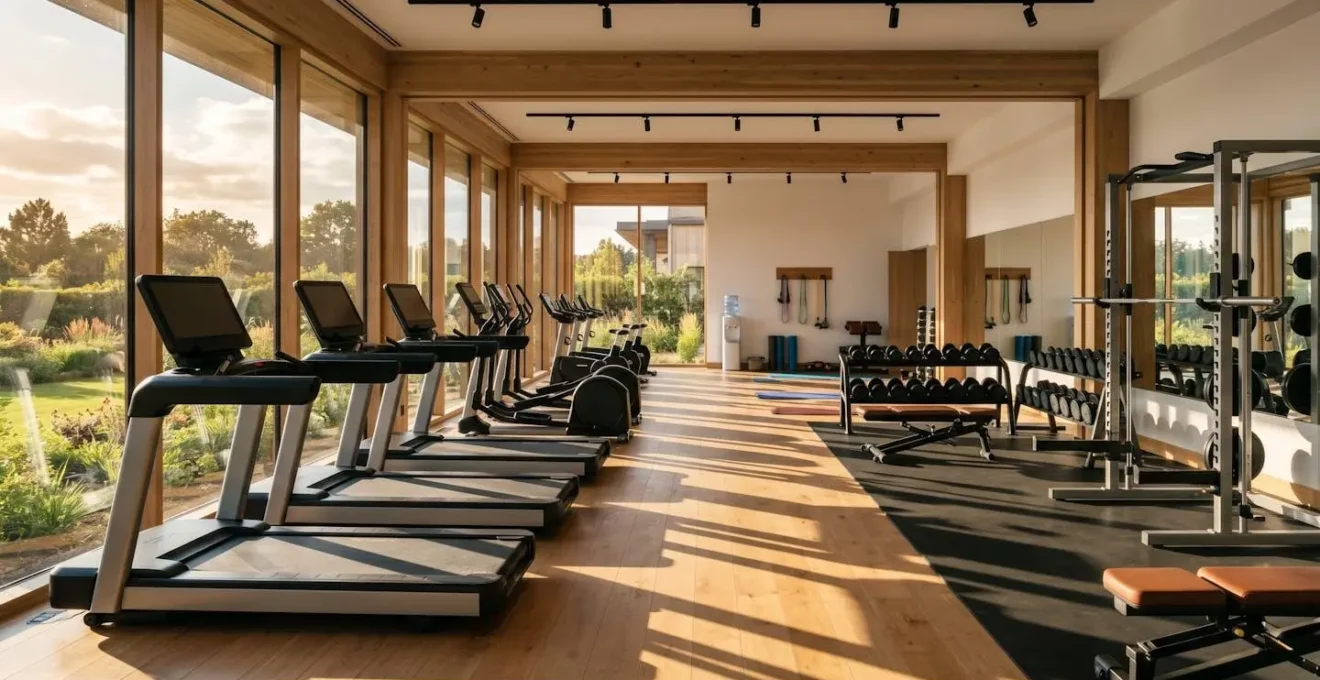
Training during these quiet periods is more than a convenience; it’s a strategic advantage. It allows for better focus, adherence to prescribed rest intervals, and the freedom to perform supersets or circuits without disrupting other guests. If your travel schedule permits, targeting the mid-day or late-evening lulls is the single most effective tactic for ensuring a productive and efficient workout.
How to Identify Hotel Pools Suitable for Lap Swimming Versus Leisure Only
For swimmers, triathletes, or any athlete using aquatic work for cardio and recovery, the « pool » amenity is as fraught with ambiguity as the « gym. » A kidney-shaped pool with a swim-up bar is useless for interval training. Discerning a true lap pool from a leisure pool requires the same digital detective work. The global trend towards wellness is on your side; according to the 2024 Hilton Trends Report, 76% of global travelers now prioritize wellness amenities, pressuring hotels to offer more functional facilities. However, verification is still essential.
When examining photos or virtual tours, you are looking for specific indicators of a pool designed for serious swimming. The most obvious is the presence of painted or tiled lane lines on the pool floor. This is a clear signal that the pool was designed with lap swimming in mind. Another powerful, though less common, indicator is the presence of backstroke flags—the strings of pennants suspended 5 meters from each end of the pool. These are a hallmark of competition-standard pools and a near guarantee of a suitable training environment. Conversely, the presence of features like water slides, in-pool fountains, or irregular shapes are red flags indicating a leisure-only facility.
Use this checklist during your hotel research to quickly determine if a pool will meet your training needs.
- Verification Point #1: Lane Lines on Pool Floor — Look for clearly marked painted or tiled lane lines running the length of the pool, indicating designated swimming paths.
- Verification Point #2: Backstroke Flags — The presence of flags suspended 5 meters from each end signals serious swimming infrastructure and a proper competition-standard setup.
- Verification Point #3: Pool Length Markers — Check for visible markers indicating a 25-meter or 25-yard length, confirming adequate distance for training intervals.
- Verification Point #4: Absence of Leisure Features — Ensure there are no water slides, fountains, swim-up bars, or in-pool entertainment features that would disrupt lap swimming.
- Verification Point #5: Pace Clock Presence — A wall-mounted or poolside pace clock is a strong indicator that the facility accommodates serious swimmers who track interval training.
How to Select Body Care Treatments Targeting Your Specific Muscle Groups
When a hotel does offer a spa, it presents a valuable opportunity for targeted recovery. However, navigating a spa menu can be confusing. For an athlete, a « relaxing » massage may not be what’s needed. The key is to match the treatment modality to your specific physiological state and recovery goals. Don’t be afraid to communicate your needs clearly to the spa concierge or therapist. Explain that you are a competitive athlete, mention your sport, and point out any areas of specific soreness or tightness. A good therapist can often customize a treatment, even if it’s not explicitly listed on the menu.
Here’s a breakdown of common massage types and their athletic applications:
- Deep Tissue Massage: This is the go-to for chronic muscle knots and adhesions (often called « trigger points »). It involves slow strokes and deep finger pressure on contracted areas. Best for post-training recovery, targeting specific problem areas like tight hamstrings, glutes, or upper back. Do not get this the day before a competition as it can leave you feeling sore.
- Sports Massage: This is a more targeted version of deep tissue, often incorporating stretching and other techniques. It can be adapted for pre-event (stimulating muscles), post-event (flushing out toxins and reducing soreness), or maintenance purposes. It’s the most versatile option if available.
- Swedish Massage: Characterized by long, gliding strokes, this modality is excellent for improving circulation, reducing general muscle tension, and promoting relaxation. It’s a great choice for a lighter recovery day or to combat the general stiffness and stress associated with travel.
- Myofascial Release: This technique focuses on the fascia, the connective tissue that envelops muscles. It’s highly effective for improving flexibility and restoring range of motion, particularly if you feel « stuck » or restricted in certain movements.
When selecting a treatment, ask about the therapist’s experience with athletes. The goal isn’t just to feel good; it’s to use the treatment as a strategic tool to accelerate recovery, improve mobility, and prepare your body for the next training session or competition. A well-chosen body care treatment is as much a part of your performance plan as your workout.
Key takeaways
- Hotel gym quality is a business decision, not a reflection of the star rating; the « checkbox amenity » mindset is common.
- A proactive, multi-step verification protocol using unfiltered user photos and specific inquiries is essential to avoid surprises.
- Timing is crucial: training during off-peak « Golden Hours » (often mid-day) avoids crowds and equipment waits.
Integrating Aquatic Fitness Into Travel Through Adequate Pool Facilities
Even if you find a hotel without a suitable gym or lap pool, an ordinary swimming pool can still be a powerful tool for maintaining fitness and promoting recovery. The unique properties of water offer significant physiological benefits that are particularly valuable for an athlete managing the stress of travel. The concept of hydrostatic pressure is key here. The pressure exerted by the water on your body helps to reduce swelling and inflammation, especially in the lower limbs after a long flight or a heavy leg day. It’s a form of natural compression that aids circulation and recovery.
The Power of Hydrostatic Pressure and Short-Burst Activity
Research, including insights from sources like Nike on travel workouts, demonstrates water’s significant value. The hydrostatic pressure created during pool workouts aids in reducing inflammation after long flights. Furthermore, a 2017 study found that short bursts of activity—even for just 10 minutes—can improve focus and alertness when fighting travel fatigue. Bodyweight training in water offers cardiovascular and strength benefits while minimizing joint impact, making it an ideal deload and recovery tool for maintaining training consistency.
If a lap lane isn’t available, you can still perform a high-intensity interval training (HIIT) session using the water’s resistance. The viscosity of water provides a challenging, full-body workout without any impact on your joints, making it perfect for a deload day or an active recovery session. You can create a highly effective cardiovascular and strength workout with zero equipment, using only the pool itself.
Here is a sample HIIT workout you can perform in almost any hotel pool, no lap lanes required:
- Exercise #1: Vertical Water Treading Intervals — 30 seconds maximum intensity treading in the deep end, 30 seconds rest, repeat 8-10 rounds for cardiovascular conditioning.
- Exercise #2: Explosive Poolside Push-ups — Hands on the pool edge, feet floating, explosive press to elevate your chest above the water line. Perform 3 sets of 10-15 reps for upper body power.
- Exercise #3: In-Water Squat Jumps — Standing in shoulder-depth water, perform maximum vertical jumps using water resistance. Do 4 sets of 12 reps for lower body explosive strength.
- Exercise #4: Underwater Lateral Shuffles — In chest-deep water, perform rapid lateral movements across the pool width, using water drag as resistance. Complete 6 sets of 20 seconds in each direction.
- Exercise #5: Poolside Flutter Kicks — Gripping the pool edge with your hands, extend your body horizontally and perform high-intensity flutter kicks. Do 4 sets of 45 seconds for core and hip flexor engagement.
The next time you book travel for a competition, don’t leave your training to chance. Make the facility verification protocol the first and most critical step in your accommodation selection. Your performance depends on it.