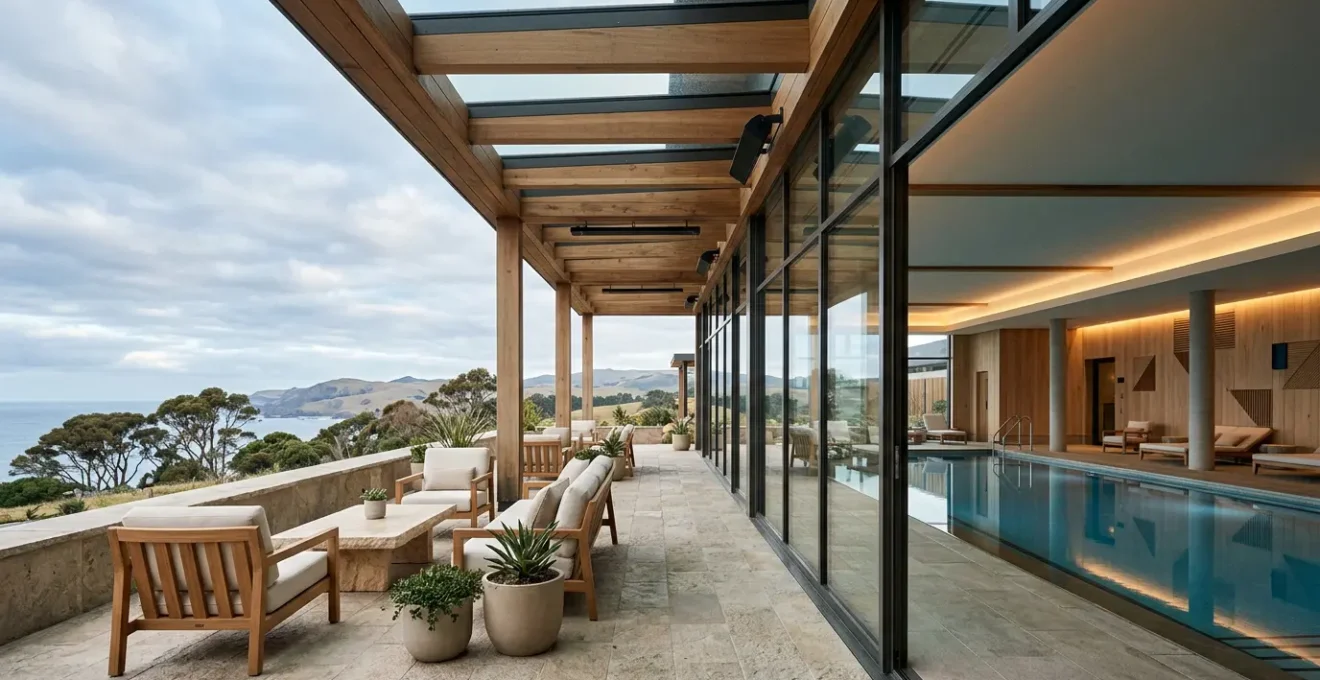
In summary:
- The key to a weather-proof UK holiday is not just finding hotels with dual facilities, but actively verifying their quality and availability before you book.
- Hotels with high-quality, equivalent indoor and outdoor options see dramatically higher guest satisfaction, especially when weather is unpredictable.
- Terms like « heated, » « covered, » and « guest-only » are often marketing language; this guide teaches you how to scrutinise them.
- Understanding your rights under the Consumer Rights Act 2015 is crucial if a key advertised facility is unavailable during your stay.
There is a uniquely British form of holiday heartbreak: peering through a window streaked with rain at the beautiful, deserted outdoor pool you had planned your entire family trip around. For decades, UK families have gambled on the weather, with enjoyment held hostage by a fickle sky. The default solution has been to book a hotel with an indoor pool as a simple backup, but this often leads to a new kind of disappointment—the « backup » is a cramped, chlorinated closet compared to the sprawling paradise advertised outdoors.
This approach is flawed because it’s passive. The true guarantee of a weather-proof holiday doesn’t come from just booking a hotel with dual facilities; it comes from mastering the art of pre-booking verification. It’s about learning to distinguish a genuine all-weather sanctuary from a clever marketing mirage. This requires a shift in mindset: you are not just a guest, you are a contingency planner ensuring your investment in leisure and family time is protected.
But if the real key to a guaranteed good time isn’t just the presence of a backup facility, but its genuine equivalence and availability, how do you verify that from home? It involves asking the right questions, knowing what to look for in photos, and understanding the operational realities of the hotel industry, from maintenance schedules to revenue models.
This guide provides a systematic framework for that verification process. We will explore why this matters for guest satisfaction, how to audit facilities before you book, what common marketing terms really mean, and what your rights are when things go wrong. Consider this your training manual for becoming a weather-contingency travel specialist.
The following sections break down the essential knowledge needed to secure your holiday enjoyment, regardless of what the British weather decides to do. From understanding hotel policies to evaluating the specifics of a rooftop pool, this is your complete guide to weather-independent travel planning.
Contents: How to Guarantee Holiday Enjoyment Regardless of Weather
- Why Hotels With Indoor and Outdoor Facilities Retain 85% Higher Satisfaction
- How to Verify Indoor Alternatives Are Genuinely Equivalent to Outdoor Facilities
- What Does « Covered Terrace » Mean in UK Hotel All-Weather Facility Policies?
- The Indoor Facility Closed for Maintenance Throughout Winter Peak Season
- How to Access Outdoor Hotel Spaces Heated for Comfortable Year-Round Use
- Rooftop Pool or Basement Pool: Which Better Serves Serious Lap Swimmers?
- Why « Guest-Only » Swimming Pools Still Admit 200 Day-Pass Holders Daily
- Integrating Aquatic Fitness Into Travel Through Adequate Pool Facilities
Why Hotels With Indoor and Outdoor Facilities Retain 85% Higher Satisfaction
The promise of a perfect holiday is often tied to an image of sun-drenched leisure. But when that promise is broken—by bad weather or a poorly maintained facility—the impact on guest satisfaction is catastrophic. The value of a hotel with genuinely equivalent indoor and outdoor facilities isn’t just about having a ‘Plan B’; it’s about eliminating the primary source of holiday disappointment. It removes the weather-related stress from the equation, allowing for a seamless transition of enjoyment from outdoors to indoors without a sense of compromise.
The numbers back this up unequivocally. Research into guest satisfaction reveals a stark contrast between expectations met and expectations dashed. A J.D. Power study found that hotel guest satisfaction measures 677 points on a 1,000-point scale when facilities meet expectations, dropping a massive 217 points to just 460 when problems occur. This cliff-edge drop highlights how critical functional and available amenities are to the overall guest experience. A « closed for maintenance » sign or a « backup » facility that is clearly inferior is not a minor inconvenience; it’s a major satisfaction killer.
The gold standard is a hotel that doesn’t just offer two separate options, but creates an integrated, all-weather experience. These are the properties that see the highest satisfaction and loyalty, turning the unpredictable UK weather from a threat into a non-issue.
Case Study: The Maximus Resort’s Seamless Indoor-Outdoor Transition
Hotels with seamless indoor-outdoor pool transitions report significantly higher guest satisfaction. The Maximus Resort, for example, features an underwater gate connecting a 30-meter combined pool system. This allows guests to swim from climate-controlled indoor relaxation pools directly into expansive outdoor pools. The outdoor section stays warm year-round, adjusting to climate conditions and welcoming guests in any weather. Guests frequently describe this as having the « best of both worlds, » demonstrating the immense value of a truly integrated, all-weather aquatic facility.
Ultimately, a hotel that invests in high-quality dual amenities is sending a clear signal: they respect the guest’s time and investment, and have proactively planned to guarantee enjoyment, come rain or shine. That guarantee is the foundation of true holiday satisfaction.
How to Verify Indoor Alternatives Are Genuinely Equivalent to Outdoor Facilities
Accepting that a hotel has both indoor and outdoor options is just the first step. The crucial next stage is pre-booking verification—the active process of auditing whether the indoor alternative is a genuine equivalent or merely a token gesture. A beautiful, Olympic-sized outdoor pool backed up by a tiny, basement plunge pool is not facility equivalence; it’s a recipe for disappointment. You must become an investigative traveler, using the hotel’s own marketing as a starting point, not a conclusion.
Your primary tools are the phone and the hotel’s image gallery. Scrutinise photos for scale, light, and signs of wear. Are the indoor photos bright and airy, or do they use clever angles to hide a cramped space? Look for people in the shots to get a sense of proportion. An empty pool looks vast; a pool with two people in it reveals its true size. This visual audit is your first line of defence against marketing mirages.
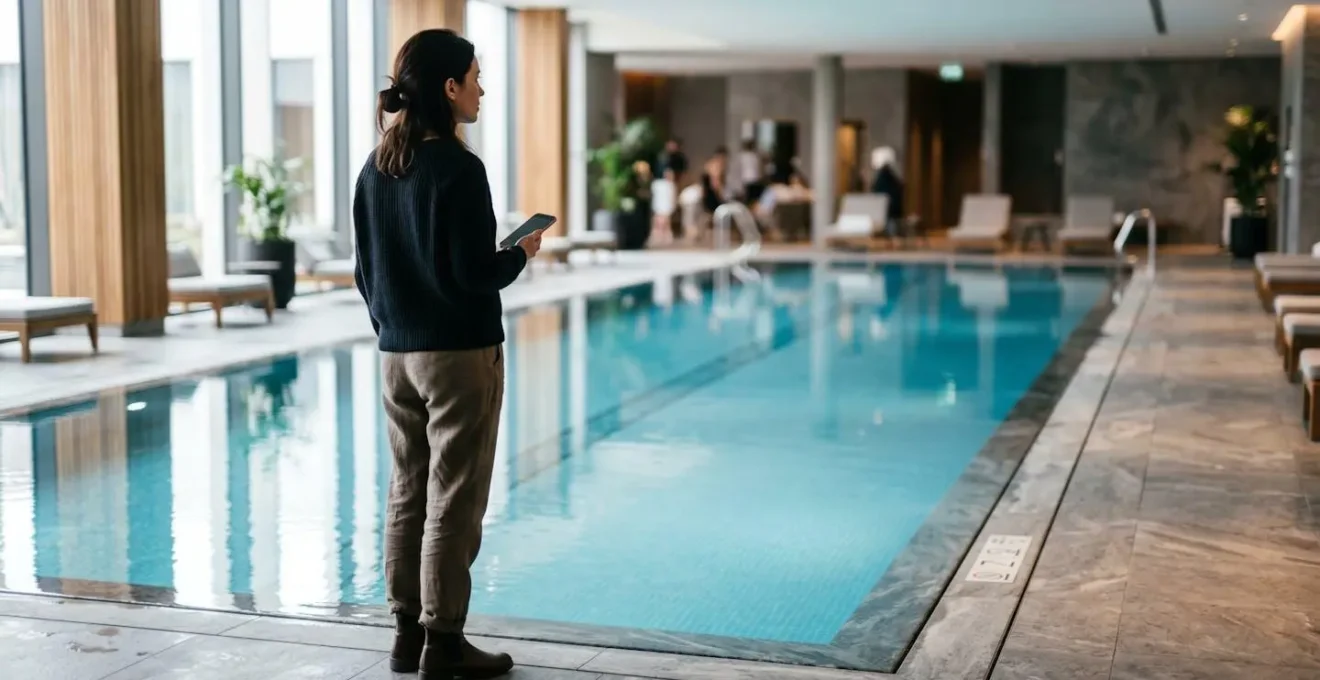
As this image suggests, the process of verification is one of careful, informed assessment. After your visual review, the next step is to get concrete answers. A direct call to the hotel is invaluable. Don’t ask « Do you have an indoor pool? » Ask specific, targeted questions that reveal the reality of the experience. The goal is to move past the brochure and understand the practical details that will define your stay.
Your Pre-Booking Verification Checklist
- Safety & Supervision: « Does the indoor pool have a lifeguard on duty? If so, what are the hours? » This indicates the hotel’s commitment to safety and the scale of the operation.
- Design & Suitability: « What is the pool’s depth range, and are there clear markers and ropes separating shallow and deep ends? » This is crucial for family safety and reveals if the pool is designed for play or just aesthetics.
- Accessibility & Hours: « What are the exact opening and closing times for the indoor pool? » A pool closing at 8 PM is of little use after a day of sightseeing. This reveals its true availability.
- Family-Friendliness: « Is there a separate, dedicated kiddie pool, or a zero-depth entry area? » This shows if the hotel genuinely caters to families or just tolerates them.
- On-Arrival Audit: « Before using any facility, I will walk the perimeter to check for visible depth markers, safety equipment, and assess if the deck is dangerously slippery. » This final check ensures what was promised is what is delivered.
By conducting this brief audit before you commit, you transform from a hopeful tourist into an empowered traveler, fully in control of your holiday experience.
What Does « Covered Terrace » Mean in UK Hotel All-Weather Facility Policies?
The term « covered terrace » is one of the most ambiguous in hotel marketing, especially in the context of the UK’s unpredictable weather. For a hopeful guest, it conjures images of a cosy, sheltered nook from which to enjoy the outdoors, rain or shine. For some hotels, however, it can mean little more than a flimsy awning over a couple of chairs. Distinguishing between a true all-weather facility and a token gesture is key to avoiding disappointment. A genuine covered terrace is an architectural feature designed for year-round comfort, not just a temporary shield from a light drizzle.
The definition hinges on two key factors: robust protection and a source of heat. A simple roof or awning provides cover, but without effective heating, the space is unusable for much of the British year. Look for specific mentions of « heated terraces, » but be aware that this term also has a wide spectrum of meaning. A single, ineffective overhead lamp is not the same as integrated heating solutions that create a genuinely warm and inviting microclimate. The most luxurious examples go far beyond basic comfort, integrating amenities that make the outdoor space a destination in its own right.
The language hotels use can be revealing. High-end properties will often detail the specifics of their terraces because they are a premium feature. They will mention the type of heating, the quality of the furniture, and any extra amenities. For example, as The Lanesborough’s marketing highlights, their terrace is a place where « guests can enjoy Cuban cigars, fine spirits and dining, » signalling a full-service, comfortable environment, not just a covered patch of concrete.
Case Study: The Gold Standard at The Marylebone Hotel
To understand the pinnacle of all-weather design, look at the terrace suites at The Marylebone Hotel in London. These spaces exemplify what a premium covered outdoor area should be. Their terraces feature a fireplace and a TV built directly into the walls, along with plush lounge armchairs. The décor of sleek slate and cedar wood creates a sophisticated, « Scandi cabin-like » feel. Critically, these covered terraces are engineered for year-round use with full climate control, demonstrating the highest tier of UK hotel all-weather facilities—a world away from basic awning protection.
Therefore, when you see « covered terrace, » your verification mindset should kick in. Look for photos, read detailed descriptions, and if in doubt, call and ask: « Is the terrace heated, and what kind of heating is it? » This simple question can be the difference between a delightful evening outdoors and a huddle in the cold.
The Indoor Facility Closed for Maintenance Throughout Winter Peak Season
You’ve done your due diligence. You booked a hotel with a fantastic indoor pool, the perfect guarantee against the winter gloom. You arrive, children in tow, only to be greeted by a sign: « Indoor Pool Closed for Maintenance. » This is the ultimate bait-and-switch, a scenario that can ruin a holiday and leave you feeling powerless. However, it’s crucial to understand that as a consumer in the UK, you are not powerless. When a key advertised facility is unavailable, it can be considered a significant failure on the hotel’s part.
According to consumer rights experts, this situation is more than just an inconvenience. As Consumer Rights Attorney Erika Kullberg explains in her guidance, » If a key facility like an indoor pool is advertised and unavailable, it can be considered a breach of contract. » This is a powerful concept. The advertised amenities are part of the ‘contract’ you entered into when you booked. Their absence means the hotel has not delivered the service you paid for, especially if the facility was a primary reason for your booking.
Your rights in this situation are protected under UK law, specifically the Consumer Rights Act 2015. This legislation states that services must be provided with reasonable care and skill and as described. If a hotel fails to provide a key advertised amenity, you are typically entitled to seek a remedy. This doesn’t mean you’ll automatically get a full refund on the spot, but it gives you a strong foundation for negotiation. The key is to act swiftly, politely, and to document everything. Keep all emails, your booking confirmation, and take photos of any closure notices as evidence to support your claim.
When you discover the closure, your first step should be to contact the hotel front desk immediately. Ask for a clear explanation and inquire about any alternative solutions they can offer. If the front desk staff are unable to resolve the issue, politely request to speak with a manager. Escalating the issue calmly and professionally often yields a better outcome. Depending on the circumstances, the hotel may offer to rebook you at a similar property at no extra cost. You can choose to accept this or push for a partial refund or other forms of compensation for the inconvenience and loss of amenity. If the closure causes you to incur extra costs, you may even be able to claim these back.
While no one wants to spend their holiday negotiating compensation, understanding your position as a consumer transforms you from a victim of circumstance into an empowered guest who can advocate for the value you were promised.
How to Access Outdoor Hotel Spaces Heated for Comfortable Year-Round Use
In the quest for a true all-weather UK holiday, the « heated outdoor space » is a holy grail. It promises the pleasure of being outside, even when the air is crisp. However, much like the « covered terrace, » the term « heated » is subjective. True year-round comfort doesn’t come from a single, sad-looking patio heater; it comes from a strategic investment by the hotel in creating a genuinely warm and inviting environment. Accessing these spaces starts with learning to identify the signs of a serious commitment to outdoor comfort.
One of the most reliable indicators of a quality heated space is the presence of a substantial fire pit. These are more than just decorative elements; they are functional heat sources that transform an outdoor area. According to industry research, hotels report fire pits with 40,000 BTU burners boost both average daily rate and incremental revenue, proving they are a significant investment in making outdoor spaces accessible year-round. When you see a well-maintained, powerful fire pit in hotel photos, it’s a strong sign that the establishment takes outdoor comfort seriously.
The same principle applies to heated outdoor pools. A pool that is truly « heated for year-round use » requires a sophisticated system. It’s not enough for the water to be simply « not freezing. » Premium hotels invest in systems that ensure a consistently delightful experience, regardless of the season.
Case Study: Defining « Heated » in All-Weather Pools
The best hotels maintain outdoor pools, often with integrated whirlpool bays, that stay invitingly warm by actively adjusting to surrounding climate conditions. These outdoor sections are equipped with advanced heating systems that welcome guests for a dip in any weather. This demonstrates that a truly useful « heated » specification should include details on temperature ranges and seasonal adjustment capabilities. Before booking, a savvy traveler can ask, « What temperature is the outdoor pool maintained at during the autumn and winter months? » This question separates the genuinely heated pools from those that are merely « seasonally » warm.
Ultimately, accessing these comfortable spaces is a matter of verification. Look for specific evidence of investment—be it powerful fire pits or detailed information on pool heating systems. This ensures your vision of a cosy evening by an outdoor fire or a warm swim under a winter sky becomes a reality.
Rooftop Pool or Basement Pool: Which Better Serves Serious Lap Swimmers?
For the traveler who integrates aquatic fitness into their daily routine, not all hotel pools are created equal. The choice of hotel can hinge on the quality of its swimming facilities, and a common dilemma arises: the glamorous rooftop pool versus the functional basement pool. While rooftop pools dominate Instagram feeds with their stunning views and social atmosphere, they often fall short for the serious lap swimmer. Their design typically prioritizes aesthetics, lounging, and socialising over athletic performance.
A serious swimmer requires specific conditions for an effective workout: sufficient length, consistent depth, minimal disruption, and clear lane lines. Rooftop pools are often shorter, have irregular shapes to accommodate design features, and suffer from variable depths. They are also exposed to the elements, meaning wind can create disruptive waves, and the bustling social scene can lead to a crowded, chaotic swimming environment. Dedicated lap swimming hours are rare as the space is a prime social hub for the hotel.
In contrast, the often-overlooked basement or indoor pool is frequently designed with function in mind. These pools are more likely to be of a standard length (e.g., 20 or 25 metres), have a uniform depth ideal for consistent strokes, and be free from weather interference. The quieter, climate-controlled environment is far more conducive to focused training. They are also more likely to have dedicated lane lines and offer adult-only swim times. The one crucial verification point for a basement pool is air quality; a proper HVAC system is essential, so it’s worth checking reviews or inquiring about ventilation. The following comparison breaks down the key differences for a performance-focused swimmer.
| Feature | Rooftop Pool | Basement Pool |
|---|---|---|
| Primary Design Purpose | Aesthetic / Lounging / Social | Functional / Performance / Training |
| Typical Pool Length | Shorter, irregular shapes | Longer, uniform lanes |
| Depth Consistency | Variable, often shallow | Uniform depth for consistent strokes |
| Environmental Disruption | Wind, wave disruption, weather exposure | Climate-controlled, no wind interference |
| Ambient Noise Level | Higher (city sounds, social activity) | Quieter, better for focused training |
| Air Quality Consideration | Excellent natural ventilation | Requires proper HVAC; must verify system quality |
| Dedicated Lap Hours | Less common due to social focus | More likely to offer adult-only swim times |
| Lane Line Availability | Rare (aesthetic conflicts) | Standard feature for serious swimmers |
Therefore, the fitness-focused traveler must look beyond the glamorous photos. The subterranean pool, while less photogenic, is often the superior choice for guaranteeing a proper workout, ensuring fitness goals are met even while away from home.
Why « Guest-Only » Swimming Pools Still Admit 200 Day-Pass Holders Daily
One of the most frustrating experiences for a hotel guest is paying a premium for a hotel with great facilities, only to find the « guest-only » swimming pool is more crowded than a public lido on a bank holiday. The term « guest-only » can be deeply misleading. While it implies exclusivity for those staying at the hotel, the reality is often very different. For many hotels, especially those with prominent spa facilities, pools are a separate profit centre, and the « guests » include a large number of day-pass holders and local members.
This business model makes perfect financial sense for the hotel. Selling daily or even monthly passes to their pool and spa facilities provides a consistent revenue stream, independent of room occupancy. This is particularly common at properties that heavily market « spa day » packages on their websites or have advertisements for local gym memberships. The policy, in practice, often means « no casual walk-ins from the street » but absolutely does not exclude high-paying day-pass holders or spa members. This influx of non-resident users can lead to overcrowding, a lack of available loungers, and a noisy environment that shatters the tranquil, exclusive experience paying hotel guests were promised.
As a guest, how can you verify the true status of the pool? The key is to look for signs that the pool is part of a larger, public-facing commercial operation. Check the hotel website for a « Spa » or « Wellness » section. Do they advertise day packages, local memberships, or treatment-plus-facility-use offers? If so, you can assume the pool will be busy. While standard hotel regulations often state that « staff or the swimming pool lifeguard is authorized to demand the guest key card or ask for details about your room number for verification, » this is usually to prevent unauthorised access, not to limit the number of paying day-guests.
A direct question during your pre-booking verification can be very revealing: « Do you sell day passes or memberships for your pool and spa facilities to the general public? » The answer to this question will give you a far more accurate picture of how crowded the pool is likely to be than the « guest-only » label on the website.
By learning to spot the signs of a commercialised pool facility, you can make a more informed choice, either by selecting a hotel with a genuinely private pool or by adjusting your expectations and planning your pool time for quieter periods.
Key takeaways
- True holiday security comes from active verification, not passive booking. Treat hotel marketing as a claim to be tested.
- The quality of a backup facility is paramount. An inferior indoor option is a source of dissatisfaction, not a solution.
- Vague terms like « heated » or « covered » must be investigated. Ask for specifics on temperature, size, and amenities.
Integrating Aquatic Fitness Into Travel Through Adequate Pool Facilities
For a growing number of travelers, a holiday is not a break from their fitness routine but an opportunity to enhance it. Integrating aquatic fitness into travel requires more than just a hotel having ‘a pool’. It demands access to adequate and reliable facilities that support a proper training regimen. This means ensuring the pool is not only suitable for laps but is also consistently open and available, a factor that can be surprisingly precarious.
The reliability of a hotel pool is not a given. Behind the scenes, pool maintenance is a complex chemical balancing act. A minor failure in this process can lead to a major disruption for guests. According to hotel compliance standards, something as simple as combined chlorine levels above 0.2 ppm can trigger mandatory 48-hour pool closures and public health citations. Hotels must test their water chemistry daily to prevent such closures during peak periods. For the fitness traveler, this highlights the importance of choosing establishments known for their high operational standards, as a well-maintained facility is far less likely to be unexpectedly closed.
Beyond simple availability, fitness-focused travelers have specific needs regarding access hours and amenities. A pool that closes at 8:00 PM is of little use to a business traveler with a packed schedule or someone wanting a pre-breakfast workout. Verifying extended or 24-hour pool access is crucial. Furthermore, the experience can be enhanced by dedicated ‘lap-swimming’ hours or ‘adult-only’ times that guarantee an uninterrupted session. It is also worth inquiring about workout-adjacent amenities, such as a sauna, steam room, or cold plunge pool, which are vital for post-workout recovery and signal a hotel’s genuine commitment to wellness.
When booking, it’s wise to have a checklist of questions. Ask about specific lap-swimming hours. If the pool is open 24/7, request a room away from the area to minimise noise. Confirm the existence and accessibility of recovery facilities. Finally, ask about pool temperature maintenance; a serious workout requires a consistent water temperature, not one that fluctuates with the season. This level of detailed inquiry ensures your fitness goals won’t be derailed by inadequate facilities.
By applying the same verification mindset to fitness amenities as you do to weather-proofing, you can design a travel itinerary that supports, rather than compromises, your health and wellness goals. Your next trip can be your best training camp yet—if you plan for it.