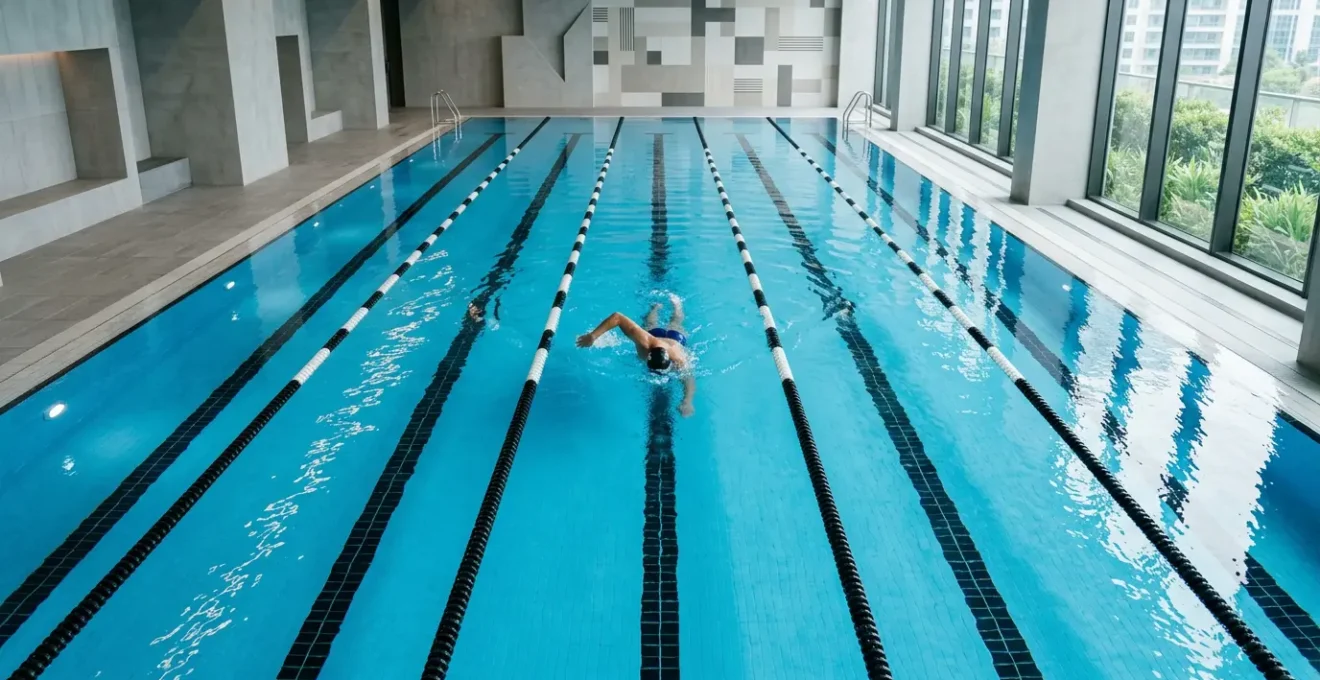
The greatest obstacle to maintaining a swimming routine while traveling is that most hotel pools are leisure amenities, not performance-ready fitness infrastructure.
- Effective training depends on specific technical criteria like pool length, shape, depth, and lane markings, which are rarely advertised.
- Operational factors, such as crowd patterns and undisclosed public access, can render even a well-designed pool unusable for serious swimmers.
Recommendation: Stop hoping for the best and start performing a pre-booking « facility audit » to verify that a hotel’s pool meets your non-negotiable training requirements.
For the committed fitness enthusiast, travel presents a significant challenge: how to maintain a hard-earned routine in an environment not built for it. The frustration is palpable. You’ve packed your gear and carved out time, only to discover the « state-of-the-art fitness centre » is a cramped room with a broken treadmill and a set of 5kg dumbbells. This is especially true for swimmers, whose training is entirely dependent on access to adequate aquatic facilities. The common advice— »just book a hotel with a pool »—is dangerously simplistic and often leads to disappointment.
The core issue is a fundamental misunderstanding. Hotels market pools as a luxury amenity for relaxation, not as a piece of critical fitness infrastructure. The kidney-shaped, lukewarm basin advertised with smiling families is the antithesis of a training environment. To preserve your athletic performance on the road, a paradigm shift is necessary. You must stop seeing a hotel pool as a bonus feature and start treating it as a technical facility that requires a rigorous audit before you even consider booking a room. This means looking beyond glossy photos and digging into the specifications that truly matter.
This guide abandons the generic advice. Instead, it provides a strategic framework for the discerning athlete. We will deconstruct the differences between leisure-grade and performance-ready pools, analyse the critical technical specifications that make or break a workout, and reveal the operational realities—like crowd management and hidden revenue models—that hotels don’t advertise. By adopting an auditor’s mindset, you can transform your travel experience from one of frustrating compromises to one of consistent, uninterrupted training.
This article breaks down the essential criteria for finding a hotel pool that truly supports your fitness goals. Explore the sections below to learn how to identify suitable facilities and maintain your peak performance, no matter where you are.
Summary: Integrating Aquatic Fitness Into Travel Through Adequate Pool Facilities
- Why Hotel Swimming Pools Beat Hotel Gyms for Calorie Burning Per Hour
- How to Identify Hotel Pools Suitable for Lap Swimming Versus Leisure Only
- Rooftop Pool or Basement Pool: Which Better Serves Serious Lap Swimmers?
- The Pool Depth Specification That Makes Proper Swimming Technique Impossible
- When to Use Hotel Pools to Avoid Family Crowds and Secure a Lane
- Why Hotel Sports Areas Rarely Meet Serious Amateur Athletes’ Training Requirements
- Why « Guest-Only » Swimming Pools Still Admit 200 Day-Pass Holders Daily
- Maintaining Athletic Performance Through Quality Sports Facility Access While Traveling
Why Hotel Swimming Pools Beat Hotel Gyms for Calorie Burning Per Hour
When evaluating a hotel’s fitness infrastructure, the default for many is the gym. However, for a truly efficient, full-body workout, the swimming pool offers a superior caloric burn and a lower risk of injury. The physics are simple but profound: water provides a dense, consistent medium for resistance training. As U.S. Masters Swimming highlights, this environment changes the entire dynamic of exercise. The effectiveness of swimming as a workout is not just an opinion; it’s backed by data proving its high-energy demands.
A key reason for this enhanced efficiency is the total-body engagement required. Unlike a treadmill, which primarily targets the lower body, swimming recruits muscles from your core, back, shoulders, and legs simultaneously. This comprehensive muscular activation leads to a significantly higher energy expenditure. According to research, swimming burns over 25% more calories than running during the same period. This makes it an incredibly time-efficient option for travelers looking to maximize their workout in a limited window.
The secret lies in the natural resistance of water. This resistance is not only effective for building strength but also gentle on the joints, making it an ideal form of exercise for maintaining fitness without the impact-related stress of running on a treadmill. It provides a challenging yet supportive environment for a high-intensity, low-impact session.
Water creates 12 to 14 percent more resistance than air.
– U.S. Masters Swimming, How Does Swimming Compare to Walking or Running
This inherent resistance means every movement is a strength-building exercise, turning a simple cardio session into a hybrid workout. For the fitness-focused traveler, leveraging a proper hotel pool isn’t just an alternative to the gym; it’s a strategic upgrade to their training regimen.
How to Identify Hotel Pools Suitable for Lap Swimming Versus Leisure Only
Not all hotel pools are created equal. The most common source of frustration for swimmers is arriving to find a beautifully designed but functionally useless « leisure pool » instead of a facility for actual swimming. Identifying a true lap pool from hotel photos and descriptions requires a trained eye and a specific checklist. The first and most obvious criterion is shape. A pool designed for laps will always be rectangular. Any pool with curves, free-form edges, or an ‘S’ shape is built for lounging, not training.
Beyond shape, length is the next critical factor. For an effective workout, a pool needs to be at least 20 yards (18.3 meters) long, with a 25-yard pool being the preferred standard for serious swimmers. Anything shorter turns a lap session into a frustrating exercise in constant turning. While hotels rarely list pool dimensions, you can often estimate length by counting the number of lounge chairs along its edge or comparing it to nearby objects. Another key indicator is the presence of features designed for straight-line swimming, such as black stripes painted on the pool floor or floating lane lines.
This visual checklist helps you quickly differentiate a performance-ready pool from a decorative water feature. The contrast is often stark once you know what to look for.
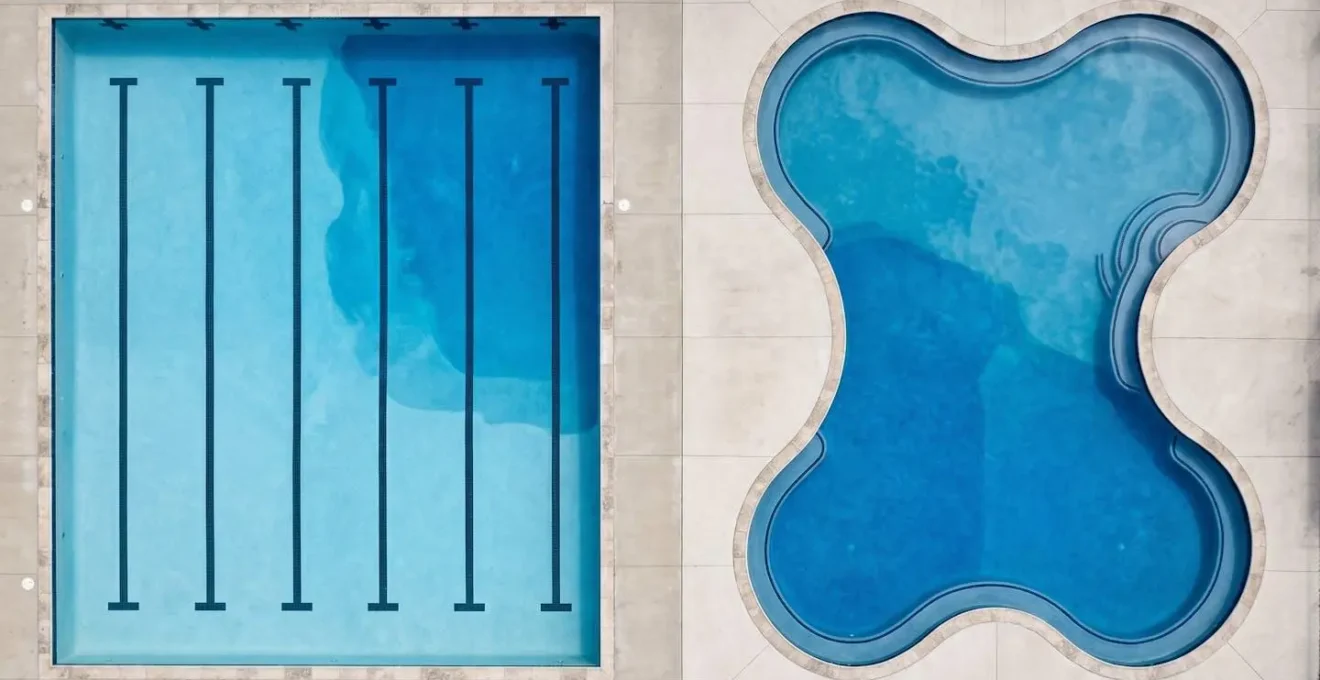
Finally, inspect for « leisure » features that actively hinder lap swimming. An integrated waterslide, a swim-up bar, or built-in underwater benches are red flags. The water temperature can also be a clue; true lap pools are kept cooler for athletic activity, whereas leisure pools are often heated to a warmer, more bath-like temperature. By applying this audit, you can effectively filter out unsuitable options before you book.
Your Pre-Booking Pool Audit Checklist
- Visual Geometry: Confirm the pool is strictly rectangular by examining all available photos and virtual tours. Disqualify any with curved or irregular shapes.
- Functional Markings: Scrutinize images for performance features. Are there black lines on the pool floor or visible anchors for floating lane lines? Their absence is a major red flag.
- Leisure Contaminants: Identify and penalize pools with integrated waterslides, swim-up bars, or zero-depth entries, as these guarantee a leisure focus and high crowd density.
- Contact & Verify: Call the hotel directly and ask for the pool’s exact length in yards or meters. If the front desk doesn’t know, ask to be transferred to the fitness/spa manager.
- Review Intelligence: Search guest reviews on multiple platforms for keywords like « laps, » « crowded, » « lane, » and « cold » to gauge its real-world usability for training.
Rooftop Pool or Basement Pool: Which Better Serves Serious Lap Swimmers?
Once you’ve identified a hotel with a promising rectangular pool, its location within the hotel—rooftop or basement—becomes a crucial factor affecting your training quality. While a rooftop pool offers stunning views and a glamorous atmosphere, it often presents significant drawbacks for a serious swimmer. The basement pool, though lacking in aesthetic appeal, frequently provides a more controlled and predictable training environment. The choice between them is a trade-off between ambiance and function.
Rooftop pools are exposed to the elements. Sun glare can make it difficult to see walls and other swimmers, while wind can disrupt stroke mechanics and create choppy water. Their social-hub atmosphere often means more noise and unpredictable crowds, especially during good weather. Conversely, basement pools offer a solitary haven. The enclosed space means consistent, climate-controlled water temperature and no weather-related disruptions. The lighting is artificial but constant, eliminating glare and providing clear visibility for turns and technique focus.
However, the basement location is not without its own set of compromises. The primary concern is air quality. Poor ventilation in an enclosed, heated pool area can lead to a high concentration of chloramines (the chemical byproduct responsible for the « pool smell »), which can be harsh on the respiratory system during an intense workout. Rooftop pools, being in the open air, naturally provide superior ventilation. Accessibility also differs; a basement pool is often located near the fitness center, allowing for a seamless transition between workout types, while a rooftop pool may require a separate, time-consuming journey.
The decision ultimately depends on your priorities as an athlete. To make an informed choice, it’s essential to compare these factors side-by-side, as detailed in a thorough comparison for traveling swimmers.
| Factor | Basement Pool | Rooftop Pool |
|---|---|---|
| Temperature Control | Consistent, climate-controlled environment | Variable, affected by weather and sun exposure |
| Lighting Conditions | Controlled artificial lighting, no glare | Sun glare, variable natural light |
| Wind Impact | None – enclosed environment | Wind can disrupt stroke mechanics |
| Acoustic Environment | Quieter, solitary haven for focused training | Social hub atmosphere, more ambient noise |
| Air Quality | Potential for poor ventilation, high chloramine concentration | Open air, better respiratory conditions |
| Accessibility | Often near fitness center, quick access | May require separate elevator journey, time-consuming |
| Crowd Patterns | More predictable usage times | Peak crowds during good weather |
The Pool Depth Specification That Makes Proper Swimming Technique Impossible
Beyond length and shape, there is one technical specification that is an absolute non-negotiable for serious training: pool depth. A pool that is too shallow makes proper swimming technique, particularly for flip turns and underwater dolphin kicks, physically impossible and even unsafe. Many hotel pools are designed with a uniform, shallow depth (often 3 to 3.5 feet) to minimize water volume, reduce liability, and cater to casual wading rather than athletic use. This cost-saving measure effectively ruins the pool for any meaningful workout.
Proper flip turns require sufficient depth to tuck and rotate without scraping your back on the pool floor. In a shallow pool, swimmers are forced to perform awkward, open turns, which break momentum and disrupt the rhythm of a workout. Furthermore, for strokes like butterfly and for underwater training off the walls, a swimmer needs space to execute powerful dolphin kicks, which can travel 3-4 feet below the surface. A shallow basin restricts this movement, leading to compromised technique and significantly higher drag forces.
The standards set by official aquatic governing bodies underscore the importance of depth for both safety and performance. A shallow design is a clear signal that the facility is not intended for athletic use.
Case Study: Official Minimum Depth Requirements
The issue of pool depth is so critical that aquatic safety and sport governing bodies have established strict minimums. Recognizing the risks and technical limitations of shallow water, USA Swimming mandates a 4-foot minimum depth for racing starts from the block in competitive settings, with a 5-foot depth required for teaching those starts. Similarly, the National Federation of State High School Associations in the U.S. updated its rules in 2001, increasing the minimum water depth from 3.5 feet to 4 feet. This change was a direct acknowledgment that shallow pools force swimmers to alter their technique in ways that are inefficient and potentially hazardous.
When auditing a potential hotel, finding information on pool depth can be difficult. It is rarely listed online. This is where a direct phone call to the hotel is essential. Ask to speak to the spa or fitness center manager, as they are more likely to know the technical specifications than the front desk staff. If a pool’s maximum depth is less than 4 feet (1.22 meters), you should immediately disqualify it as a viable training facility.
When to Use Hotel Pools to Avoid Family Crowds and Secure a Lane
Securing a technically sound hotel pool is only half the battle. The other half is navigating the operational reality: you will be sharing this space with leisure-seeking guests. For a focused lap swimming session, timing is everything. A pristine 25-yard pool is useless if it’s filled with children playing Marco Polo. To guarantee an uninterrupted workout, you must learn to identify and exploit the strategic windows when the pool is most likely to be deserted.
The most reliable time for a quiet swim is the early morning. Most travelers, especially families on vacation, are not early risers. By arriving at the pool as soon as it opens, often before 7 AM, you can typically secure an hour of solitude. Another effective strategy is to swim during the check-out wave. In the 60-90 minutes leading up to the hotel’s official check-out time (usually 11 AM or noon), the majority of guests are preoccupied with packing and leaving, creating a predictable lull in pool traffic.
The usage patterns also vary depending on the hotel’s primary clientele. In business-oriented hotels, the pool is often empty during standard working hours. This creates valuable mid-morning (9:30-11 AM) and mid-afternoon (2-4 PM) windows when professionals are in meetings. Conversely, in resort-style hotels, the first dinner seating (around 6-7:30 PM) is an excellent time to swim, as families head to restaurants. Finally, the late evening, typically after 8 PM, sees a sharp decline in family use, offering another opportunity for a peaceful session.
Mastering these timing strategies transforms your relationship with the hotel pool from one of hopeful chance to one of calculated access, ensuring you can execute your training plan without interference.
Why Hotel Sports Areas Rarely Meet Serious Amateur Athletes’ Training Requirements
For athletes whose training isn’t water-based, the hotel gym seems like the obvious solution. Yet, the reality rarely lives up to the marketing photos. While hotels promote their « fully equipped » fitness centers, these facilities are typically designed with a « liability-first » philosophy, not a « performance-first » one. This results in an environment that is often inadequate for anyone following a structured strength and conditioning program. The expectation and the reality are often worlds apart.
A hotel gym fitout is much the same as a commercial gym fitout. You need to cater to an equally broad range of people, and each machine will see a similarly steady flow of users, so they need to be built for the task and faithfully maintained.
– GymQuip Fitness, Gym Equipment For Hotels
The statement above reflects the ideal, but the operational reality is driven by cost and risk management. Commercial analysis from industry experts like 3G Cardio reveals that hotel fitness equipment is fundamentally different from that found in a public gym. It is typically light-to-medium duty commercial grade, rated for 6-8 hours of use per day, compared to the 12-18+ hours expected of heavy-duty machines in a dedicated fitness club. This means treadmills, bikes, and weight machines often cost half as much and are not built for the same level of intense, repeated use.
This design philosophy prioritizes minimizing legal risk over maximizing athletic potential. The result is a curated selection of « safe » equipment: restrictive machines that guide movement along a fixed path, a limited range of light dumbbells (often topping out at 20-25 kg), and a conspicuous absence of fundamental strength training tools like proper squat racks, barbells, or platforms for deadlifting. For a serious athlete, this environment represents a significant training compromise, making it impossible to perform compound lifts or follow a progressive overload plan.
The visual reality of a typical hotel gym often consists of a few basic cardio machines and a small rack of lightweight dumbbells, a far cry from a true training facility.
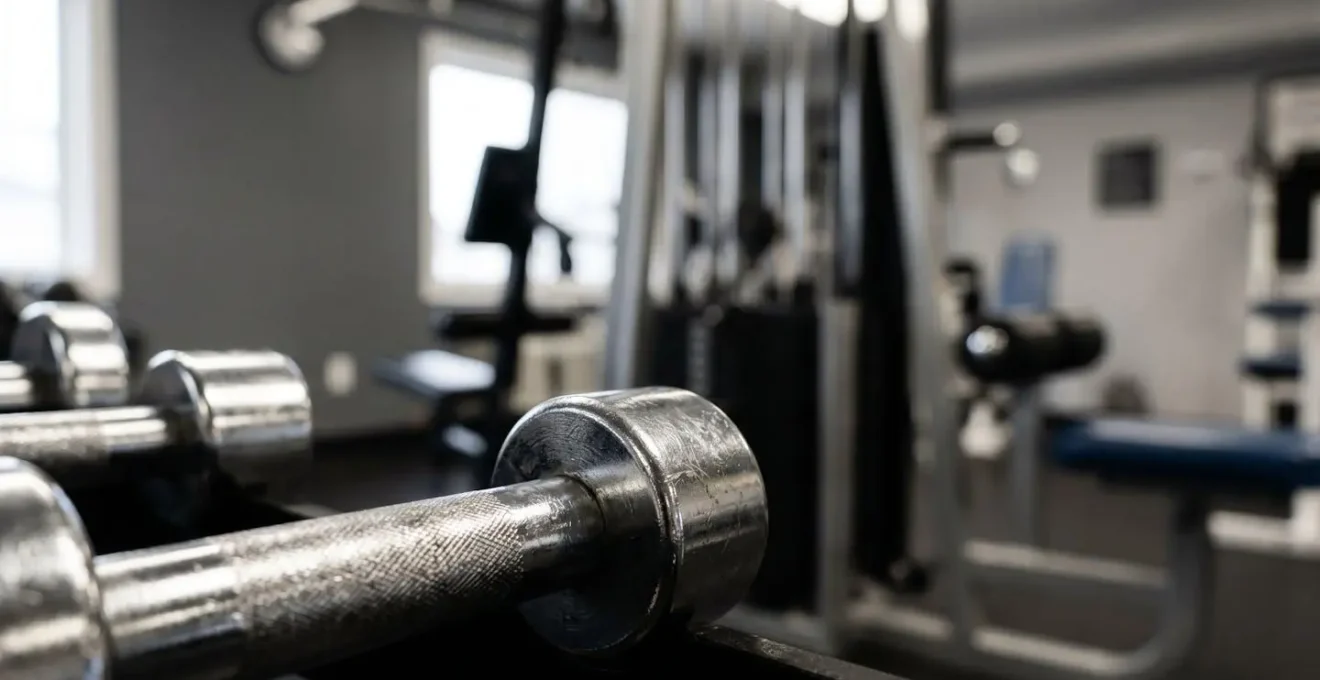
Understanding this fundamental difference in equipment philosophy is key to managing expectations. A hotel gym can be sufficient for a light cardio session or basic maintenance, but it should not be considered a substitute for a proper training facility. This limitation reinforces the value of finding a hotel with a performance-ready swimming pool, which can offer a far more comprehensive and challenging workout.
Why « Guest-Only » Swimming Pools Still Admit 200 Day-Pass Holders Daily
One of the most misleading aspects of hotel marketing is the concept of the « guest-only » pool. You might book a hotel specifically for its promise of an exclusive, tranquil swimming environment, only to find it just as crowded as a public facility. The reason for this is a growing and often undisclosed ancillary revenue model: the sale of day passes to the general public. High maintenance costs for aquatic facilities have pushed hotels to transform their pools from exclusive amenities into profit centers.
This business model has been streamlined by third-party platforms that allow hotels to easily sell access to their facilities. By partnering with these services, hotels can fill their poolside chairs and generate significant income from non-guests, effectively turning their « private » club into a semi-public one. This financial incentive often outweighs the promise of exclusivity made to registered guests.
Case Study: The Day-Pass Revenue Model
Platforms like ResortPass and Swimply have revolutionized how hotels monetize their amenities. An investigation into this model reveals how premium properties leverage these services. For example, a major hotel can sell day passes for its facilities at significant prices. As documented in a guide to Chicago’s best indoor pools, a family of four could pay upwards of $130 for a single day’s access to an indoor heated pool, sauna, and fitness center. For the hotel, this is a lucrative revenue stream that offsets high operational costs. For the registered guest who expected a quiet swim, it means competing for space with potentially hundreds of day-pass holders.
As a fitness-focused traveler, it’s crucial to identify hotels that engage in this practice before you book. There are several red flags to look for. Check the hotel’s website for any mention of « spa day packages » or « pool cabana rentals » available to the public. Search the hotel’s name on day-pass platforms to see if they are listed. Reading recent guest reviews can also be revealing; look for comments mentioning a « crowded pool » or the presence of « non-guests. » The most direct approach is to call the hotel and ask a very specific question: « Is your pool’s use reserved exclusively for registered overnight guests? » The way they answer will tell you everything you need to know.
Key Takeaways
- Hotel pools are superior to gyms for efficient, low-impact, full-body workouts, but most are designed for leisure, not training.
- A « facility audit » is essential, focusing on non-negotiable criteria: rectangular shape, minimum 20-yard length, and at least 4-foot depth.
- The « guest-only » label is often a myth; many hotels sell day passes, so verifying exclusivity and planning workouts for off-peak hours is crucial.
Maintaining Athletic Performance Through Quality Sports Facility Access While Traveling
Maintaining peak athletic performance while traveling is not about finding the perfect all-in-one hotel; it’s about strategic planning and mental flexibility. The reality is that the ideal hotel—one with a 25-yard, deep, empty, guest-only lap pool—is exceedingly rare. A more practical and effective approach involves unbundling your accommodation from your training facility and adopting a maintenance-focused mindset.
One of the most effective strategies is the « Hub and Spoke » model. Instead of paying a premium for a luxury hotel with a subpar pool, book a more functional and affordable hotel (« the hub ») that is conveniently located near a superior, dedicated aquatic facility (« the spoke »). This could be a university pool, a municipal aquatic center, or a local YMCA. Use tools like Google Maps to research these options in advance. The small inconvenience of a short commute is often a worthwhile trade-off for access to a performance-ready environment. Even in a less-than-ideal hotel pool, moderate swimming can burn around 500 calories per hour for a 150-pound person, making it a valuable maintenance tool.
To further enhance your adaptability, pack a minimalist training kit. A simple pair of resistance bands can turn any hotel room into a functional strength training space. For swimmers, a swimming tether can transform even a small, 10-yard pool into a station for stationary swimming, allowing for endurance and technique work. Waterproof headphones can help you focus and block out distractions in a noisy environment. Additionally, don’t hesitate to leverage global sports networks. Contacting a local Masters swimming club or CrossFit box ahead of your trip can often secure you a friendly drop-in session.
Perhaps the most important adjustment is mental. Shift your framework from goal-oriented training (e.g., hitting a new personal best) to maintenance-focused training. The objective on the road is consistency and technique preservation, not peak performance. By focusing on maintaining your feel for the water and keeping your routine intact, you can return home without losing your fitness base, ready to resume your progression. This strategic approach ensures travel enhances your life without derailing your athletic commitments.
By adopting a proactive, analytical approach, you can successfully integrate your fitness routine into your travel plans. Stop leaving your training to chance and start auditing your hotel’s fitness infrastructure with the rigor of a serious athlete. Your performance will thank you for it.