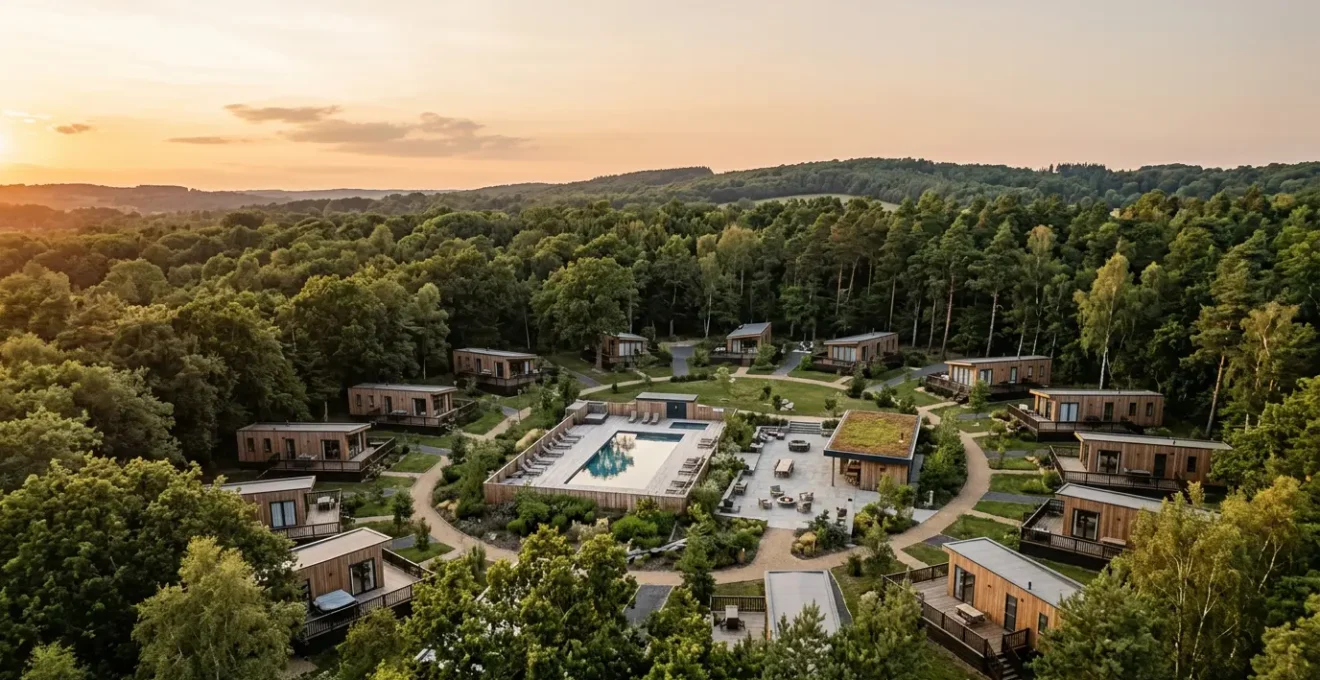
The promise of a residential park—the perfect blend of hotel services and rental freedom—often masks a complex operational model with significant hidden costs and limitations.
- True value is determined by analysing the Total Cost of Stay (TCS), not just the base rate, as ancillary fees for utilities and activities can dramatically inflate the price.
- Service is not equivalent to a hotel; it operates within limited « availability windows » and its quality is dictated by the park’s corporate or private ownership structure.
- Many parks are designed as « gilded cages, » creating physical and financial isolation that prevents authentic local immersion and can lead to guests feeling trapped.
Recommendation: Use a structured evaluation framework that focuses on the park’s operational model, hidden costs, and integration with its surroundings before booking.
For UK families, planning the perfect holiday often feels like an exercise in compromise. Do you choose the effortless convenience of an all-inclusive hotel, with its round-the-clock service and structured activities, but sacrifice space and autonomy? Or do you opt for the freedom and domestic comfort of a self-catering rental, only to find yourself responsible for every meal, clean-up, and moment of entertainment? It’s a classic dilemma, and on the surface, the residential leisure park presents itself as the ideal solution—a harmonious middle ground offering the best of both worlds.
These parks promise private, spacious lodges with your own kitchen, combined with access to resort-style facilities like pools, restaurants, and kids’ clubs. The marketing brochures paint a picture of idyllic family bliss. However, this appealing hybrid model is often misunderstood. The typical debate focuses on superficial aspects like facility lists or base accommodation prices, completely overlooking the most critical factor: the park’s underlying operational model. This model dictates everything from service quality and real costs to the very real risk of feeling isolated from your chosen destination.
But what if the key to making the right choice wasn’t just comparing brochures, but learning how to dissect this operational model? This article moves beyond the surface-level comparisons. We will provide a strategic framework for UK families to critically evaluate residential parks. We will explore how service availability truly functions, how to calculate the real total cost, the hidden dangers of park isolation, and when this model genuinely delivers superior value. By the end, you will be equipped to see past the glossy marketing and determine if a residential park is your family’s next perfect holiday or a potential gilded cage.
This guide provides a comprehensive framework for evaluating whether a residential park meets your family’s specific needs. Below, you will find a detailed breakdown of the key factors to consider, from service realities to the true, all-in cost of your stay.
Summary: Assessing Residential Leisure Parks as a Middle Ground Between Hotels and Self-Catering
- Why Residential Parks Differ From Holiday Rentals in Ongoing Service Availability
- How to Calculate Real Total Costs Including Hidden Fees at Residential Parks
- Residential Park or All-Inclusive Resort: Which Delivers Better Family Value?
- The Residential Park Isolation That Limits Authentic Destination Immersion
- When to Book Residential Parks to Ensure Full Activity Program Availability
- When to Switch From Hotels to Vacation Rentals Based on Group Size and Duration
- The Complex Isolation That Leaves 60% of Guests Feeling Trapped
- Confidently Navigating the Overwhelming Variety of Lodging Types for Group Trips
Why Residential Parks Differ From Holiday Rentals in Ongoing Service Availability
The primary appeal of a residential park over a standard holiday rental is the promise of on-site support. However, it’s crucial to understand that this service is not analogous to a hotel’s 24/7 front desk. The « service » in a residential park operates within a specific and often limited Service Availability Window. A holiday rental offers almost no ongoing support, placing all responsibility on the guest, while a hotel provides constant access. A residential park sits in a confusing middle ground where support exists, but its accessibility is highly variable.
For instance, an analysis of actual reception hours at UK parks reveals schedules often limited to brief morning and afternoon slots, such as 9am-10am and 4pm-6pm, with even shorter hours on Sundays. If a problem arises outside these windows—a faulty appliance at 7 pm or a lost key at midday—you are effectively on your own until the next scheduled opening, much like in a holiday rental. This limited access can be a significant point of friction for families needing flexible support.
Furthermore, the consistency of service is directly tied to the park’s operational model. A park managed by a large corporate operator will likely offer standardized, predictable, albeit potentially impersonal, service across all its units. In contrast, parks where lodges are individually owned and managed by the park operator on the owner’s behalf can lead to significant inconsistencies. The level of maintenance, the quality of furnishings, and the responsiveness to issues can vary dramatically from one lodge to the next, depending on the individual owner’s investment and the specifics of their management agreement. This means two families in the same park can have vastly different service experiences.
Therefore, when evaluating a park, you must look past the simple claim of « on-site services » and investigate the specific reception hours and the management structure to understand the true nature of the support you will receive.
How to Calculate Real Total Costs Including Hidden Fees at Residential Parks
One of the most significant evaluation errors is comparing the base accommodation rate of a residential park to that of a hotel or rental. The park’s business model often relies heavily on ancillary revenue, meaning the advertised price is merely the entry ticket. To make an informed decision, you must calculate the Total Cost of Stay (TCS), which includes a range of mandatory and optional fees that are rarely transparent upfront.
These hidden extras go far beyond a simple cleaning fee. Many UK parks charge separate, metered rates for electricity, gas, and water, often at a premium compared to standard residential tariffs. Furthermore, access to the very facilities that define the park experience—pools, kids’ clubs, and entertainment—frequently requires the purchase of separate ‘activity’ or ‘entertainment’ passes for every member of the family. Even ‘essentials’ like bed linen and Wi-Fi can be costly add-ons. These costs are compounded by significant long-term expenses for those considering ownership, where annual site fees can range from £3,650 to £9,200, before even considering utilities and maintenance.
This table illustrates a potential one-week cost breakdown for a family of four, highlighting how a residential park’s initially competitive base rate can quickly escalate when the full TCS is considered.
| Cost Component | Residential Park (UK) | All-Inclusive Hotel | Airbnb Rental |
|---|---|---|---|
| Base Accommodation (7 nights, family of 4) | £1,274 – £2,798 | £1,800 – £2,500 | £800 – £1,500 |
| Food & Groceries | £200 (self-catering) | £0 (included) | £250 (self-catering) |
| On-site Activities | £150 – £300 (optional extras) | £0 (included) | £200 (external bookings) |
| Utilities & Fees | £50 – £100 (metered) | £0 (included) | £30 – £80 (cleaning fee) |
| Total Estimated Cost | £1,674 – £3,398 | £1,800 – £2,500 | £1,280 – £1,830 |
As the data shows, while an all-inclusive hotel has the highest budget predictability, a residential park can sometimes become the most expensive option once all extras are factored in, challenging the common perception that it is an inherently cheaper alternative.
Residential Park or All-Inclusive Resort: Which Delivers Better Family Value?
When comparing a residential park to an all-inclusive resort, the definition of « value » extends beyond mere cost. It becomes a question of priorities: is value found in budget predictability and effortless service, or in flexibility and autonomy? An all-inclusive resort offers unparalleled budget predictability. Once paid, nearly all essential costs are covered, from meals and drinks to activities, removing financial uncertainty from the holiday. This is a powerful value proposition for families wanting to relax without constantly calculating expenses.
However, this convenience comes at the cost of autonomy. Guests are tied to restaurant meal times and pre-scheduled activities. For families with specific dietary needs, allergies, or picky eaters, the buffet-style dining of an all-inclusive can be a source of stress rather than a convenience. This is where the residential park’s core value shines. The inclusion of a private kitchen grants families complete control over their meals—a critical advantage for managing health requirements, accommodating a toddler’s unpredictable eating schedule, or simply enjoying a relaxed family breakfast without having to get dressed for a public dining room.

This image perfectly captures the essence of that flexibility. The ability to source and prepare your own food is a form of control and personalization that an all-inclusive model simply cannot offer. This autonomy extends to the daily schedule; there are no fixed times for anything. A day can be spent exploring off-site, relaxing in the lodge, or using the park’s facilities at your own pace. While this freedom requires more planning and effort (e.g., grocery shopping and cooking), it provides a different, and for many, a more significant, type of value.
Ultimately, a family that prioritizes effortless relaxation and predictable costs will find better value in an all-inclusive resort. In contrast, a family that values flexibility, needs dietary control, and enjoys a more home-like environment will find the residential park model to be a far more valuable proposition, despite the extra effort required.
The Residential Park Isolation That Limits Authentic Destination Immersion
A significant, often overlooked, drawback of the residential park model is the risk of the « gilded cage » effect—a form of designed isolation that discourages guests from engaging with the local area. Many parks are intentionally built as self-contained ecosystems, with on-site supermarkets, restaurants, and a full roster of activities. While convenient, this model is designed to maximize on-site spending and can create a powerful disincentive to explore the authentic destination you travelled to see.
This isolation is often physical. Parks are frequently located in rural or semi-rural areas, several kilometres from the nearest town, with poor or non-existent public transport links. Without a car, guests can become physically trapped within the park’s boundaries. But the isolation is also psychological. When all needs are met on-site, the effort required to research, book, and travel to local attractions can seem prohibitive, leading families to default to the path of least resistance: staying within the park’s comfortable but artificial bubble.
Case Study: Contrasting Immersion Models
The difference between an integrated and an isolated park is stark. Center Parcs Zandvoort in the Netherlands is located on the edge of a vibrant seaside town. Guests can easily cycle to nearby Haarlem or take a 30-minute train to Amsterdam, spending most of their time and money in the local community. This contrasts sharply with Center Parcs Longford in Ireland, which is situated deep in the countryside. The remote location means most guests remain on-site for their entire break, leading to minimal local cultural immersion and higher spending on park facilities. This highlights how a park’s location strategy directly shapes the guest’s ability to have an authentic travel experience.
To avoid this trap, families must proactively assess a park’s « immersion potential » before booking. This involves checking:
- Walkability and Transport: Is the park within a reasonable walking distance (under 2km) of a town? Are there frequent and reliable local bus or train services?
- Local Partnerships: Does the park actively promote local tour operators and attractions, or does it exclusively market its own paid activities?
- The ‘Escape Radius’: Use an online map to identify the variety of restaurants, shops, and cultural sites within a 10-minute drive to gauge the feasibility of leaving the bubble.
Choosing a park that is well-integrated with its surroundings is key for any family that values authentic travel experiences over a perfectly curated but ultimately generic holiday environment.
When to Book Residential Parks to Ensure Full Activity Program Availability
The vibrant activity programs are a major draw for residential parks, but accessing them is often a competitive and frustrating experience. Due to the business model’s reliance on ancillary spending, parks are incentivized to maximize occupancy of their base accommodation first. The result is extremely high demand for a limited number of activity slots, especially during school holidays. For example, some popular UK parks report demand data showing over 99% occupancy and high repeat business rates, creating a bottleneck for popular activities like swimming, climbing, and craft sessions.
This scarcity means that families who book their accommodation last-minute or wait until arrival to plan their itinerary will likely be disappointed. The most sought-after activities are often fully booked weeks or even months in advance by guests who plan meticulously. To secure a spot, you must adopt a proactive booking strategy. This typically involves booking your accommodation as far in advance as possible to gain access to the activity booking portal the moment it opens for your travel dates.
Complicating matters further is a notable lack of price transparency in the booking process. Many parents are frustrated to discover that the only way to see the true cost of activities is after they have already committed to and paid for their holiday. As one analysis of the process notes, a major park’s policy means that, as stated by Center Parcs activity pricing disclosure in a vacation planning cost analysis, » the only way to see the real activity prices for your stay is by logging into their website after your holiday is booked« .
The only way to see the real activity prices for your stay is by logging into their website after your holiday is booked.
– Center Parcs activity pricing disclosure, Center Parcs activity cost analysis for vacation planning
This practice forces families to book blind, without the ability to budget for activities, which can form a substantial part of the holiday’s total cost. It reinforces the need to treat activity booking not as a spontaneous holiday decision, but as a critical, pre-planned component of your trip.
Therefore, if a full and active itinerary is a priority for your family, you must book your stay and your activities as early as possible. If you prefer spontaneity, you must either accept that many on-site options will be unavailable or choose a less structured holiday model altogether.
When to Switch From Hotels to Vacation Rentals Based on Group Size and Duration
While residential parks offer a compelling hybrid, there are clear scenarios where the classic models—hotels or vacation rentals—are unequivocally the better choice. The decision often hinges on two simple variables: the size of your group and the duration of your stay. These factors determine whether the primary need is for logistical simplicity or for communal living space.
For shorter trips (1-3 nights) or for smaller groups like couples or a single family with young children, a hotel is often superior. The benefits are clear: no cooking or cleaning, 24/7 service for any issues, and individual rooms providing personal space and privacy. The hassle of grocery shopping and meal planning for a short city break, for example, would detract from the experience. Booking multiple hotel rooms for a larger group can be costly, but for a small unit, the convenience outweighs the expense of not having a shared living area.
Conversely, as the group size increases or the duration of the stay extends beyond a few nights, the economic and social logic shifts firmly in favour of a large vacation rental. For two or more families travelling together or for a week-long stay, the cost of multiple hotel rooms becomes prohibitive. A single large house is not only more cost-effective but also provides the one thing hotels cannot: a shared communal space. A large kitchen, dining area, and living room become the heart of the holiday, fostering a sense of togetherness, enabling shared meals, and providing a safe, private space for children to play. On a longer trip, the ability to do laundry and cook simple meals becomes a necessity, not a chore.
In essence, the hotel model optimizes for individual convenience on short-term stays, while the vacation rental model optimizes for group cohesion and cost-efficiency on longer-term stays. The residential park attempts to bridge this gap, but for trips at either extreme of the spectrum, sticking to the original models is often the most logical and satisfying choice.
The Complex Isolation That Leaves 60% of Guests Feeling Trapped
The concept of isolation in a residential park extends beyond mere geography; it is a complex phenomenon with deep financial and psychological roots. The feeling of being « trapped » that some guests report stems from a powerful combination of escalating hidden costs and the sunk cost fallacy. The business model of many parks involves a low initial entry price for accommodation, followed by a steady stream of high-margin ancillary charges.
This financial pressure is most acute for caravan owners, who face not only unpredictable utility bills but also relentlessly increasing ground rents. For instance, historical data reveals that pitch fees at some UK parks have soared from a typical £1,500-£2,000 in the early 2000s to a staggering £3,000-£12,000 today. Once a family has invested a significant sum in a holiday home, they feel psychologically compelled to continue using it to « get their money’s worth, » even if the escalating costs make each visit a source of financial stress. They are caught in a financial trap, where selling the unit might mean a huge loss, but keeping it means enduring ever-increasing expenses.
Case Study: The Sunk Cost Fallacy in Action
A stark example of this trap involves a caravan owner who purchased a holiday home with annual pitch fees of £2,795. As highlighted in an investigation into holiday park practices, within just two years, these fees rose to £4,100, making ownership unaffordable. Upon trying to sell, the owner was informed the park would not buy back homes over 10 years old, forcing a private sale for a fraction of the purchase price, minus a £500 « disconnection fee » charged by the park. This case perfectly illustrates how a large initial investment can compel guests to endure unfavourable conditions, creating a profound sense of being financially and physically captive.
This dynamic creates a captive audience for the park’s expensive on-site shops and restaurants, as the perceived « waste » of not using the facilities feels greater than the cost of leaving the park for more affordable local options. To avoid this, prospective buyers and renters must be vigilant in spotting the warning signs of a high-isolation-risk park.
Your 5-Step Park Isolation Risk Audit
- Analyse Marketing Materials: Scrutinise brochures and the website. Do they exclusively showcase on-site activities with little to no mention of the surrounding area, its attractions, or local businesses? This is a primary red flag for a « gilded cage » model.
- Inventory On-Site vs. Local Pricing: Before booking, research the cost of a pint of milk or a family meal at the on-site shop and restaurant (if possible via online menus or reviews). Compare these to prices at the nearest off-site supermarket and pub. Significant markups indicate a captive-audience pricing strategy.
- Map the ‘Escape Route’: Use a mapping service to measure the physical distance to the nearest town centre and check for pedestrian-safe walking paths. Then, search for local bus and train timetables that service the park’s entrance. A lack of viable transport is a major warning sign.
- Assess Rulebook Restrictions: Request a copy of the park’s rules. Look for policies that subtly discourage leaving, such as limited gate hours for entry/exit, complex procedures for guest visitors, or punitive parking rules for vehicles that come and go frequently.
- Evaluate Communication Transparency: Attempt to contact park management before booking with specific questions about local partnerships or transport options. Evasive, vague, or non-existent answers strongly suggest a business model focused on keeping guests and their spending contained within the park’s boundaries.
By identifying these financial and logistical traps beforehand, you can differentiate a truly integrated holiday location from one that is designed to hold you captive.
Key Takeaways
- Evaluate the Operational Model: The true experience is dictated not by the facility list, but by whether the park is corporately run (consistent but impersonal) or individually owned (personal but variable).
- Calculate the Total Cost of Stay (TCS): Always look beyond the base rate. Factor in mandatory activity passes, metered utilities, and charges for « extras » like linen and Wi-Fi to understand the real price.
- Assess the Immersion Potential: Measure a park’s physical and psychological isolation. A park over 2km from a town with poor transport links is a « gilded cage » designed to maximize on-site spending.
Confidently Navigating the Overwhelming Variety of Lodging Types for Group Trips
With a clear understanding of the nuanced trade-offs of residential parks, you can now confidently place them within the broader landscape of group accommodation. The choice is never simply « good » or « bad »; it’s about matching the specific features of an accommodation model to your group’s unique priorities. For multi-family or multi-generational trips, the key is to balance the competing needs for shared social space and personal privacy.
This is where a structured decision matrix becomes an invaluable tool. By scoring each lodging type against critical factors like budget predictability, service levels, and autonomy, you can move from a vague feeling to a data-driven decision. A hotel excels at privacy and service but fails on shared space. A vacation rental excels at shared space and autonomy but offers no service and can create privacy conflicts. The residential park model attempts to find a balance, offering both private units and shared facilities.
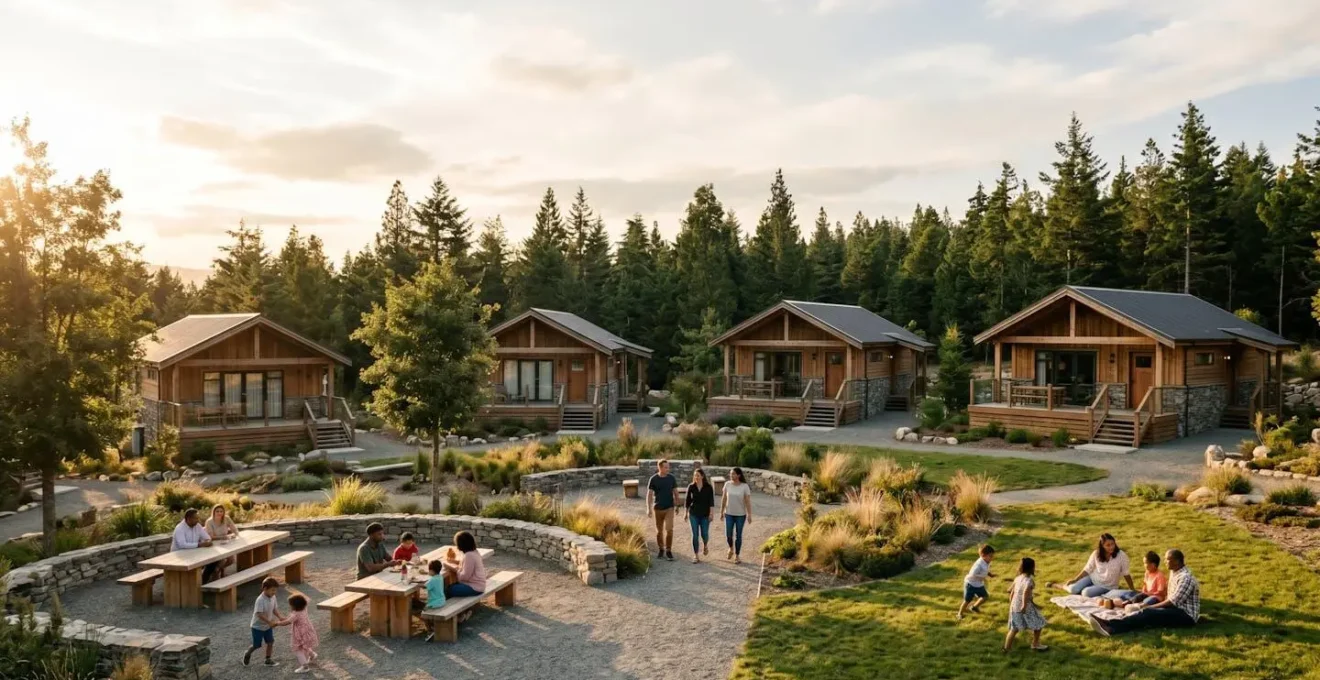
The visual above demonstrates this hybrid model perfectly: separate, private lodges provide sanctuaries for individual families, while the communal areas facilitate group gatherings without forcing constant togetherness. The following table formalizes this comparison, providing a clear framework for your decision.
| Priority Factor | Hotel (Multiple Rooms) | Vacation Rental (Shared Home) | Residential Park (Hybrid) |
|---|---|---|---|
| Budget Predictability | High – Fixed room rates, minimal surprises | Medium – Base rate clear but utility/cleaning fees vary | Medium – Base rate plus activity/facility add-ons |
| Shared Social Space | Low – Only public lobby areas | High – Entire shared living room, kitchen | High – Private unit plus communal facilities (pool, plaza) |
| Personal Privacy | High – Separate rooms with own amenities | Low – Shared bathrooms, kitchen conflicts possible | High – Separate units with own facilities |
| Kids’ Activities | Low-Medium – Limited on-site options | Low – Must arrange externally | High – Extensive on-site programs included |
| Service/Support | High – 24/7 front desk, concierge | Low – Contact single host, limited hours | Medium – Reception hours (typically 9am-6pm) |
| Multi-Family Logistics | Medium – Separate billing, staggered check-ins OK | Low – Single key, coordinated arrivals required | High – Individual units, centralized reception |
| Autonomy/Flexibility | Low – Fixed meal times if dining included | High – Complete control over schedule | High – Self-catering with optional dining |
Three Group Personas: The Optimal Lodging Match
To see this in action, consider three common group types. Persona 1, The Multi-Generational Family Reunion: The residential park is optimal. Grandparents can retreat to their quiet lodge while younger families use the pool. It provides the perfect balance of togetherness and private space. Persona 2, The Friends’ Weekend City Break: A hotel is the best fit. A prime urban location, 24/7 service, and separate rooms for privacy are paramount; no one wants to be stuck with cooking duties. Persona 3, Two Families Holidaying Together: A large vacation rental is ideal. The shared kitchen and living room become a social hub for parents and a play area for kids, offering the best value and fostering a strong sense of community.
By using this persona-based approach and evaluation framework, you can confidently navigate the overwhelming variety of options and select the accommodation model that is genuinely the best fit for your group’s specific needs, budget, and desired holiday style.