Travel by Profile
Choosing the right accommodation becomes dramatically easier when you understand one fundamental principle: different traveler profiles require fundamentally different solutions. A family of four traveling for a week has entirely different needs than a solo business traveler on a three-night trip, yet both often make the same mistake of applying a one-size-fits-all approach to hotel selection.
Profile-based travel planning recognizes that your traveler composition, trip duration, and specific requirements should drive every accommodation decision you make. This approach transforms hotel selection from overwhelming to systematic, ensuring you book spaces that genuinely serve your needs rather than forcing your needs to fit generic room offerings.
Understanding how to match accommodation types, room configurations, and service levels to your specific profile eliminates common frustrations, reduces costs, and dramatically improves travel satisfaction for everyone in your party.
Understanding the Profile-Based Accommodation Framework
Traditional hotel booking focuses on star ratings and location, but these metrics reveal little about whether a property will actually work for your specific situation. The profile-based framework evaluates accommodations through three critical lenses that determine compatibility.
Traveler Composition as Your Primary Filter
Your group makeup fundamentally determines which accommodation types will function effectively. A couple traveling alone can thrive in compact hotel rooms that would create immediate friction for families with teenagers. Business groups of thirty require completely different infrastructure than three-generation family reunions, even when both groups book the same number of rooms.
Composition includes not just headcount, but ages, relationships between travelers, and mobility requirements. Two adults and two children under five have radically different supervision needs than two adults with teenagers aged fourteen and sixteen, yet hotels often categorize both as « family of four. »
Duration Thresholds That Change Everything
The economics and practicality of accommodation types shift dramatically at specific duration thresholds. Stays under three nights typically favor traditional hotels for convenience. Between four and seven nights, serviced apartments often provide better value and comfort. Beyond two weeks, vacation rentals or extended-stay properties become increasingly advantageous both financially and functionally.
Duration affects more than cost. Longer stays require proper kitchens, separate living spaces, and laundry facilities that shorter trips can reasonably do without. A hotel room that feels perfectly adequate for three nights becomes oppressively confining by day ten.
Purpose Alignment and Service Expectations
Corporate event organizers require completely different service levels and reliability guarantees than leisure travelers. Tourist hotels optimize for different amenities than business-focused properties. Understanding these distinctions prevents booking properties that excel at serving profiles completely different from yours.
Choosing Accommodation Types for Different Traveler Profiles
Once you understand your profile, matching it to the right accommodation type becomes systematic rather than speculative. Each property type serves specific profiles exceptionally well while disappointing others predictably.
When Families Should Abandon Traditional Hotels
Traditional hotel rooms work well for families with very young children who sleep in cribs and require constant parental proximity. However, families with children over eight increasingly benefit from serviced apartments or aparthotels that provide separate sleeping areas and living spaces. The additional square footage reduces family friction dramatically during longer stays.
For stays exceeding five nights, serviced apartments typically offer superior value when you factor in meal costs. A functional kitchen allows families to prepare breakfasts and occasional dinners, reducing restaurant expenses that quickly exceed any nightly rate savings from budget hotels.
Corporate Travel and the Reliability Question
Business travelers face a fundamental choice between boutique properties offering personalized service and chain hotels providing standardized reliability. For critical corporate events involving clients or stakeholders, service consistency often outweighs unique character. A single service failure during a high-stakes client dinner can damage relationships that took years to build.
Conference organizers should conduct site visits during operational hours that mirror their event timing. A hotel that appears impeccably managed on Tuesday afternoon may reveal significant service gaps during weekend events when different staffing levels apply.
Extended Stays and the Serviced Apartment Advantage
Business travelers on project assignments lasting six weeks or longer benefit enormously from serviced apartments over extended-stay hotels. The presence of full kitchens, separate workspaces, and residential-style layouts prevents the psychological fatigue that develops when living indefinitely in traditional hotel rooms.
Extended-stay hotels occupy a middle ground, offering more amenities than serviced apartments but less residential comfort. They work well for four-to-eight-week stays but rarely provide the best solution for either shorter or longer durations.
Family Travel: Room Configurations That Actually Work
Room configuration mistakes cause more family travel dissatisfaction than any other single factor. Understanding the critical distinctions between family rooms, connecting rooms, and adjoining rooms prevents the common error of booking arrangements that separate family members across floors or create unwanted intimacy.
The Family Room Problem Nobody Discusses
Standard family rooms function adequately for families with young children who naturally go to bed early. However, these same configurations create significant friction when children reach ten or older and want different sleep schedules than parents. The acoustic environment of a single shared space means someone’s sleep inevitably suffers when different family members have incompatible routines.
Before booking family rooms, verify actual square footage rather than relying on property descriptions. Industry standards vary wildly, with some properties offering genuinely spacious layouts while others simply add a bunk bed to a standard double room and relabel it.
Connecting Rooms Versus Adjoining Rooms
These terms are frequently confused but describe fundamentally different configurations. Connecting rooms share an interior door allowing passage between spaces without entering the hallway. Adjoining rooms share a common wall but require corridor access to move between them. Connecting rooms provide substantially better supervision options for families with children.
The challenge with connecting rooms is their limited availability, typically representing only fifteen percent of hotel inventory. Request them at initial reservation rather than at check-in, and confirm the hotel provides a binding guarantee rather than a « we’ll try » commitment that often fails during high-occupancy periods.
When Adjoining Rooms Beat Family Suites
For families with children over eight, adjoining rooms frequently provide better value and functionality than family suites. They offer genuine privacy for both parents and children while maintaining proximity for parental peace of mind. Studies suggest this configuration reduces parental anxiety by eighty percent compared to booking separate rooms on different floors.
The critical distinction is verifying that « adjoining » truly means rooms sharing a common wall rather than simply being near each other. Some hotels use the term loosely to describe any rooms on the same floor, which provides minimal supervision benefit.
Corporate and Business Travel Considerations
Business travel, particularly for corporate events and client hospitality, requires a completely different evaluation framework than leisure trips. The stakes are higher, service failures carry professional consequences, and reliability often matters more than uniqueness.
Service Quality Audits Before Major Bookings
For significant corporate events, conducting pre-booking service audits protects against the service failures that damage client relationships. This means visiting properties unannounced during peak service hours to observe actual operations rather than staged tours. Check-in efficiency, restaurant service quality, and staff responsiveness during busy periods reveal far more than marketing materials.
Request references from companies that have hosted similar events at the property, and specifically ask about service recovery when problems occurred. Every venue encounters occasional issues; their response protocols matter more than claiming perfection.
The Boutique Versus Chain Debate
For a thirty-person executive conference, chain hotels typically offer superior risk management compared to boutique properties. Chains provide documented service standards, backup resources, and established escalation procedures when problems arise. Boutique hotels may deliver more memorable experiences when everything works perfectly, but often lack the systematic redundancy that corporate events require.
This calculation shifts for smaller groups or less critical events where relationship-building and unique atmosphere provide strategic value that outweighs standardization benefits.
Decoding Hotel Classifications and Tourist Hotels
Hotel classification systems, particularly the « tourist hotel » designation common in British licensing, create confusion because terminology varies significantly between jurisdictions and doesn’t always indicate what travelers assume.
What Tourist Hotel Classification Actually Guarantees
In British hotel classification systems, « tourist hotel » indicates licensing focused on leisure travelers rather than business clientele. This affects everything from breakfast timing to business center availability. Tourist hotels typically prioritize family-friendly amenities, tour coordination services, and leisure facilities over conference rooms and early breakfast service.
The classification doesn’t necessarily indicate quality level. A tourist hotel can range from budget to luxury; the designation describes primary market focus rather than service standards.
Tourist Class Versus Business Hotels
The infrastructure differences between tourist-focused and business-focused properties significantly impact whether they’ll serve your profile effectively. Tourist hotels often lack the early check-in flexibility and 24-hour business services that corporate travelers require, while business hotels frequently omit children’s activity programs and family-oriented dining that leisure travelers expect.
Understanding these distinctions before booking prevents the disappointment that occurs when properties optimize for profiles completely different from yours. Neither type is objectively better; they simply serve different needs.
Mastering Room Type Terminology
Room type vocabulary varies significantly across properties and countries, creating confusion that leads to booking spaces that don’t match expectations. Understanding the critical distinctions prevents the common frustration of requesting a « double room » and receiving twin beds.
The Double Room Terminology Problem
Across European countries, « double room » terminology varies dramatically. In some markets, it guarantees one double bed, while in others it simply indicates occupancy for two people and may contain twin beds. British usage typically aligns « double room » with a single large bed, but this convention doesn’t extend reliably across Continental Europe.
Always specify exact bed configuration requirements rather than relying on room type labels. Request « one king bed » or « two twin beds » rather than assuming « double » communicates your preference.
Studio, Junior Suite, and Suite Distinctions
These categories describe fundamentally different layouts with significant implications for different traveler profiles. Studio rooms provide open-plan sleeping and living areas within a single space. Junior suites offer partial separation, typically with a sitting area distinct from but not walled off from the sleeping zone. Full suites provide genuinely separate rooms.
For solo business travelers, studio rooms often provide better functionality than junior suites because the open layout creates better workspace options. Families, conversely, benefit enormously from the separation that true suites provide.
The Photography Misrepresentation Problem
Industry research suggests approximately seventy percent of room type photographs misrepresent actual layouts through wide-angle lenses, strategic furniture placement, or showing premium units while booking confirmations don’t guarantee the photographed configuration. Combat this by reviewing multiple guest photographs and specifically requesting square footage measurements rather than relying on visual impressions.
Accessibility and Inclusive Travel
Accessibility requirements introduce critical considerations that many properties address inadequately despite claiming compliance. Understanding how to verify genuine accessibility versus token regulatory minimums prevents the disappointments that occur when « wheelchair accessible » rooms still create barriers for sixty percent of users.
Beyond Basic Compliance Standards
Properties meeting minimum regulatory requirements under legislation like the UK Equality Act may still create practical barriers for many disabled guests. Basic compliance often addresses wheelchair width in doorways but ignores factors like bed height, bathroom fixture placement, and distance from accessible parking to room locations.
Before booking, ask specific questions about the precise elements critical to your needs rather than accepting general « accessible room » assurances. Request measurements for doorway widths, turning radiuses in bathrooms, and height specifications for beds and accessibility features.
The Ten Critical Pre-Booking Questions
Verifying genuine accessibility requires asking specific questions that reveal whether properties truly understand mobility needs:
- Exact doorway width measurements for entry, bathroom, and all interior doors
- Bathroom turning radius and shower/tub transfer specifications
- Bed height and space underneath for lift equipment if needed
- Visual alarm systems and communication accessibility for hearing-impaired guests
- Distance from accessible parking to room location
- Availability of portable equipment like shower chairs or raised toilet seats
- Staff training protocols for assisting disabled guests
- Emergency evacuation procedures for guests with mobility limitations
- Proximity of accessible rooms to elevators and main facilities
- Photographs of actual accessible rooms rather than standard units
Asserting Rights When Properties Misrepresent Features
When hotels misrepresent accessibility features, understanding your legal rights enables effective advocacy. Document all claims made during booking, photograph any discrepancies upon arrival, and immediately request alternative arrangements or refunds when advertised features don’t exist.
Properties have legal obligations to provide reasonable accommodations even when initial room assignments prove inadequate. Knowing these obligations prevents accepting unsuitable arrangements simply because « nothing else is available. »
Profile-based travel planning transforms accommodation selection from guesswork into strategy. By systematically matching your specific traveler composition, duration, and requirements to appropriate property types and room configurations, you eliminate the common frustrations that occur when travelers force their needs into generic solutions. The investment in understanding these distinctions pays dividends across every trip you take.
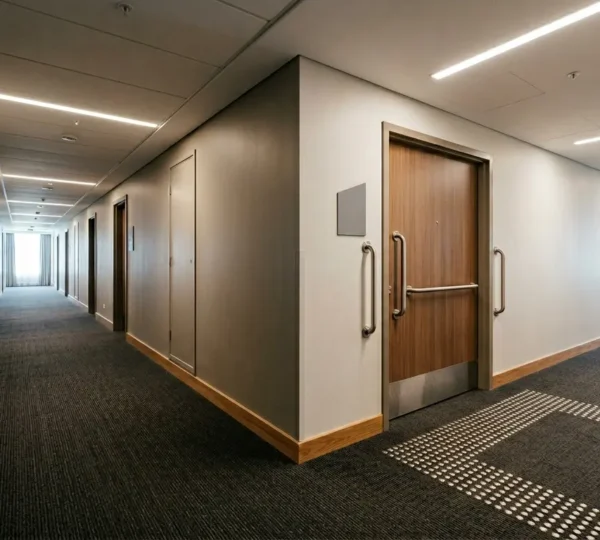
Verifying Genuine Accessibility Compliance Beyond Token Regulatory Minimums
The « wheelchair accessible » label on a hotel booking site is a starting point, not a guarantee of usability or dignity. True accessibility lies in specific, verifiable features (like bed type and transfer space) that go far beyond basic legal dimensions….
Lire la suite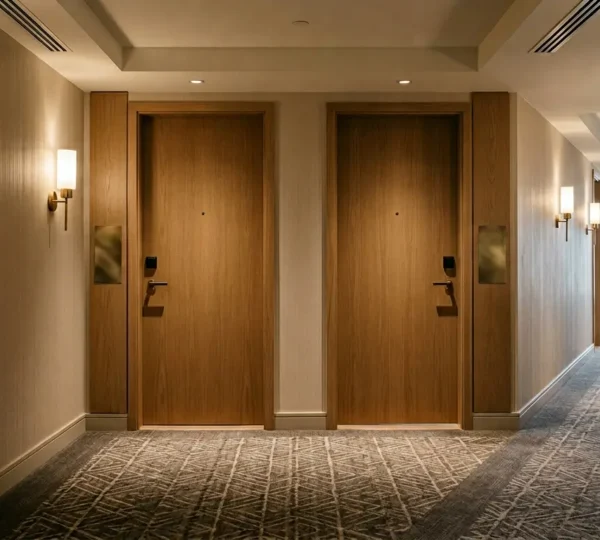
Hotel Proximity for Teens: A Parent’s Guide to Supervision Without Intrusion
The right hotel room setup is more than a bed; it’s a powerful tool for teaching teenagers trust and independence. Adjoining rooms offer acoustic and physical separation for older teens, fostering autonomy. Connecting rooms provide direct access, ideal for younger…
Lire la suite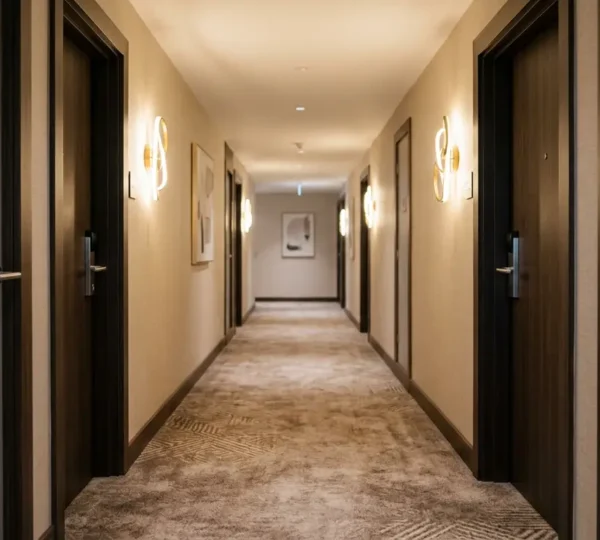
Securing Connecting Rooms: A Strategy for Family Privacy and Cohesion
Securing connecting rooms is less about asking nicely and more about understanding hotel systems and mastering spatial dynamics to create a deliberate balance of proximity and privacy. Connecting room availability is fundamentally an inventory management challenge for hotels, not a…
Lire la suite
Family Holiday Harmony: How to Choose a Hotel Room That Prevents Friction
Choosing the right hotel room for a family holiday isn’t about size or luxury; it’s about deploying strategic ‘configuration psychology’ to prevent conflict before it starts. A single, large family room often creates friction for children over 10 by eliminating…
Lire la suite
Beyond ‘Double’ or ‘Twin’: A Group Organiser’s Guide to Mastering Hotel Room Vocabulary
The key to successful group bookings isn’t memorising room names, but decoding the hotel’s operational language to differentiate between a room’s ‘category’ and its actual physical ‘configuration’. A « Double Room » in Germany often means two twin beds pushed together, while…
Lire la suite
Understanding What a « Tourist Hotel » Classification Really Guarantees for Leisure Visitors
The term « tourist hotel » has no legal weight in the UK; it is a marketing label that can be misleading for holidaymakers. Official UK ratings (from the AA or national tourist boards) are voluntary but based on rigorous, public criteria…
Lire la suite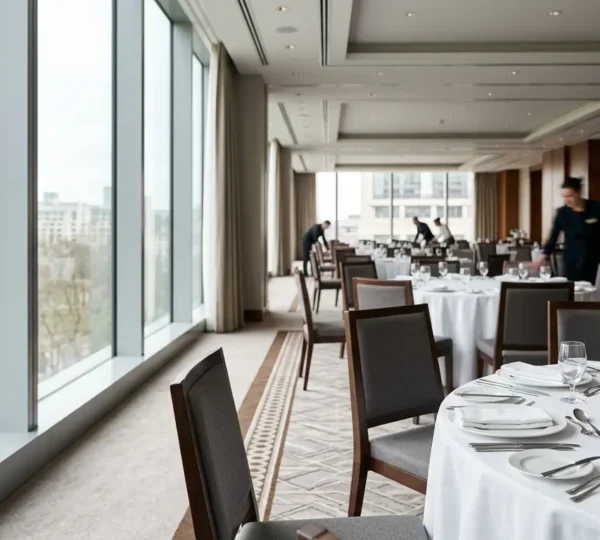
Flawless Guest Experience: A Guide to Vetting Hotels for High-Stakes Business Events
For high-stakes corporate events, standard hotel vetting is insufficient; protecting your reputation requires a diagnostic audit of a hotel’s underlying service culture before booking. Service excellence is not about amenities, but about proactive, anticipatory actions and robust communication protocols. The…
Lire la suite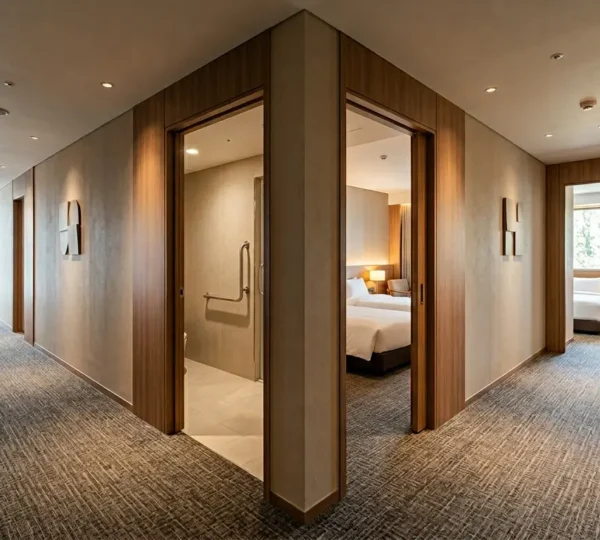
Selecting Optimal Room Configurations for Diverse Guest Compositions and Mobility Needs
Securing the right hotel room configuration is not a matter of luck; it is a verifiable process that you control. For families with older children, the need for privacy often makes two adjoining rooms a better, more harmonious choice than…
Lire la suite
A UK Group Travel Framework: How to Choose the Perfect Accommodation and Avoid Hidden Costs
Choosing group accommodation is less about the nightly rate and more about calculating the ‘Total Cost of Habitation’ to see the true price. Serviced apartments offer significantly better value and space than hotels for family stays of five nights or…
Lire la suite