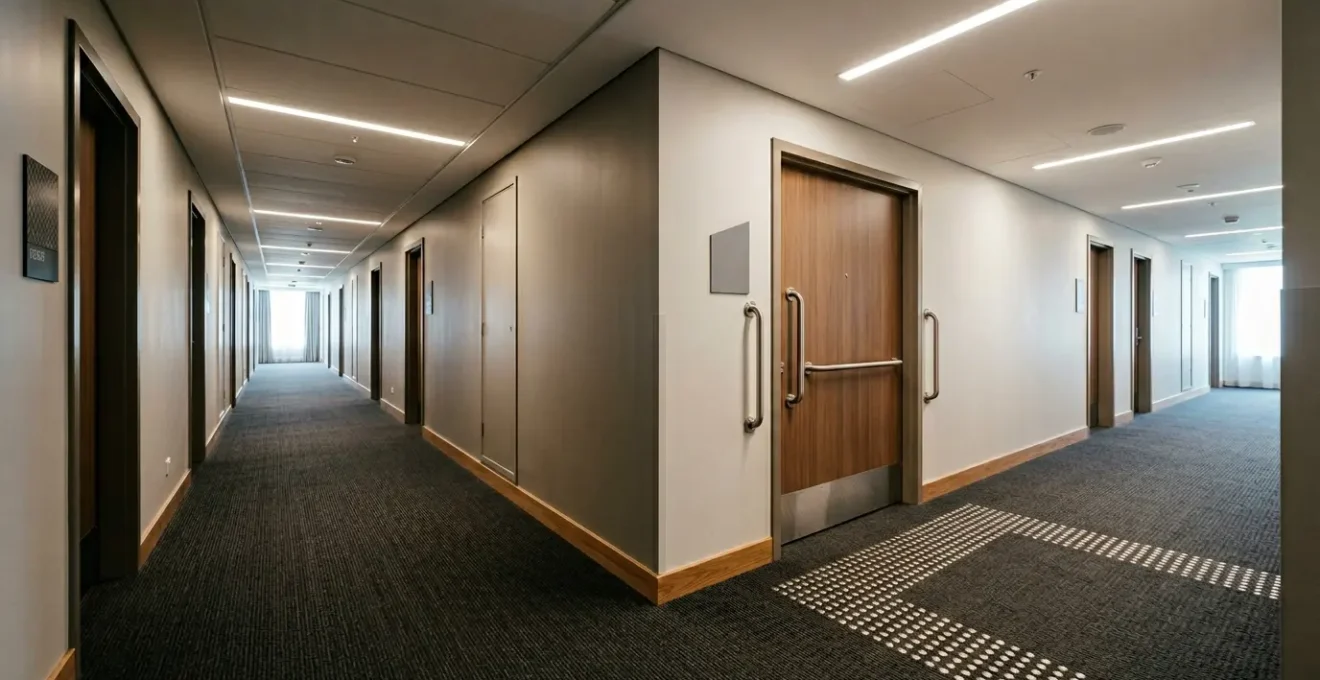
The “wheelchair accessible” label on a hotel booking site is a starting point, not a guarantee of usability or dignity.
- True accessibility lies in specific, verifiable features (like bed type and transfer space) that go far beyond basic legal dimensions.
- Empowerment comes from shifting from a hopeful booker to a forensic investigator, using a targeted script of questions before you commit.
Recommendation: Document every interaction and specific promise made by the hotel. This documentation is your primary tool for on-site negotiation and post-stay recourse if the hotel fails to deliver.
The promise of an “accessible” hotel room often evaporates the moment you roll through the door. For countless travellers with disabilities, the gap between a hotel’s advertised features and the functional reality is a source of profound frustration, indignity, and ruined trips. A room might technically meet a dimensional requirement—a wide doorway, a certain turning circle—yet be rendered completely unusable by a single, thoughtless design choice, like a trendy but immovable platform bed that blocks the use of essential hoist equipment. This is the accessibility gap: a chasm between checklist compliance and genuine, dignified usability.
Standard advice often falls short, suggesting you simply “call to confirm” or “look for the accessibility logo.” This passive approach is no longer sufficient. It’s time to abandon hope as a strategy and adopt a new framework: one of proactive, forensic verification and empowered self-advocacy. This guide is not about asking if a room is accessible; it’s about teaching you how to investigate and confirm that a room is *usable for you*. It’s about moving beyond the token minimums to demand the functional space and dignity you are legally and morally owed.
This article will provide you with the strategic tools to dismantle the uncertainty of accessible travel. We will explore why the “accessible” label so often fails, provide a specific script to verify a room’s usability before booking, clarify your legal rights under UK law, and outline a clear escalation framework for when a hotel misrepresents its facilities. This is your manual for demanding and securing true accessibility.
Summary: Verifying Genuine Accessibility Compliance Beyond Token Regulatory Minimums
- Why “Wheelchair Accessible” Hotels Still Create Barriers for 60% of Users
- How to Verify Accessible Rooms Through Ten Specific Pre-Booking Questions
- UK or European Accessibility Standards: Which Provides Better Disabled Access?
- The Accessible Room Isolation That Segregates Disabled Guests From Facilities
- How to Assert Legal Rights When Hotels Misrepresent Accessibility Features
- How to Request Accessible Hotel Rooms Meeting UK Equality Act 2010 Standards
- The Legally Required Accessibility Feature 20% of Budget Hotels Omit
- Knowing Which Essential Services Every UK Hotel Must Legally Provide
Why “Wheelchair Accessible” Hotels Still Create Barriers for 60% of Users
The term “wheelchair accessible” has become a dangerously misleading label in the hotel industry. It suggests a standard of usability that rarely exists in practice. For many travellers who use wheelchairs, arriving at a pre-booked “accessible” room only to find it functionally impossible is a grimly familiar experience. The core of the problem is the vast gulf between checklist compliance—meeting the bare minimum dimensional standards set by law—and functional usability, which accounts for the diverse needs of real people. A hotel can tick a box for a 32-inch doorway, but that says nothing about the heavy, immovable platform bed inside that prevents a guest from using their personal hoist for a safe transfer.
This failure is systemic. As Erick Sandoval, a wheelchair user, noted in an investigation 35 years after the ADA’s passage, “Right now, it often feels like ‘accessible’ is just a label, not a guarantee.” This sentiment is born from countless negative experiences. The very design trends meant to modernize hotels, like the shift to heavy platform or divan beds to streamline housekeeping, have actively created new barriers. These beds eliminate the critical under-bed clearance required for hoist equipment, a feature essential for many individuals with limited upper body strength, effectively trapping them despite the room otherwise meeting legal requirements.
This isn’t a niche problem. When a room is designed only to meet a list of measurements without considering the actual process of living in it, it fails a significant portion of its intended users. The result is a travel landscape where disabled guests are forced to develop complex vetting strategies, rely on physical assistance from family, or cancel trips altogether. The onus is unfairly placed on the individual to navigate a system that prioritizes the appearance of accessibility over its practical reality.
How to Verify Accessible Rooms Through Ten Specific Pre-Booking Questions
The only way to bridge the accessibility gap is to shift from a passive booker to a proactive investigator. You cannot rely on a website’s icon or a central booking agent’s assurances. You must speak directly with someone at the hotel who has physically been inside the specific rooms and can answer detailed, forensic questions. The goal is to move beyond simple “yes/no” queries and elicit descriptive information that allows you to build a mental model of the space and determine if it meets your unique functional needs.
This process requires a structured approach. Instead of asking “Do you have a roll-in shower?”, you should ask, “Can you describe the layout of the roll-in shower for me? What is the height of the threshold, where is the bench placed, and what is the distance from the toilet to the shower wall?” This forces the staff member to provide facts, not assumptions. Documenting every detail, including the name of the person you spoke with, is non-negotiable. This documentation becomes your evidence and leverage if the room does not match what was promised upon arrival. The image below represents the meticulous nature of this verification process, where every detail is noted and confirmed.

As you can see, this is not a casual inquiry. It’s a systematic process of evidence gathering. Requesting specific measurements, like bed height or the clear space beside the toilet, is critical. Asking for recent photos or even a brief video call can provide the visual confirmation that a hotel’s professional (and often misleading) marketing photos will not. This level of detailed inquiry signals to the hotel that you are a serious guest with specific, legally protected requirements.
Your Pre-Booking Investigation Checklist: 10 Critical Questions
- Direct Contact: Call the hotel’s front desk directly, not the central reservations line. Ask to speak with someone who is physically on-site and familiar with the accessible rooms.
- Open-Ended Questions: Ask descriptive questions. Instead of “Is there a roll-in shower?”, ask “Can you describe the roll-in shower’s layout, including the threshold height and bench position?”
- Request Specific Measurements: Ask for critical dimensions like bed height (floor to top of mattress), toilet height, and the clear floor space between furniture for turning.
- Confirm Bed Base Type: Explicitly ask: “Is the bed on a solid platform or divan base, or does it have clear space underneath for a hoist?” This is a frequent point of failure.
- Document Everything: Note the date, time, staff member’s name, and all specific information and promises made. This is your contract.
- Request a Virtual Inspection: Politely ask if a staff member can send you current smartphone photos of the bathroom and bed area or conduct a brief video call.
- Confirm on Arrival Day: Call the morning of your stay to re-confirm your name is assigned to the specific, verified accessible room to prevent it from being given away.
- Guarantee the Specific Room: When providing a credit card, clarify you are guaranteeing the specific accessible room type you have discussed, not just any “accessible” room.
- Query Room Location: Ask about the room’s proximity to elevators, the lobby, and other facilities to avoid being isolated at the far end of a corridor.
- Inquire About Amenity Access: Ask about the accessibility of other features you plan to use, such as pool hoists, restaurant table heights, or shuttle bus access.
UK or European Accessibility Standards: Which Provides Better Disabled Access?
Navigating hotel accessibility requires understanding the legal landscape, which in the UK involves a complex interplay between domestic law and broader European frameworks. The primary UK legislation is Part M of the Building Regulations, which works in concert with the Equality Act 2010. These frameworks differ significantly from the European Accessibility Act (EAA), creating a confusing environment for travellers. The key difference lies in their approach: the UK favours a prescriptive model, while the EU increasingly moves towards an outcome-based model.
The UK’s prescriptive approach, under Part M, dictates specific, measurable standards. For example, these building regulations require that new hotels designate 1 in 20 rooms (5%) as wheelchair-accessible, and they specify exact dimensions for things like corridor widths and ramp gradients. For travellers, the benefit of this model is clarity. It provides a concrete set of standards against which a hotel’s physical environment can be measured. The downside is its rigidity; a “one-size-fits-all” prescription may not meet the diverse needs of all individuals with disabilities.
In contrast, the European Accessibility Act focuses more on functional outcomes, especially in the digital realm. It mandates that by June 2025, all services, including hotel booking websites and apps, must be fully accessible according to Web Content Accessibility Guidelines (WCAG). This is a major step forward in eliminating digital discrimination, but the EAA is less specific about physical hotel room requirements, often leaving that to individual member states. This can lead to vagueness and allow for minimal compliance in the physical world. The following table breaks down the key distinctions.
| Framework Aspect | UK Part M (Prescriptive) | European Accessibility Act (Outcome-Based) |
|---|---|---|
| Regulatory Approach | Exact dimensional specifications (heights, widths, gradients) | Focus on functional outcomes and WCAG 2.1 AA digital standards |
| Hotel Room Requirement | 5% of total rooms must be wheelchair-accessible | Varies by member state; emphasizes digital booking accessibility |
| Digital Compliance | UK Equality Act 2010 requires ‘reasonable adjustments’ | EAA mandates full booking engine accessibility (June 2025 enforcement) |
| Pros for Travelers | Clear, measurable standards; easier to verify pre-booking | Broader disability inclusion; addresses digital discrimination |
| Cons for Travelers | Rigid specifications may not suit all individual needs | Vague outcome language can enable minimal compliance |
For a UK traveller, the most effective strategy is to leverage the strengths of both. Use the clarity of UK prescriptive standards to ask specific questions during verification, while being aware of the broader digital rights being enforced at a European level.
The Accessible Room Isolation That Segregates Disabled Guests From Facilities
A sinister and often overlooked form of discrimination is the physical and experiential isolation of disabled guests within a hotel. Even when a room itself is technically compliant, its location can create significant barriers and a profound sense of segregation. All too often, accessible rooms are clustered together in the most undesirable parts of a hotel—at the far end of a long corridor, on the ground floor next to a noisy service entrance, or as far as physically possible from the lobby, restaurant, and elevators.
This isn’t an accident; it’s a design choice that prioritizes the convenience of the hotel over the dignity of its guests. It effectively ghettoizes disabled visitors, imposing a “travel tax” in the form of extra time, effort, and energy required just to access the same facilities as non-disabled guests. As journalist Rebecca Theim documented during a cross-country trip with her mother, this isolation is a consistent and degrading reality.
Even that room, however, was the next-to-the-farthest from the hotel entrance. That meant I had to maneuver my mother’s wheelchair and our luggage over longer stretches than I would’ve if the room had been better located.
– Rebecca Theim, Next Avenue investigation
This segregation extends beyond mere location. It manifests as a comprehensive experiential exclusion. A hotel might have an accessible room but no pool hoist, rendering the pool useless. The breakfast buffet counters may be too high to reach from a seated position. The trendy high-top tables in the hotel bar may be completely inaccessible. Even in-room features, like bathrooms where the door cannot be closed without blocking the toilet, strip guests of basic privacy. Each of these failures communicates a clear message: you are an afterthought. Your experience does not matter as much as that of other guests. This is why the pre-booking verification process must include questions about the room’s location and the accessibility of the specific amenities you intend to use.
How to Assert Legal Rights When Hotels Misrepresent Accessibility Features
Discovering that your guaranteed “accessible” room is unusable upon arrival is a moment of crisis. How you respond in that moment can determine whether you salvage your trip or face a complete disaster. Asserting your rights is not about being confrontational; it’s about calmly and firmly holding the hotel accountable for the service agreement they entered into when they confirmed your booking based on specific, advertised features. Widespread failures in this area are common, as a recent Supreme Court case documents reveal, where one tester filed over 600 lawsuits for such misrepresentations.
Your power in this situation comes from your documentation. The notes, photos, and names you collected during the verification process are now your primary leverage. The key is to follow a structured escalation framework, starting with the simplest solution and progressing only as needed. Do not immediately accept “we’re fully booked” as an answer. The problem was created by the hotel’s failure to provide the service they sold, and the responsibility to solve it lies with them.
The three-tier escalation framework provides a clear path forward:
- Tier 1: Immediate On-Site Resolution. The moment you identify the issue, document it with photos on your phone. Go to the front desk, politely explain the discrepancy between what was promised (referencing your notes) and the reality, and request an immediate fix. This could be moving to another suitable accessible room or having maintenance address a simple issue (e.g., removing an obstructive piece of furniture).
- Tier 2: Managerial Negotiation. If front desk staff cannot or will not resolve the issue, ask for the duty manager. Present your evidence calmly: the booking confirmation, your notes from the verification call, and screenshots of the website’s accessibility claims. State clearly: “I booked this room based on these advertised features, which constitutes a service agreement. The room provided does not meet that agreement.” Request a partial refund, a complete room rate waiver, or relocation to a comparable, suitable hotel at their expense.
- Tier 3: Post-Stay Recourse. If the manager refuses a reasonable resolution, your final on-site step is to check out. Paying for a room you cannot use can be seen as accepting it. Relocate to a suitable hotel (at your own initial expense). Once you are settled, initiate a credit card chargeback for “services not rendered as described,” submitting all your documented evidence. Concurrently, file formal complaints with the hotel chain’s corporate headquarters, the booking platform (e.g., Booking.com, Expedia), and share your experience with disability rights organizations.
How to Request Accessible Hotel Rooms Meeting UK Equality Act 2010 Standards
Your request for an accessible hotel room is not a plea for a favour; it is the invocation of a legal right. In the United Kingdom, the Equality Act 2010 is the cornerstone of this power. This Act places a legal duty on all service providers, including hotels, to make “reasonable adjustments” for people with disabilities to ensure they are not placed at a “substantial disadvantage” compared to non-disabled people. This is a powerful legal principle that transforms your booking from a simple commercial transaction into a legally grounded request for accommodation.
The key to effectively leveraging the Equality Act is to be specific and to ground your request in the language of function, not just labels. Instead of asking for a generic “wheelchair-accessible room,” you must detail your actual functional requirements. This means translating your needs into concrete, measurable features. For instance, your request should sound less like “I need an accessible room” and more like: “Pursuant to the hotel’s duty to make reasonable adjustments under the Equality Act 2010, I require a room with the following features to ensure safe and dignified use: a roll-in shower with zero threshold and a fixed shower bench, a bed with a minimum of 6 inches of clear space underneath for hoist access, and a clear transfer space of at least 36 inches to one side of the toilet.”
The Equality Act 2010 mandates that service providers, including hotels, are legally obligated to make reasonable adjustments for individuals with disabilities.
– UK Equality Act 2010 legal framework, Hotel Contract Beds UK
Documenting this request in writing (via email) is crucial. It creates an undeniable record that the hotel was informed of your specific, legally protected needs before your arrival. This documentation is your shield. If the hotel accepts your booking after receiving this email, they are implicitly agreeing that they can meet these requirements. Failure to do so upon your arrival is not just poor customer service; it is a potential breach of their duties under the Equality Act, which significantly strengthens your position for on-site negotiation or post-stay recourse.
The Legally Required Accessibility Feature 20% of Budget Hotels Omit
While high-end hotels can have their share of accessibility failures, the budget hotel sector presents a unique and paradoxical challenge. On one hand, the standardization inherent in budget chains can lead to more consistent layouts. On the other, cost-cutting measures often lead to the omission of small but critical accessibility features. One of the most frequently omitted yet legally significant elements is the provision of adequate and correctly installed grab bars in the bathroom, particularly around the toilet and in the shower or bath area.
While it may seem like a minor detail, the precise height, positioning, and structural mounting of grab bars are critical for safe transfers and independent use of the facilities. They are not decorative; they are essential medical equipment. Yet, hotel ADA compliance audits consistently reveal that incorrect grab bar installation is one of the most common violations. This can include bars placed at the wrong height, bars that are not properly secured to the wall to support weight, or a complete lack of bars in the necessary locations, such as for side-transfers to the toilet.
This issue is compounded by the “platform bed paradox” that is especially prevalent in modernizing budget hotels. These chains install new, solid-base beds that prevent hoist use, while simultaneously marketing their rooms as “newly renovated” and accessible. The traveller is lured by the promise of a modern, compliant room, only to discover that the most fundamental need—getting in and out of bed—has been rendered impossible. These hotels may have the correct doorway width and turning radius but have completely failed on the functional requirements that transform a space into a truly usable environment. Other frequently omitted features include missing Braille on room signage, inaccessible front desk counters, and non-operational pool lifts that exist for compliance theatre but are never maintained for actual use.
Key Takeaways
- The “accessible” label is unreliable; true usability must be forensically verified with specific, functional questions before booking.
- Document every promise made by hotel staff, including names and dates. This documentation is your primary leverage in case of a dispute.
- Your rights are grounded in the Equality Act 2010. Frame your needs as functional requirements, not requests, and be prepared to escalate calmly and systematically if the hotel fails to deliver.
Knowing Which Essential Services Every UK Hotel Must Legally Provide
Underpinning the entire framework of accessibility is the legal principle of equivalent facilitation. The Equality Act 2010 doesn’t just mandate that hotels provide accessible features; it insists that disabled guests receive an experience of equivalent dignity, independence, and quality to that of non-disabled guests. This is a crucial concept that extends far beyond the four walls of your hotel room. It means a hotel cannot simply direct you to a service entrance through the kitchens and rubbish bins as an “alternative” to an inaccessible main entrance. They must provide an alternative that is equally dignified and convenient.
This principle applies to all essential services the hotel offers. If there is a hotel restaurant, there must be an accessible path to it and seating that accommodates a wheelchair user. If there is a swimming pool, a non-functional pool hoist is not a “reasonable adjustment”; a working one is. If parking is offered, designated accessible parking spaces must be provided and kept clear. This is not just good practice; it is a legal requirement. The economic power of this demographic is also significant; an old but indicative UK Travel Survey demonstrated that £1.8 billion was spent on travel by disabled people and their families back in 2009, a figure that has undoubtedly grown.
Knowing this gives you the power to reframe your expectations and your demands. You are not asking for special treatment. You are requiring the hotel to provide the same level of service and access that they provide to every other paying guest. This includes access to emergency evacuation procedures that account for your needs, staff who are trained to communicate respectfully, and information provided in accessible formats. The responsibility is on the hotel to anticipate and provide for these needs as a standard part of their operation, not as a last-minute, begrudging reaction to a complaint.
By arming yourself with this knowledge—by shifting from a passive consumer to an empowered, informed investigator—you reclaim control over your travel experiences. Stop hoping for accessibility and start demanding the functional usability and dignity that you are legally owed. Your next trip depends on it.