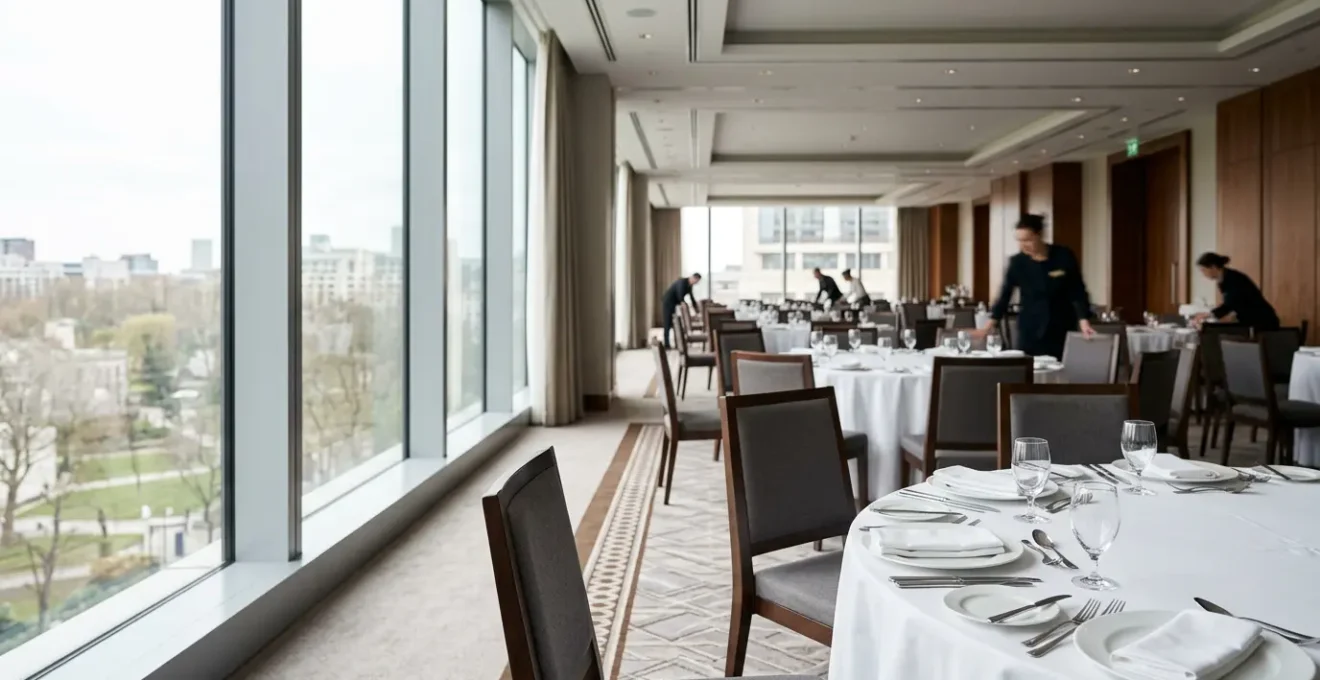
For high-stakes corporate events, standard hotel vetting is insufficient; protecting your reputation requires a diagnostic audit of a hotel’s underlying service culture before booking.
- Service excellence is not about amenities, but about proactive, anticipatory actions and robust communication protocols.
- The most damaging service failures stem from poor communication during a crisis, not the initial problem itself.
Recommendation: Shift from a checklist-based site visit to a diagnostic approach that includes unannounced inspections during peak hours and pre-arrival communication tests to gauge true operational discipline.
For a corporate event planner, securing a venue for a high-stakes business event is a nerve-wracking exercise in trust. The success of the event, and by extension, your company’s reputation with key clients, rests on the promise of flawless service delivery. A single misstep—a delayed check-in, a technical glitch, or an unresponsive staff member—can unravel months of planning and damage valuable business relationships. The pressure to get it right is immense, and the stakes are far too high for guesswork.
Many planners rely on the usual due diligence: combing through online reviews, conducting a pre-scheduled site visit, and checking off a list of standard amenities. While these steps are necessary, they are fundamentally inadequate for gauging a hotel’s true service capabilities under pressure. They often show you a polished performance, not the authentic operational reality. You see the stage, but you don’t get to inspect the backstage discipline that ensures the show runs smoothly when the unexpected occurs.
But what if the key to mitigating risk wasn’t just in verifying what a hotel *has*, but in diagnosing how it *behaves*? The real secret to ensuring a flawless event lies in moving beyond the surface-level inspection and adopting the mindset of a quality assurance specialist. This involves a diagnostic approach designed to stress-test a hotel’s service culture, its communication protocols, and its ability to perform under real-world pressure. It’s about proactively identifying the signals of genuine excellence—or the red flags of potential failure—long before you commit.
This guide will walk you through this advanced evaluation framework. We will explore how to conduct effective service audits, identify the most critical points of failure, and use simple but powerful tests to evaluate a hotel’s service standards from afar, ensuring your next corporate event is not just successful, but a reputation-enhancing triumph.
To help you navigate these crucial steps, this article details a complete framework for evaluating hotel service excellence. The following sections break down everything from understanding the nuances between hotel types to executing precise audit techniques.
Summary: A Guide to Vetting Hotels for High-Stakes Business Events
- Why Independently Owned Hotels Often Outperform Chains in Personalized Service
- How to Conduct Service Quality Audits Before Booking Corporate Hospitality Events
- Boutique Service or Chain Reliability: Which for a 30-Person Executive Conference?
- The Service Failure That Damages 80% of Corporate Client Relationships
- When to Schedule Site Visits to Observe True Hotel Service Standards
- How to Test Hotel Service Standards Before Your Arrival Using Three Simple Methods
- How to Spot Genuine Five-Star Quality Before Booking a Top-of-the-Range Hotel
- How to Evaluate True Service Excellence Before Committing to Premium Hotel Bookings
Why Independently Owned Hotels Often Outperform Chains in Personalized Service
When selecting a venue for a high-stakes corporate event, the choice often comes down to two models: the predictable consistency of a major chain versus the unique character of an independent hotel. While chains offer the security of standardized procedures and global loyalty programs, they can sometimes lack the flexibility and personal touch required for truly bespoke events. For planners aiming to create a memorable and highly personalized experience, independent hotels frequently hold a distinct advantage rooted in their service culture.
Unlike their larger counterparts, which operate on rigid, top-down protocols, independent hotels are built around a culture of individuality. Their business model depends on creating a unique identity and fostering direct relationships with guests. This translates into a service approach that is inherently more agile and responsive. Staff are often empowered with greater autonomy to make decisions on the spot, enabling them to accommodate unusual requests and resolve issues without escalating through a complex hierarchy. This empowerment is a key component of a proactive service culture.
This focus on the individual is not just a philosophy; it’s a strategic necessity. As one hospitality research group notes, this mindset is what sets them apart. This insight comes from a deep analysis of hospitality models by Mews Hospitality Research in their report on « Independent vs chain hotels: advantages and disadvantages »:
Independent hotels pride themselves on their uniqueness. They strive to offer a unique and authentic experience at every hotel. They focus on the individual guest, seeking to anticipate their needs, and going above and beyond when it comes to service.
– Mews Hospitality Research, Independent vs chain hotels: advantages and disadvantages
For a corporate planner, this means an independent hotel may be more willing and able to co-create a truly customized event. Whether it’s arranging a non-standard room layout, sourcing specific local cuisine, or handling last-minute changes with grace, their operational flexibility can be a decisive factor in delivering a flawless, high-touch experience that reflects positively on your organization.
How to Conduct Service Quality Audits Before Booking Corporate Hospitality Events
Moving beyond a simple site visit and adopting a formal service quality audit is the hallmark of a strategic event planner. A standard tour shows you the hotel’s best face—pristine rooms and smiling staff ready to present a rehearsed script. An audit, by contrast, is a diagnostic process designed to uncover the reality of a hotel’s operational discipline. It’s about systematically evaluating the processes, staff behaviours, and communication channels that underpin the guest experience, especially under pressure.
A true service audit is structured around evidence-gathering, not just observation. It starts with defining clear, measurable standards for your event. These standards should cover everything from check-in efficiency and concierge responsiveness to the cleanliness of common areas during peak times and the quality of F&B service. Instead of asking « Is the staff friendly? », an audit asks « Does the front desk acknowledge a waiting guest within 30 seconds, even when busy with another task? ». This shift from subjective feeling to objective metrics is crucial.
To effectively conduct these audits, you must test the system at its potential weak points. This involves both announced and unannounced components, allowing you to compare the « show » performance with the everyday reality. The goal is to collect data points that build a comprehensive picture of the hotel’s service culture.
This process is about more than just finding flaws; it’s about verifying capabilities. The image below illustrates the professional, detail-oriented nature of a service quality inspection, where every element of the guest journey is systematically evaluated.

As you can see, a professional audit replaces assumptions with verifiable evidence. It assesses whether the service promise is backed by robust systems and a well-trained team. By observing staff interactions, testing response times, and evaluating problem-solving skills, you gather the intelligence needed to predict how the hotel will perform when your clients are on-site and your reputation is on the line. This methodical approach is the ultimate form of risk mitigation.
Boutique Service or Chain Reliability: Which for a 30-Person Executive Conference?
The decision between a boutique hotel and a major chain becomes particularly critical when planning an event like a 30-person executive conference. This type of gathering demands a delicate balance. It requires the seamless technological and logistical support typically associated with chains, yet it also benefits from the high-touch, personalized environment where boutique hotels often excel. Making the right choice requires a clear-eyed assessment of your event’s specific priorities against the inherent strengths and weaknesses of each model.
Chain hotels offer a compelling proposition centered on risk mitigation and standardization. For an executive conference, this translates to reliable, enterprise-grade Wi-Fi, robust AV infrastructure, and large blocks of rooms available under a single corporate agreement. Their staff operate under well-defined Standard Operating Procedures (SOPs), ensuring a consistent, predictable level of service. However, this rigidity can be a drawback. Decision-making is often hierarchical, and requests for significant customization may be met with resistance or delays as approvals are sought.
Boutique hotels, on the other hand, trade on flexibility and personalization. With a smaller room count (typically 25-100 rooms), they offer an intimate atmosphere conducive to networking and high-level discussion. Staff are generally empowered to make decisions, allowing for a highly adaptive and client-centric service approach. A boutique venue is more likely to accommodate bespoke requests, from unique meeting space configurations to curated culinary experiences. The primary risk lies in variability—their technology infrastructure may not be as robust, and service quality can be dependent on a small team of key individuals.
The following table provides a clear breakdown of these trade-offs, helping you weigh the factors most critical to the success of your executive conference. This comparative analysis is based on established industry observations of accommodation types for business travel.
| Criteria | Chain Hotels | Boutique Hotels |
|---|---|---|
| Service Approach | Standardized, process-driven with high consistency | Personalized, flexible with culture of personality |
| Decision-Making Authority | Hierarchical approval required, rigid protocols | Empowered staff with wider authority radius |
| Contract Flexibility | Pre-negotiated master service agreements, less negotiable | Case-by-case evaluation, more flexible terms and attrition |
| Technology Infrastructure | Robust AV, reliable Wi-Fi, enterprise-grade systems | Variable, may require external vendors |
| Ideal For | High-complexity events, large groups, standardized needs | High-customization events, creative retreats, unique requests |
| Group Accommodation | Large room blocks, loyalty programs, corporate rates | Limited rooms (25-100), intimate atmosphere |
Ultimately, the choice is strategic. If your priority is flawless execution of a standard conference format with complex technical needs, a chain hotel is often the safer bet. If your goal is to create a unique, high-touch experience that fosters connection and creativity, a boutique hotel’s personalized approach and flexibility may be the deciding factor. The key is to align the venue’s core strengths with your event’s primary objectives.
The Service Failure That Damages 80% of Corporate Client Relationships
In the world of high-stakes corporate hospitality, even the most meticulously planned event can encounter a service failure. A projector might malfunction, a dietary requirement might be missed, or a room block could be mismanaged. While these issues are frustrating, they are not typically the cause of lasting reputational damage. The true poison to a corporate client relationship is not the initial problem, but the hotel’s response—or lack thereof. The single most corrosive service failure is a breakdown in communication during a crisis.
When something goes wrong, clients and event planners look for ownership, transparency, and a clear path to resolution. Silence, conflicting information from different staff members, or a visible lack of a coordinated response creates a sense of chaos and incompetence. This erodes trust far more quickly than the original service hiccup. Research has identified various types of service issues, but the handling of these issues is what truly defines the guest experience. For instance, one analysis points to research that identified 26 service problems grouped into six major categories, with staffing issues being the most serious. However, it is the response to these problems that leaves the most lasting impression.
The most effective hotels understand this and have implemented robust service recovery playbooks. They have pre-defined protocols for common failures and, most importantly, have trained their staff on how to communicate clearly and consistently when under pressure. They designate a single point of contact and empower that person to take ownership of the problem until it is resolved.
Case Study: The High Cost of Silence in Service Recovery
Research on hotel service failures reveals that the most damaging incidents are not the problems themselves, but the lack of clear communication during the crisis. Studies show that when hotel staff remain silent, disappear, or provide conflicting information during service disruptions, it significantly erodes trust with corporate clients. The absence of a clear, single point of communication and ownership during problems causes more relationship damage than the actual service failure. In response, leading hotels implement service recovery playbooks with predefined protocols, ensuring staff know exactly how to communicate and resolve issues before they escalate, turning a potential disaster into a demonstration of professionalism.
As an event planner, your due diligence must therefore include a « communication stress-test. » During your audit, pose hypothetical problems to managers. Ask them to walk you through their exact service recovery process for a specific scenario. Who takes the lead? How is the client kept informed? How are internal teams coordinated? A confident, clear, and process-driven answer is a strong signal of a mature service culture. A vague or hesitant response is a major red flag that the hotel is unprepared for real-world failures.
When to Schedule Site Visits to Observe True Hotel Service Standards
A scheduled site visit is an essential part of any event planner’s due diligence, but it often provides a curated, idealized view of the hotel’s operations. To gauge the true service standards, you must observe the hotel when it is not putting on a show for you. This means strategically timing your visits—both announced and unannounced—to coincide with moments of peak operational stress. It is during these high-pressure periods that a hotel’s real culture of service, discipline, and teamwork is revealed.
The most telling times to observe a hotel are during its busiest operational windows. The weekday morning check-out rush (typically 7-10 AM) is an excellent stress test. Watch the front desk: are staff flustered or calm? How do they manage queues? Are they able to provide personalized attention while maintaining efficiency? Observe the lobby and public areas: is housekeeping able to keep up with the increased foot traffic? These moments provide raw, unfiltered data on staff performance under pressure.
Another critical window is the mid-afternoon shift change (around 3-4 PM). This is a classic point of potential failure in any service operation. A well-managed hotel will have a seamless handover process, with clear communication between outgoing and incoming teams to ensure no guest requests are dropped. A disorganized shift change, on the other hand, can be a sign of poor management and a lack of operational discipline—a major red flag for any event that spans multiple days and shifts.
By scheduling your visits to witness these real-world scenarios, you can gather authentic insights into the hotel’s capabilities. The goal is to see beyond the polished presentation and understand how the team truly operates day-to-day.
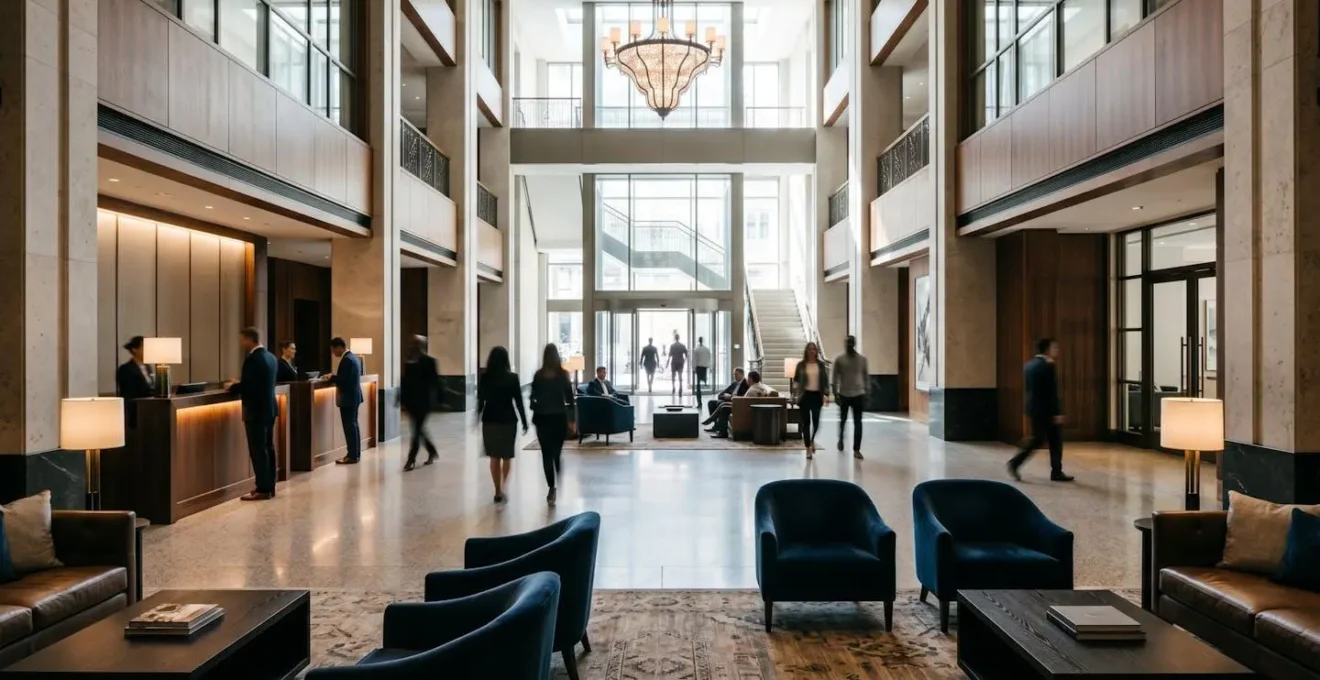
To implement this diagnostic approach, consider a multi-visit strategy. Use an official, scheduled tour for formal discussions and to see the event spaces. Then, conduct one or two separate, unannounced visits as a « mystery shopper » during the peak times identified. Sit in the lobby with a coffee, observe the flow, and even make a small request of the concierge or front desk to test their responsiveness. This combination of announced and unannounced visits provides the most complete and reliable picture of the service quality you can expect for your event.
How to Test Hotel Service Standards Before Your Arrival Using Three Simple Methods
While on-site inspections are invaluable, a significant part of your service audit can and should be conducted remotely, long before you ever set foot on the property. These pre-arrival tests act as a « service culture diagnostic, » providing early indicators of a hotel’s responsiveness, attention to detail, and overall customer-facing professionalism. By testing their communication channels with simple but specific requests, you can gather crucial data on how your team and your clients are likely to be treated. These methods are designed to reveal the authentic service attitude behind the marketing promises.
These tests are not about trying to catch the hotel out; they are about establishing a baseline for their standard of care. A hotel that excels at these small, remote interactions is highly likely to have the robust systems and guest-centric culture necessary to handle a high-stakes corporate event. Conversely, a hotel that fails these simple tests is waving a major red flag. If they cannot handle a straightforward email query or a simple pre-arrival request professionally, it signals a deeper lack of operational discipline that could jeopardize your event.
Implementing these tests is straightforward and requires minimal effort, yet yields disproportionately valuable insights. They allow you to assess multiple dimensions of the hotel’s service apparatus, from the speed and quality of their digital communication to the helpfulness and problem-solving skills of their front-line staff. Consider the following plan a core part of your pre-booking due diligence.
Your Action Plan: Three Pre-Arrival Service Audits
- The Pre-emptive Request Test: One week before a planned site visit, call the front desk or concierge with a specific, slightly unusual but reasonable request (e.g., « Could you recommend and book a restaurant for four that has a private dining area and can accommodate a vegan guest? »). Evaluate the quality, speed, and helpfulness of the response to gauge their real-world service attitude and problem-solving skills.
- The Digital Body Language Assessment: Send a detailed query with two to three specific questions through the generic contact form on the hotel’s website. Analyse the response time (is it within 24 hours?), the level of personalization (did they use your name?), and the thoroughness of the reply (did they answer all your questions directly?). This establishes their baseline for customer-facing communication standards.
- The Social Media Response Audit: Locate a recent negative comment or question on one of the hotel’s primary social media platforms (like Twitter or Facebook). Evaluate whether they responded publicly, how quickly they replied, and the tone they used. A public, professional, and helpful response to criticism is a strong signal of a mature and confident service culture.
Each of these interactions is a data point. A swift, personalized, and helpful response across all three channels is a powerful indicator of a well-oiled service machine. Inconsistent or poor responses should be considered a serious warning that the hotel’s service promise may be only skin-deep.
How to Spot Genuine Five-Star Quality Before Booking a Top-of-the-Range Hotel
The term « five-star » is often associated with luxurious amenities, opulent decor, and a prestigious address. For a seasoned corporate event planner, however, these are merely table stakes. True five-star quality is not defined by what a hotel *has*, but by how it *acts*. It is found in the subtle, often invisible, layer of anticipatory service—the ability of the staff to recognize and fulfill needs before they are ever voiced. Spotting these indicators of a proactive service culture is the key to distinguishing genuine luxury from mere expensive decoration.
Reactive service is easy to find: you ask for something, and you get it. This is the standard at any competent hotel. Anticipatory service is a different paradigm entirely. It’s the concierge who, after you mention having a free evening, has already prepared a short-list of restaurant recommendations based on the cuisine you discussed earlier. It’s the meeting room attendant who discreetly refills water glasses without being asked and without interrupting the flow of conversation. These micro-actions signal a team that is not just trained, but is deeply attuned to the guest’s context and needs.
This level of service is a powerful driver of guest satisfaction and loyalty, which is why a great past stay is a strong predictor of future bookings. Data shows that for 62% of travelers, a great past stay is the primary driver for repeat business. For corporate clients, this principle is even more critical, as a flawless experience reflects directly on the hosting company. As experts in the field note, the difference between good and great is this very proactivity.
True luxury isn’t just reacting well; it’s anticipating needs. Anticipatory service indicators include water glasses in meeting rooms discreetly refilled without asking, and concierges offering to make dinner reservations after mentioning a free evening. These micro-actions signal a proactive service culture.
– Hospitality Industry Quality Standards, Hotel Service Quality: Strategies to Elevate Your Standards
During your audit and site visits, your task is to hunt for these signals. Observe staff interactions with other guests. Look for evidence of empowerment—do staff members take ownership of requests, or do they pass them off? Pay attention to the details. Are the public spaces not just clean, but impeccably maintained throughout the day? These are the fingerprints of a genuine five-star operation, and they are far more telling than the thread count of the sheets or the brand of the toiletries.
Key Takeaways
- True due diligence for high-stakes events requires a diagnostic audit of a hotel’s service culture, not just a checklist-based site visit.
- The most damaging service failures stem from poor communication and a lack of ownership during a crisis, not the initial problem itself.
- Observing a hotel during peak operational hours (e.g., morning check-out, shift changes) provides an unfiltered view of its true service discipline under pressure.
How to Evaluate True Service Excellence Before Committing to Premium Hotel Bookings
In the final analysis, evaluating a hotel for a high-stakes business event is an exercise in comprehensive reputation management. Your decision transcends a simple booking; it is a strategic choice that directly impacts your company’s image and its relationship with key clients. Therefore, your evaluation process must be as rigorous and sophisticated as the event itself. It requires synthesizing all the data points—from pre-arrival communication tests to on-site stress tests—into a holistic judgment of the hotel’s capacity for true service excellence.
This means moving beyond the conventional wisdom of relying solely on past performance. While it’s true that for many travelers, online reviews are a primary factor—with studies showing that 81% of users read reviews online before booking—a professional planner must adopt a more forward-looking, predictive methodology. A hotel’s past rave reviews for leisure travelers may not translate to success for a complex corporate event with demanding logistical and technical requirements. Your job is to assess future capability, not just past sentiment.
The financial stakes for the hotel itself underscore why this level of scrutiny is warranted. For many premium properties, events are not an ancillary service but a core revenue driver. A successful event portfolio is a critical component of their business model, elevating the importance of flawless execution.
The Strategic Importance of Flawless Event Execution
Industry analysis reveals that successful events can contribute a significant portion—often between 25% to 40%—of a hotel’s total revenue through strategic room bookings, catering packages, and venue rentals. This elevates event management from a support service to a core business pillar, making the quality of execution critically important. Hotels that deliver flawlessly on high-stakes business events not only secure immediate revenue but also build the reputation needed to drive future corporate partnerships. This financial reality highlights why thorough, pre-booking evaluation of service excellence is an essential, non-negotiable step for corporate event planners.
Committing to a premium hotel booking should be the final step of a rigorous diagnostic process. You should have a clear, evidence-based assessment of the hotel’s communication protocols, its staff’s level of empowerment, its performance under pressure, and its culture of anticipatory service. By replacing assumptions with data and a curated tour with a genuine audit, you transform the venue selection process from a gamble into a calculated, strategic decision that safeguards your event and your corporate reputation.
Begin implementing this diagnostic framework on your very next project. By shifting your focus from amenities to behaviours and from checklists to stress-tests, you can secure not just a venue, but a true partner in delivering a flawless and reputation-enhancing corporate event.