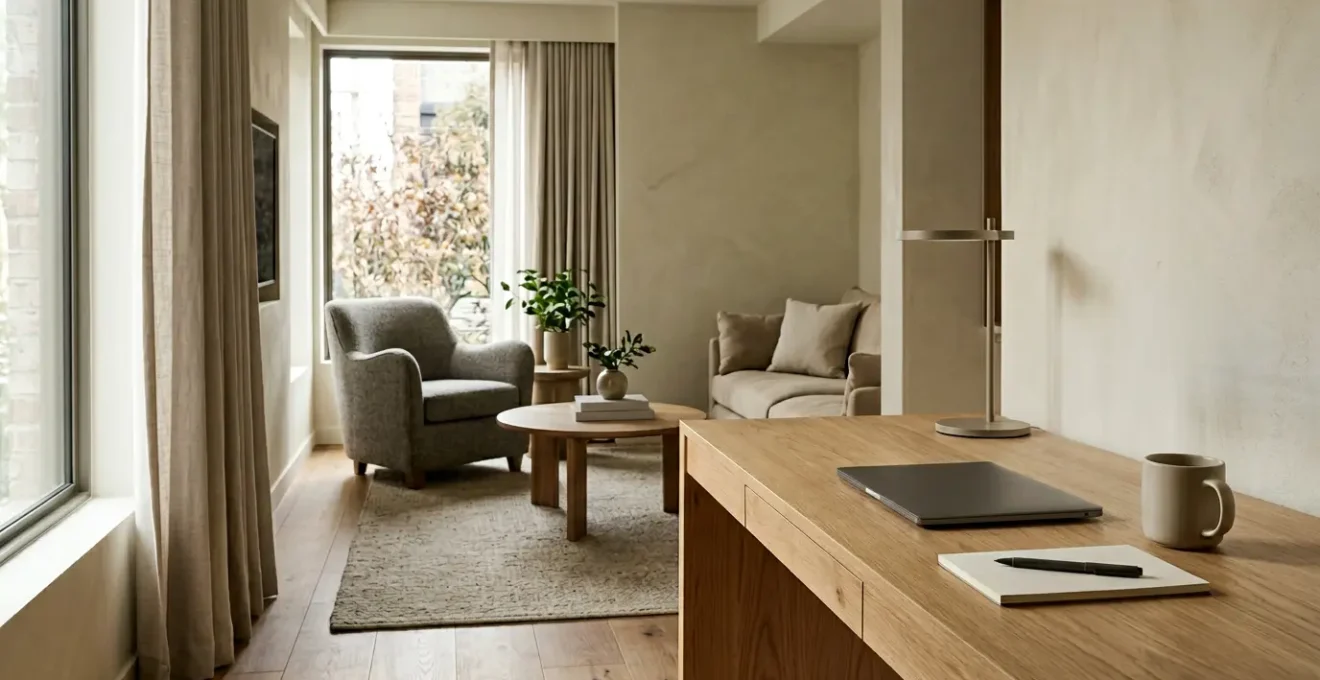
For stays exceeding a week, the hidden costs and logistical friction of hotel services can erode budgets and productivity. The solution is to reframe the hotel from a temporary room into an operational base.
- Strategically managing services like laundry and housekeeping can reduce ancillary spending by over 30%.
- Direct negotiation and service bundling create a value partnership with the hotel, unlocking rates and amenities not available online.
Recommendation: Before any extended stay, conduct a pre-arrival service audit and propose a bundled package that aligns hotel amenities with your specific operational needs.
For the UK business traveller on a month-long project, a hotel is not a holiday destination; it is a temporary operational base. Yet, many professionals treat it like the former, passively accepting standard services and rates. This approach leads to predictable friction: spiralling laundry costs, inconvenient housekeeping schedules, and a steady drain of time and money on logistical minutiae. The standard advice to “book in advance” or “join a loyalty program” barely scratches the surface of the inefficiencies built into extended hotel stays.
The core problem is a misalignment of perspectives. Hotels are structured for short-term, high-turnover guests, while the long-stay professional requires residential-quality support infrastructure. Bridging this gap requires a strategic shift in mindset. Instead of viewing services as optional extras, we must treat them as critical components of a productive work environment. This involves auditing their real cost, negotiating their delivery, and bundling them into a coherent, cost-effective package.
But what if the key to unlocking significant savings and productivity gains wasn’t just about getting a lower nightly rate, but about fundamentally restructuring the service agreement with the hotel? This guide moves beyond superficial tips to provide an operational framework for managing your extended stay as a strategic asset. We will explore how to dissect service costs, negotiate like a procurement manager, and make informed decisions between different accommodation models. By the end, you will have a clear roadmap to transform your hotel from a recurring expense into a highly efficient and productive home base.
This article provides a structured approach to mastering the operational side of long-term hotel living. We will break down the essential services, from laundry and housekeeping to fee structures and accommodation types, providing actionable strategies for each.
Summary: Mastering the Logistics of Long-Term Hotel Productivity
- Why Laundry Services Become Critical for Hotel Stays Exceeding Five Nights
- How to Negotiate Weekly Housekeeping Rates for Month-Long Business Stays
- Serviced Apartment or Extended-Stay Hotel: Which for a Six-Week Project?
- The Accommodation Service That Incurs £200 in Unexpected Monthly Charges
- How to Bundle Accommodation Services for 30% Cost Savings on Long Stays
- Why Serviced Apartments Beat Hotels for UK Families Staying Over Five Nights
- Why Same-Day Dry Cleaning Is Impossible at 70% of British Hotels
- Preserving Executive Presentation Through Reliable Garment Care While Traveling
Why Laundry Services Become Critical for Hotel Stays Exceeding Five Nights
On a short trip, laundry is an afterthought. On a multi-week assignment, it becomes a significant line item and a logistical challenge. The convenience of in-house valet or dry-cleaning services comes at a steep premium. While costs vary, an analysis of industry data shows a stark difference: where self-service can cost £2-£7 per load, hotel valet dry cleaning can easily reach £10-£25 per single item. For a business professional needing to maintain a rotation of shirts, suits, and other attire, these costs can accumulate to hundreds of pounds over a month.
This transforms garment care from a simple chore into a strategic decision. The choice is no longer just about clean clothes; it’s a calculation of cost, time, convenience, and risk. Each option presents a different operational trade-off. In-house hotel services offer maximum convenience and accountability—any issues are handled by the front desk—but at the highest cost. Off-site contractors used by the hotel offer a slight discount but introduce rigid cut-off times and 48-hour turnarounds.
Third-party laundry apps present a more budget-friendly alternative, often 30-40% cheaper, but require personal coordination and introduce a higher risk of lost or damaged items with limited recourse. The most economical option, a local laundromat, demands the largest personal time investment for transport and service. For the productive professional, this time is often more valuable than the money saved. Therefore, an effective long-stay strategy requires a conscious choice based on your project’s budget and time constraints, rather than a default reliance on the most convenient, expensive option.
How to Negotiate Weekly Housekeeping Rates for Month-Long Business Stays
For a long-term guest, daily housekeeping is often an unnecessary intrusion and an inefficient use of hotel resources. A room occupied by one business professional for a month does not require the same daily deep clean as a room turned over to new guests every 24 hours. This discrepancy presents a clear opportunity for negotiation, reframing the conversation from a simple discount request to a mutually beneficial operational adjustment.
The key is to approach the hotel manager not as a haggler, but as an operational partner. By proposing a reduced, predictable cleaning schedule (e.g., one full service per week), you offer the hotel a valuable asset: staffing predictability. This allows them to optimise housekeeping schedules and allocate resources more effectively. In exchange for this efficiency, you can reasonably request a rate adjustment, a fixed monthly food and beverage (F&B) credit, or another concession.

A powerful tactic is to formalise the arrangement. Offering to sign a daily service waiver at check-in contractually frees the hotel from its daily obligation, providing a solid justification for a discount. This proactive, collaborative approach is far more effective than a last-minute request at the front desk. It positions you as a considerate, long-term partner rather than a demanding guest, paving the way for a more favourable and productive relationship throughout your stay.
Your Action Plan: Securing a Custom Housekeeping Agreement
- Pre-Arrival Contact: Email the hotel manager 7-14 days before check-in to discuss customising your extended-stay housekeeping service.
- Frame for Efficiency: Propose a fixed weekly cleaning slot, highlighting how this helps them optimise staff schedules, and ask what rate adjustment they can offer in return.
- Define the Scope: Specify your exact needs, such as a weekly linen change and kitchenette clean, while waiving daily towel replacement to justify a discount.
- Formalise with a Waiver: Offer to sign a written waiver for daily service, creating a contractual basis for a percentage rate reduction or a fixed monthly F&B credit.
- Bundle the Deal: Combine the housekeeping negotiation with other long-term commitments (e.g., parking, guaranteed F&B spend) to create an attractive, comprehensive package.
Serviced Apartment or Extended-Stay Hotel: Which for a Six-Week Project?
When an assignment extends beyond a month, the choice between a serviced apartment and an extended-stay hotel becomes paramount. A surface-level comparison focuses on space and kitchen facilities, but a true operational decision requires a deeper look at the Total Cost of Occupancy (TCO) and the less tangible factors of service accountability and professional environment.
Serviced apartments often appear more cost-effective on a nightly basis and provide a more residential feel. However, the TCO can be complicated by security deposits (often equivalent to a month’s rent), one-time cleaning fees, and potential surcharges for utilities. Furthermore, the initial cost and time required to stock a kitchen from scratch can add a significant upfront burden. The hotel model, while potentially having a higher nightly rate, includes most of these costs and offers a single point of contact—the front desk—for any and all issues, from a faulty Wi-Fi connection to a plumbing emergency. In an apartment, resolving these issues can mean coordinating with multiple parties like the landlord, an internet provider, and building management, a significant drain on a busy professional’s time.
A comparison of estimated costs for a six-week stay illustrates this difference clearly. While the base rate of an apartment may be lower, additional fees and setup costs can narrow the gap considerably.
| Cost Factor | Serviced Apartment | Extended-Stay Hotel |
|---|---|---|
| Nightly/Monthly Rate | Often includes weekly/monthly discounts | Average rates with limited long-term discounts |
| Security Deposit | Often required (equivalent to 1 month rent) | Credit card hold only (£20-£200/night) |
| Cleaning Fees | One-time exit cleaning fee (£80-£160) | Included or weekly housekeeping option |
| Utilities | May incur surcharges for excessive use | Fully included in rate |
| Kitchen Setup Cost | £120-£250 to stock from scratch (groceries, basics) | Kitchenette pre-equipped, minimal setup |
| Parking | Typically included in flat rate | Often £30-£50 daily charge in urban locations |
| Internet/WiFi | Usually included | May require upgrade fee (£8-£12/day) |
| Service Accountability | Fragmented (landlord, internet provider, building management) | Single point of contact (front desk) for all issues |
Case Study: Professional Isolation vs. Community Networking
Beyond cost, the social environment is a critical factor. Serviced apartments offer privacy and a sense of local integration, but business professionals on long assignments often report feelings of isolation. In contrast, extended-stay hotels are increasingly designed to foster community. Communal areas like guest lounges, lobby bars, and shared gyms provide low-friction opportunities for professional networking. These built-in social spaces can be invaluable for reducing the psychological strain of a long solo assignment and can lead to spontaneous professional connections. The trade-off is clear: apartments offer autonomy and space, while hotels facilitate productivity and combat isolation.
The Accommodation Service That Incurs £200 in Unexpected Monthly Charges
One of the most significant financial risks in extended stays, particularly in the US market, is the mandatory “resort fee” or “destination fee.” While less common in the UK, the model of ancillary charges is a growing trend. These fees are presented as covering amenities like Wi-Fi, gym access, or local calls, but are in reality a method of non-transparent pricing. A study of the US market found that the average resort fee is $42.41 per day, adding a staggering 11% to the advertised room cost. For a month-long stay, this can easily amount to over £1,000 in unexpected charges.
The danger for the long-stay business traveller is that these fees are often poorly disclosed during the booking process, particularly on third-party websites. A guest might budget based on a negotiated nightly rate, only to be faced with a significantly inflated bill at checkout. In the UK, this might manifest as mandatory “service charges,” “amenity fees,” or overpriced “premium” Wi-Fi that is essential for work.
The only effective defence is a proactive audit before finalising a booking. This means bypassing the booking platform’s generic information and contacting the hotel manager directly with a request for a complete, itemised breakdown of all mandatory charges. Specifically asking whether any daily fees can be waived or reduced for a long-term guest puts the hotel on notice and forces transparency. Securing this information in writing creates a predictable budget and eliminates the risk of costly checkout surprises, ensuring your Total Cost of Occupancy is known and controlled from the outset.
A diligent pre-stay audit is not confrontational; it is a standard business practice to ensure budget predictability. Your script should be firm, polite, and specific, requesting a written breakdown of all potential charges to prevent any misunderstanding. This simple step can save hundreds of pounds and is a cornerstone of managing your stay as a professional operation.
How to Bundle Accommodation Services for 30% Cost Savings on Long Stays
The single most powerful negotiation strategy for a long-term stay is to shift the conversation from price to value. Instead of haggling over the nightly rate, the goal is to create a bundled “all-inclusive professional package.” This approach leverages your long-term commitment as a significant asset, offering the hotel guaranteed revenue in exchange for a consolidated, cost-effective rate that includes all your operational necessities.
The process begins by identifying the hotel’s low-marginal-cost assets. These are services that cost the hotel very little to provide once the infrastructure is in place: premium high-speed internet, parking spaces in an under-utilised garage, or breakfast during off-peak hours. Your proposal should be to commit to a guaranteed multi-week stay in exchange for a single flat rate that includes the room plus these valuable, low-cost amenities. This reframes the negotiation as a value partnership, where you provide predictable occupancy, and the hotel secures a long-term booking by providing enhanced value, not just a discount.

According to industry analysis, this proactive approach can yield significant results, with some studies showing that booking in advance can unlock rates up to 13 percent lower, with even greater potential for bundled packages. Another powerful bargaining chip is your on-site Food & Beverage (F&B) spend. By calculating a realistic monthly dining budget and committing to a minimum spend at the hotel’s restaurant, you create another stream of guaranteed revenue, which can be exchanged for a reduced room rate or a complimentary suite upgrade.
For independent hotels without formal corporate rate structures, you can even request that they treat your individual long-term stay as equivalent to corporate volume. Emphasise that your guaranteed 30-night booking provides more predictable revenue than 15 separate one-night corporate bookings. This strategic bundling transforms a simple transaction into a sophisticated, mutually beneficial agreement.
Why Serviced Apartments Beat Hotels for UK Families Staying Over Five Nights
While extended-stay hotels offer significant advantages for the solo business traveller, the equation shifts dramatically for families. For any UK family trip lasting more than five nights, the serviced apartment model becomes the overwhelmingly superior option, primarily due to two factors: space and food costs. Corporate housing analysis indicates that serviced apartments offer 30-50% more space than a typical hotel room for a rate that is often 30-50% lower. This extra space is not a luxury but a necessity for families, providing separate living and sleeping areas that prevent the claustrophobia of sharing a single hotel room for an extended period.
The most significant financial advantage, however, comes from the full kitchen. The cost of dining out for every meal with a family of four in the UK is astronomical. Even a modest breakfast can cost £40-£60, with daily food expenses easily exceeding £150. A serviced apartment allows for self-catering, transforming this massive expenditure into a manageable grocery bill. By shopping at a local Tesco or Sainsbury’s, a family can prepare their own breakfasts and pack lunches, reserving restaurant meals for special occasions.
A conservative cost analysis reveals the staggering difference. A week of restaurant dining for a family of four can approach £1,000, whereas a self-catering budget for the same period would be closer to £250. This represents a potential saving of over 75% on food costs alone.
| Scenario | UK Restaurant Dining (Family of 4) | Serviced Apartment Self-Catering | Weekly Savings |
|---|---|---|---|
| Breakfast (7 days) | £105 | Groceries (Tesco/Sainsbury’s) = £35 | £70 |
| Lunch (7 days) | £336 | Supermarket meal prep = £70 | £266 |
| Dinner (7 days) | £504 | Home cooking with delivery = £120 | £384 |
| Snacks & Beverages | £56 | Bulk grocery purchase = £25 | £31 |
| Total Weekly Cost | £1,001 | £250 | £751 (75% savings) |
Why Same-Day Dry Cleaning Is Impossible at 70% of British Hotels
For an executive on a long assignment, a stained tie or a wrinkled suit before a critical meeting is a logistical crisis. The expectation is that a hotel’s “same-day” dry cleaning service will provide a quick solution. However, in the vast majority of British hotels, this is an operational impossibility. The reason lies not in poor service, but in the economic and regulatory realities of the UK hospitality industry.
The UK Hotel Outsourcing Model
Most UK hotels, apart from a few top-tier 5-star establishments in London, do not have on-site dry cleaning facilities. The high cost of labour in the UK, combined with stringent environmental regulations on dry cleaning chemicals like perchloroethylene (PERC), makes operating an in-house plant economically unfeasible. Consequently, almost all hotels outsource their garment care to a single, large off-site contractor. These contractors operate on strict, consolidated pick-up schedules, typically making one collection run between 8 AM and 10 AM. If a guest misses this narrow window, their items will not be collected until the following day, automatically resulting in a 48-hour turnaround. This outsourcing model is efficient for the hotel, but it completely removes any service flexibility for the guest.
This operational reality is compounded by high costs. Even when the service is available, it is priced per item. Analysis of UK hotel pricing shows charges of approximately £2.50 for a t-shirt and up to £4.50 for a dress, with even socks and underwear incurring charges of around £1 per pair. This means that a business traveller who relies on the hotel for garment care is subject to both inflexible timelines and punitive pricing.
Understanding this structural limitation is crucial. It means that the promise of “same-day service” is often a marketing statement rather than an operational guarantee. The prudent professional must assume that a 48-hour turnaround is the standard and cannot rely on the hotel for last-minute garment emergencies. This necessitates a shift towards self-sufficiency and preparation.
Key Takeaways
- Treat your hotel as an operational base, not a holiday spot, by actively managing its services.
- Negotiate service bundles (parking, Wi-Fi, F&B) rather than just the nightly rate to achieve the best value.
- Always conduct a pre-stay audit to uncover hidden fees like resort charges or mandatory service fees.
Preserving Executive Presentation Through Reliable Garment Care While Traveling
Given that reliable, same-day garment care is a logistical uncertainty in most UK hotels, the travelling executive cannot afford to be dependent on external services. Maintaining a professional presentation requires taking operational control of your garment care logistics. This means equipping yourself with a compact, effective “first-aid” kit for your clothes, allowing you to handle common issues like wrinkles and minor stains independently and instantly.
The cornerstone of this kit is a high-quality portable travel steamer. It is vastly superior to the often unreliable and potentially scorching irons found in hotel rooms. A steamer works on all fabric types, from delicate silks to wool suits, removing wrinkles without direct, damaging heat. It is the single most effective tool for refreshing a suit or dress that has been packed in a suitcase. This should be complemented by a professional-grade stain remover pen, which allows for immediate treatment of spills during a business meal, preventing them from setting permanently.
Beyond these core tools, a small bottle of wrinkle-release spray can extend the time between cleanings by quickly refreshing garments. Finally, a few collapsible, high-quality hangers are essential, as the supply in hotel closets is often inadequate for properly hanging suits and shirts, leading to shoulder dimples and creases. Mastering simple techniques, like using a hairdryer on a cool setting to reset the shape of a wool suit or a damp towel to press a shirt, further enhances your self-sufficiency. This small, portable toolkit transforms garment care from a source of stress and dependence into a managed, internal process, ensuring your professional presentation is never compromised by external logistical failures.
By implementing these strategies, you shift from being a passive guest to an active manager of your accommodation. This proactive approach not only yields significant cost savings but, more importantly, it conserves your most valuable asset: time. Begin today by applying this operational mindset to your next extended stay to transform it into a seamless and productive experience.