
Hotel guarantees are not designed to protect you; they are marketing tools with deliberate loopholes that can leave you out of pocket.
- « Free Cancellation » policies often contain strict cut-off times and non-refundable components that lead to unexpected charges.
- Over 50% of « Best Rate Guarantee » claims are denied on technicalities, such as minor differences in cancellation terms.
Recommendation: True booking protection comes not from trusting guarantees, but from understanding your UK consumer rights and creating a solid evidence trail from the moment you book.
The feeling is all too familiar for many UK travellers: a carefully planned trip is disrupted by unforeseen circumstances, but the « flexible » hotel booking you secured suddenly feels anything but. You’re left navigating a maze of confusing terms and conditions, often losing your deposit or the full cost of the stay. This experience has left a generation of travellers wary, constantly searching for ways to protect their holiday investment from costly pitfalls.
The standard advice is to seek out « free cancellation » policies or chase « best rate guarantees. » While these options appear to offer a safety net, they are often the source of the problem. They create a false sense of security, lulling you into a commitment without a full understanding of the contractual obligations you’re accepting. These guarantees are less about customer protection and more about reducing booking friction for the hotelier.
But what if the key to genuine booking confidence isn’t about blindly trusting these marketing promises? What if it lies in understanding the legal framework that already protects you as a UK consumer? The power shifts back to you when you stop seeing yourself as a simple guest and start acting as an informed party to a contract. It’s about knowing the loopholes before you encounter them and building an undeniable case for your rights.
This guide will deconstruct the most common hotel booking guarantees, exposing the hidden restrictions and legal grey areas. We will provide a clear, protection-focused framework based on UK consumer law, empowering you to move from anxious booker to confident traveller, secure in the knowledge that your holiday investment is properly protected.
Table of Contents: Decoding Hotel Guarantees for Confident Booking
- Why « Free Cancellation » Policies Still Cost 20% of Guests Unexpected Charges
- How to Verify if Your Hotel Booking Is Protected Under UK Consumer Rights Law
- What « Best Rate Guarantee » Legally Requires UK Hotels to Honor
- The Guarantee Loophole That Voids 50% of Best Rate Price Match Claims
- When to Purchase Travel Insurance Instead of Relying on Hotel Guarantees
- Flexible Booking or Hidden Restrictions: Which Policies Trap 50% of Travelers?
- The Platform Booking Error That Voids Your Cancellation Protection
- Protecting Your Holiday Investment From Accommodation Mistakes That Ruin Entire Trips
Why « Free Cancellation » Policies Still Cost 20% of Guests Unexpected Charges
The « free cancellation » banner is one of the most powerful tools in a hotel’s marketing arsenal. In an uncertain world, it promises risk-free booking, a promise so compelling that 70% of travellers viewed a flexible cancellation policy as a mandatory requirement in 2024. Hotels leverage this desire to lower booking hesitation, knowing that once a customer commits, they are less likely to cancel, regardless of the policy. However, this marketing promise often obscures a more complex and costly reality.
The term « free » is conditional. The most common trap is the strict cut-off window. A policy might offer free cancellation up to 48 hours before check-in, but this is often based on the hotel’s local time, not yours. A miscalculation by a few hours can result in the forfeiture of one night’s stay or more. Furthermore, some bookings require a non-refundable « first-night deposit » even under a free cancellation policy, a detail often buried in the fine print. This deposit is not a hold; it’s a charge that you will not get back, making the cancellation anything but free.
Another layer of complexity involves prepaid « flexible » rates. These offer a discount for paying upfront, with the option to change dates. However, the « flexibility » is often limited to a credit with the same hotel, usable only within a specific timeframe. It is not a refund. If your plans change entirely and you cannot rebook, you lose the entire amount. These policies prey on the assumption that « flexible » means « refundable, » a misunderstanding that can cost travellers dearly. The guarantee is a tool for the hotel’s yield management, not for your financial protection.
How to Verify if Your Hotel Booking Is Protected Under UK Consumer Rights Law
While hotel policies can be a minefield, UK travellers have a powerful tool at their disposal: the Consumer Rights Act 2015. This legislation provides a foundational layer of protection that often supersedes a hotel’s own terms and conditions. The Act stipulates that any service, including hotel accommodation, must be carried out with « reasonable care and skill. » It also requires that the service be « as described, » meaning the heated pool, sea view, or air conditioning advertised must be provided and functional.
If a hotel fails to meet these standards—for example, by placing you in a room that doesn’t match the description or failing to provide advertised amenities—it may be in breach of contract. However, asserting your rights successfully depends entirely on your ability to prove the discrepancy. This is why building an evidence trail from the moment you book is not just advisable; it’s essential. You must shift your mindset from being a passive guest to an active documentarian of your consumer contract.
This means systematically capturing every piece of information related to your booking. Before you even pack your bags, you should have a dedicated folder with screenshots of the booking pages, the policy text, and your final confirmation. This documentation creates an undeniable record of what was promised to you. The following checklist outlines the key steps to ensure your booking is protected under UK law.
Your Action Plan: Verifying UK Consumer Rights Protection
- Confirm the service must be provided with ‘reasonable care and skill’ under the Consumer Rights Act.
- Verify the accommodation must match what was promised, including all advertised amenities like a pool or specific view.
- Screenshot all booking stages, from the initial offer to the final confirmation page, to create an undeniable record of the terms.
- Upon arrival, document any discrepancies between hotel marketing materials and reality with dated photos and written notes.
- Keep all documentary evidence, including receipts, booking references, and correspondence, organised for a potential claim.
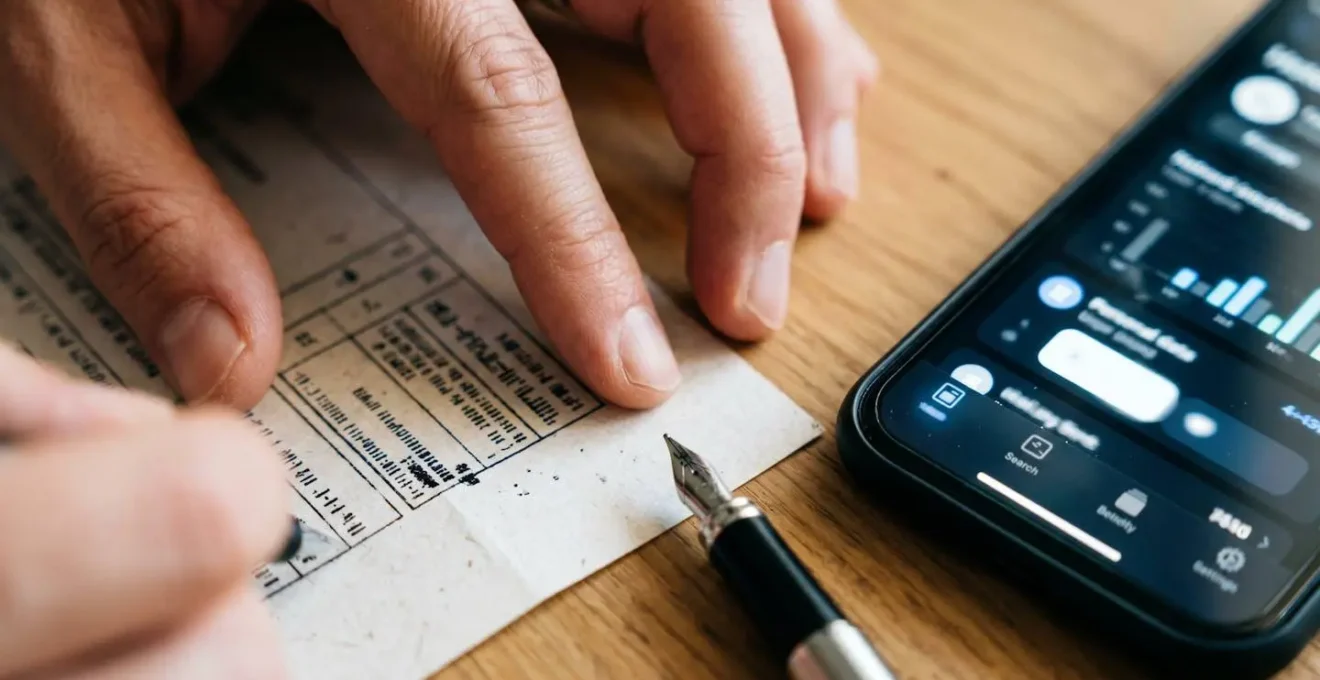
As this image illustrates, the careful collation of digital and physical evidence is the cornerstone of protecting your rights. Each screenshot and receipt is a vital part of the contract you are holding the hotel accountable for. Without this proof, any complaint is merely your word against theirs, a position from which it is very difficult to seek redress.
What « Best Rate Guarantee » Legally Requires UK Hotels to Honor
The « Best Rate Guarantee » (BRG) is another enticing marketing promise. Hotels and large chains assure you that if you book directly on their website and then find a lower rate for the exact same room on another site, they will match the price and often add a bonus, like a further discount or loyalty points. In theory, this eliminates the need to shop around. In practice, it’s a carefully constructed maze designed to be almost impossible to navigate successfully. As one travel expert from Traveling For Miles bluntly states:
Best rate guarantees are a marketing ploy and not meant to be a good thing for customers. You should expect the hotel chains to do everything within their power to dismiss a claim.
– Traveling For Miles Travel Expert
Legally, a BRG is a unilateral offer that forms part of your booking contract. If you meet all the specified conditions, the hotel is obligated to honour it. The problem is that these conditions are intentionally numerous and complex. The most significant hurdle is the requirement for an « apples-to-apples » comparison. The lower rate you find must be for the exact same room type, on the exact same dates, with the exact same number of guests, and—crucially—with the exact same cancellation policy and payment terms. This last point is where most claims fail.
Case Study: The Reality of Best Rate Guarantee Claims
To test the system, a traveller submitted 14 BRG claims across major hotel chains. The results were revealing: only 6 claims were approved, a success rate of less than 50%. A primary reason for denial was a slight policy discrepancy; the cheaper rates found on other sites often had a more restrictive cancellation policy than the one offered directly by the hotel. Several claims were also denied because the traveller hadn’t booked the hotel’s « Member » rate, a requirement that traps many consumers. These guarantees are not a straightforward path to savings but a gauntlet of fine print.
This demonstrates that the BRG is not a price promise but a challenge. Hotels are not legally required to make the process easy; they are only required to follow the labyrinthine rules they themselves have created. Success is rare and requires meticulous attention to detail and a significant investment of time.
The Guarantee Loophole That Voids 50% of Best Rate Price Match Claims
The low success rate of Best Rate Guarantee claims is not a matter of chance; it is a direct result of meticulously crafted loopholes in the terms and conditions. As documented by travel experts at The Points Guy, it’s common for approximately 50% of BRG claims to be denied, a figure that highlights a systemic issue. These are not good-faith efforts to give you the best price; they are contractual frameworks designed to protect the hotel’s direct booking revenue by creating the illusion of a guarantee.
The single biggest loophole is the « identical terms » requirement. A third-party booking site might offer a room for £10 less, but with a « non-refundable » policy, whereas the hotel’s direct rate is « cancellable up to 24 hours. » This difference, however small, renders the comparison invalid, and the claim is denied. Another common tactic is the « member rate » loophole. Many hotel chains require you to book their lowest available direct rate, which is often a « member-exclusive » rate, to be eligible for a BRG. However, they simultaneously refuse to price-match against member-exclusive rates from online travel agencies (OTAs), creating a no-win scenario.
The sheer complexity and variation in rules across different hotel chains serve as another barrier. As the following data compiled from industry sources shows, the submission windows are tight, and the requirements are unforgiving.
This table, based on a comprehensive analysis of BRG policies, reveals the subtle but critical differences that hotels use to invalidate claims.
| Hotel Chain | Submission Window | Minimum Price Difference | Bonus if Approved | Key Exclusion |
|---|---|---|---|---|
| Marriott Bonvoy | Within 24 hours of booking | Any amount | 25% discount OR 5,000 points | Must book lowest member rate |
| Hilton Honors | Within 24 hours of booking | More than 1% | 25% discount | Claims denied if difference is 1% or less |
| Hyatt World | Within 24 hours of booking | Any amount | 20% discount OR 5,000 points | 48 hours before check-in required |
| IHG One Rewards | Within 24 hours of booking | Any amount | 5x points (max 40,000) | Not valid in China, Macau, Hong Kong, Taiwan |
A 24-hour submission window leaves little room for error. A minimum price difference of 1%, as required by Hilton, can be used to dismiss claims over a few pence. These are not customer-friendly features; they are carefully engineered obstacles.
When to Purchase Travel Insurance Instead of Relying on Hotel Guarantees
Hotel guarantees, even when they work, only cover issues related to the booking itself—price discrepancies or failure to provide a room. They offer zero protection if you need to cancel your trip for personal reasons such as illness, a family emergency, or a flight cancellation. This is where the role of travel insurance becomes critical. It is designed to cover the external risks that a hotel contract will never address.
The need for this protection is significant, as approximately 25% of all travel insurance claims are related to trip cancellations. A standard travel insurance policy will typically reimburse your non-refundable costs, including hotel bookings, if you have to cancel for a list of covered reasons. These often include the illness or death of the traveller or a close family member, jury duty, or significant damage to your home making it uninhabitable. However, it will not cover cancellation due to a change of mind, a work conflict, or concerns about a destination’s weather.
For the ultimate flexibility, travellers should consider a « Cancel For Any Reason » (CFAR) upgrade. This add-on allows you to cancel your trip for any reason whatsoever and receive a partial refund. However, CFAR is a premium product with strict rules and is not a 100% money-back guarantee. It’s a strategic tool for specific high-stakes situations, not a default purchase. To decide if it’s right for you, a careful cost-benefit analysis is required:
- Calculate Total Non-Refundable Costs: Sum up all prepaid, non-refundable expenses for your trip, including flights, hotels, and tours.
- Determine the Premium: A CFAR policy typically adds 40-60% to the cost of your standard travel insurance premium.
- Understand the Reimbursement: CFAR only reimburses 50% to 75% of your total trip cost, not the full amount.
- Verify Eligibility: You must usually purchase CFAR within 10-21 days of your initial trip deposit and insure 100% of your prepaid costs.
- Check the Cancellation Window: You are often required to cancel your trip at least 48 hours before your scheduled departure.
Ultimately, relying on hotel guarantees protects you from the hotel’s mistakes. Travel insurance protects you from life’s unpredictability. They serve two entirely different purposes, and for comprehensive protection, both must be considered.
Flexible Booking or Hidden Restrictions: Which Policies Trap 50% of Travelers?
The line between a truly flexible booking and one laden with hidden restrictions is becoming increasingly blurred, creating a minefield of confusion for travellers. You may believe you’re booking a flexible, refundable rate, only to discover at the point of cancellation that you are trapped by a condition you never saw. This is not an accident; it is a calculated strategy to maximise hotel occupancy while maintaining an appearance of flexibility.

One of the most significant hidden restrictions is the booking channel itself. The flexibility of your booking can change dramatically depending on whether you book directly with the hotel or through an Online Travel Agency (OTA) like Booking.com or Expedia. While OTAs are popular for price comparison, they often come with more volatile terms. Industry data reveals a stark difference: cancellation rates on brand websites are around 19%, whereas OTA rates can soar to 39%. This suggests that bookings made via OTAs are either more prone to cancellation due to less committed customers or are subject to more complex and less favourable terms that lead to disputes and forced cancellations.
Another common trap is the « prepaid but flexible » rate. Hotels offer a small discount to entice you to pay the full amount upfront, with the promise that you can change your dates later. However, the « flexibility » is often a one-way street. You might be able to move your booking to a new date, but you can almost never get a cash refund. Furthermore, if the rate for your new dates is higher, you must pay the difference. If it’s lower, you rarely receive a refund for the excess. This turns your « flexible » booking into a hotel credit with numerous strings attached, trapping your money with one provider.
The Platform Booking Error That Voids Your Cancellation Protection
Booking through a major Online Travel Agency (OTA) feels safe and reliable, but it introduces a third party into your contract, creating a critical point of failure. A common and deeply frustrating issue is the platform booking error, where the OTA’s system does not sync correctly with the hotel’s own inventory. This can lead to you booking and paying for a room that doesn’t actually exist or has already been sold, a scenario that effectively voids your booking protections from the start.
When you arrive at the hotel with a valid confirmation from the OTA, only to be told there is no room for you, you become a victim of « walking. » The hotel may offer to find you alternative accommodation, but this is where your rights begin to erode. The new hotel has no contractual obligation to honour the terms of your original booking. The rate may be different, the room type inferior, and any cancellation protection or other guarantees you thought you had are gone. You are left in a vulnerable position with no clear redress mechanism.
Case Study: The OTA vs. Hotel Blame Game
Under UK consumer law, third-party booking sites are accountable for the services they sell. If there is a problem with a reservation, your first point of contact should be the OTA. However, a frequent and maddening dispute arises where the OTA blames the hotel for not updating its inventory, and the hotel blames the OTA for a platform glitch. This finger-pointing leaves the traveller caught in the middle. While the law is on your side, the practical process of getting a refund or compensation becomes a drawn-out battle, with each party deflecting responsibility. The « protection » offered by the booking platform evaporates the moment it is most needed.
This risk is not explicitly warned about when you click « confirm. » It’s an inherent structural weakness in the third-party booking model. The convenience of using an OTA comes at the cost of a direct contractual relationship with the service provider, adding a layer of risk that can completely derail a trip.
Key Takeaways
- Hotel guarantees are commercial contracts with specific loopholes, not simple safety nets.
- Your primary protection as a UK traveller stems from the Consumer Rights Act 2015, which mandates services be provided with « reasonable care » and « as described. »
- Proactive evidence collection—screenshotting every step of the booking process—is the most powerful tool you have to enforce your rights.
Protecting Your Holiday Investment From Accommodation Mistakes That Ruin Entire Trips
After navigating the complexities of booking policies and guarantees, the final and most crucial step is proactive confirmation. Trusting that a digital confirmation is sufficient is a common mistake that can lead to disastrous arrival experiences, such as being given the wrong room type or finding your reservation doesn’t exist at all. To truly protect your holiday investment, you must take direct action to verify every critical detail of your booking just before you travel.
This involves more than a cursory check; it requires a methodical confirmation process. The single most effective tactic is to call the hotel directly, bypassing the OTA or central reservations system. Speaking with someone at the front desk of the property itself allows you to confirm that your booking is correctly reflected in their local system. This is your last chance to catch any platform booking errors or miscommunications before they become a major problem upon arrival. A simple 10-minute phone call can save you hours of stress and potential financial loss.
The following pre-emptive script provides a clear, step-by-step guide for this essential confirmation call. It turns a vague check-in into a systematic verification of your contract.
- Timeline: Call the hotel directly 72 hours (3 days) before your scheduled arrival.
- Confirm: Verify that your booking reference number and dates are correctly recorded in the hotel’s own system.
- Verify: Re-confirm the exact bed configuration you booked (e.g., one king bed, not two twins pushed together).
- Check: Ensure any specific room features, like a sea view or a location away from the elevator, are accurately noted in your reservation.
- Document: Have the staff member confirm that any special requests (e.g., early check-in, accessibility needs) are recorded.
- Record: Get the full name of the staff member who confirmed these details, along with the date and time of your call.
- Follow-up: Send a brief, polite email to the hotel’s general information address, summarising the conversation and confirmed details for a written record.
This final verification, combined with the evidence trail you built during booking, transforms your reservation from a hopeful expectation into a verified contractual agreement. It closes the loop and minimises the chance of last-minute mistakes. As the legal experts at FindLaw clearly state, this contract carries significant weight:
A room reservation—even when it’s not prepaid—is a contract, which a hotel is legally obligated to honor. If the hotel does not have a room for you, it has breached your contract.
– FindLaw Legal Expert Team, Hotel Guest Legal Rights: FAQ
By treating every booking as a formal agreement and systematically verifying its terms, you can confidently protect your holiday investment and travel with the peace of mind you deserve.