
Contrary to popular belief, a hotel’s star rating and amenity list are poor predictors of true service quality.
- Authentic service stems from an empowered staff culture and a commitment to generosity, not just scripted procedures or lavish features.
- You can conduct simple « service stress tests » via email and targeted review analysis to reveal a hotel’s true service DNA before arrival.
Recommendation: Shift from being a passive guest to an active assessor by applying a simple audit framework to your booking process to guarantee the quality you’re paying for.
For the discerning traveller, the promise of « service excellence » is the ultimate currency. We are willing to invest more in a premium hotel not just for finer linens, but for an experience that is seamless, intuitive, and genuinely caring. Yet, we have all felt the sting of disappointment when a hotel’s five-star marketing narrative crumbles upon arrival. The concierge is present but unhelpful, the policies are rigid, and the atmosphere feels transactional rather than generous. This disconnect arises from a fundamental misunderstanding of what constitutes real service.
Most travel advice focuses on superficial markers: check the star rating, read the reviews, look at the amenity list. While not entirely useless, these are the platitudes of hotel selection. They fail to penetrate the surface and assess the one thing that truly matters: the hotel’s service culture, or what I call its Service DNA. True excellence is not a feature to be listed, but a systemic quality that can be tested and verified. It’s found in the autonomy of the staff, the consistency of the experience, and the organisation’s philosophy towards guest satisfaction, a philosophy increasingly shared by those seeking eco friendly accommodation, where ethical commitment and genuine hospitality naturally go hand in hand.
This guide abandons the old checklist. Instead, it equips you with the mindset and tools of a hospitality consultant. You will learn to move from being a passive consumer of marketing promises to an active assessor of service reality. We will provide a clear framework for auditing a hotel’s service standards before you commit, decoding what luxury service entails in the UK market, and ensuring your investment in a premium stay delivers the flawless experience you expect. This is not about finding problems; it’s about finding proof of genuine quality.
This article provides a structured approach to vetting hotel service. You’ll find actionable methods and expert frameworks designed to empower your decision-making process before you book.
Contents: A Framework for Assessing Service Excellence
- Why « Round-the-Clock Concierge » Doesn’t Guarantee Genuinely Helpful Service
- How to Test Hotel Service Standards Before Your Arrival Using Three Simple Methods
- What Does « Turndown Service » Actually Include in British Four and Five-Star Hotels?
- The Five Red Flags That Signal Poor Service Standards in Hotel Reviews
- How to Request Service Enhancements Without Additional Charges at Check-In
- How to Conduct Service Quality Audits Before Booking Corporate Hospitality Events
- How to Spot Genuine Five-Star Quality Before Booking a Top-of-the-Range Hotel
- Ensuring Flawless Guest Experience Management for High-Stakes Business Events
Why « Round-the-Clock Concierge » Doesn’t Guarantee Genuinely Helpful Service
The phrase « 24-hour concierge » is a staple of luxury hotel marketing. It conjures images of an all-knowing, well-connected fixer who can procure last-minute theatre tickets or impossible dinner reservations. However, the mere presence of a desk is not a proxy for quality service. The critical differentiator is not availability, but empowerment. A truly exceptional service culture empowers its staff to solve guest problems creatively and decisively, often without needing managerial approval.
Consider the legendary standard set by The Ritz-Carlton, where, according to hospitality excellence standards, employees are empowered to spend up to $2,000 per guest to resolve an issue or enhance an experience. This figure is not about spending money; it is a symbol of trust and autonomy. It signals a « generosity culture » over a « transactional culture. » The question for a discerning guest is, how can you test for this empowerment before you arrive? A concierge who can only offer a city map is a functional directory; a concierge who can curate a personalised experience based on a nuanced request demonstrates a higher level of service DNA.
The goal is to probe beyond scripted responses. You are looking for signs of independent thought, creative problem-solving, and a genuine desire to assist. This is the difference between a hotel that simply staffs a concierge desk and one that cultivates a team of true guest service professionals. The former is a marketing feature; the latter is the heart of genuine hospitality.
To fully grasp this distinction, it’s worth re-examining .
Ultimately, a helpful concierge is a symptom of a healthy, empowered service culture, not the cause of it. Seeking evidence of that culture is the key.
How to Test Hotel Service Standards Before Your Arrival Using Three Simple Methods
How can you diagnose a hotel’s service culture from afar? The answer lies in becoming an « active assessor » and conducting simple, targeted « service stress tests. » These are not tricks, but methodical inquiries designed to reveal how the hotel’s systems and staff perform under non-standard conditions. The goal is to observe their processes, communication style, and problem-solving abilities.
The professional equivalent of this approach is the « mystery shopper. » As a prime example, consider the methodology of the world’s leading assessors.
Case Study: The Forbes Travel Guide Anonymous Inspector Methodology
To ensure authenticity in their ratings, Forbes Travel Guide employs anonymous inspectors who book, stay, and pay like any other guest. They evaluate up to 900 objective standards, but the core of their assessment lies in observing unscripted service interactions. Because staff are unaware of their identity, inspectors see the hotel’s typical performance, not a special show. This methodology has consistently shown that service consistency across all departments is the hallmark of a true five-star property, revealing that it’s the depth of staff training and empowerment—not just friendly scripts—that defines excellence.
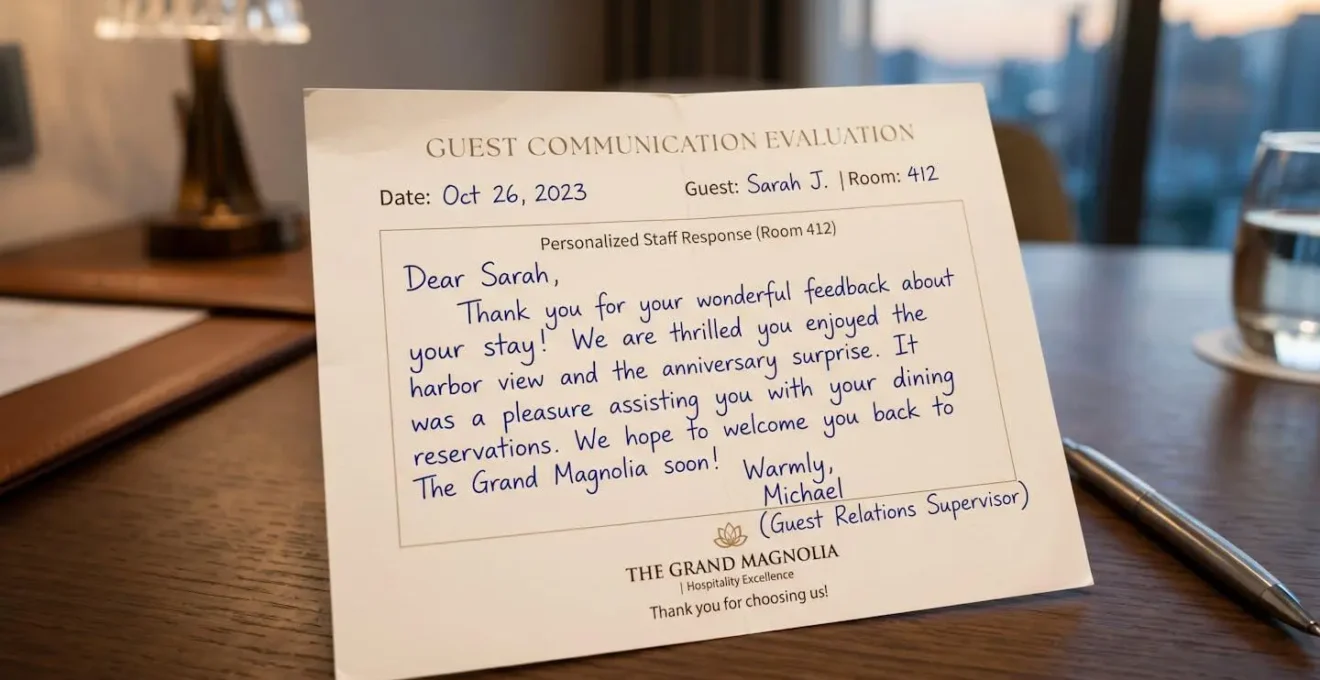
Inspired by this professional approach, you can create your own lightweight audit. First, conduct a Communication Quality Test: send an email with a polite, specific, and slightly unusual query that cannot be answered by a template. Second, perform a Digital Body Language Audit: observe how management responds to online reviews. Are replies personalised and accountable, or generic and defensive? Finally, make a Reasonable Special Request tied to your booking. The nature of the request is less important than the hotel’s response. A proactive, solution-oriented reply is a strong positive signal of a healthy Service DNA.
Applying these techniques requires a mindset shift, turning you into a proactive evaluator of service standards before you ever check in.
These methods are not about being demanding; they are about collecting data points to make an informed decision and ensure the hotel’s service philosophy aligns with your expectations.
What Does « Turndown Service » Actually Include in British Four and Five-Star Hotels?
Turndown service is one of those classic hallmarks of a luxury hotel, yet its definition can be surprisingly elastic. For some, it’s a perfunctory tidying of the bed. For others, it’s a thoughtful, multi-step ritual that enhances the guest’s comfort and signals the transition from day to evening. Understanding what to expect, particularly within the context of high-end British hotels, is crucial for assessing value. The baseline is clear: for top-tier properties, this is not an optional extra. According to the Hotelstars Union standards, evening turndown service is a mandatory criterion for five-star classification across 21 European nations, including many that influence UK standards.
However, compliance with the standard is one thing; excellence in its execution is another. True quality can be understood as a hierarchy of service, moving from the basic to the deeply personalised:
- Level 1 (Basic): This is the functional minimum. It involves preparing the bed by turning down the corner of the duvet, removing decorative cushions, drawing the curtains, and perhaps leaving a bottle of water on the nightstand. Wastebaskets are emptied. It is efficient but impersonal.
- Level 2 (Thoughtful): This level demonstrates a greater consideration for the guest experience. In addition to the basic tasks, staff will place slippers and a bathrobe in a convenient location, leave a weather forecast for the following day, and perform a light tidying of the bathroom, replacing used towels. This shows an anticipation of basic needs.
- Level 3 (Personalised & Intuitive): This is the pinnacle of turndown service and a clear systemic indicator of a hotel that empowers its staff to be observant. Here, housekeepers don’t just follow a checklist; they react to the guest’s behaviour. They might replenish the specific type of tea you drank earlier, leave an extra towel where you left a wet one, neatly fold an item of clothing left on a chair, or place a bookmark in the book you left open. This is proactive, intuitive care that transforms a routine service into a memorable moment.
When you are paying a premium, you should expect service that trends towards Level 2 and 3. The difference between them is the difference between a hotel that follows rules and one that practices genuine hospitality.
Discerning what level of service you can expect requires a clear understanding of what "turndown service" entails at different quality tiers.
It is in these small, observant details that a hotel’s commitment to a true luxury experience is most clearly revealed.
The Five Red Flags That Signal Poor Service Standards in Hotel Reviews
The advice to « read the reviews » is ubiquitous but incomplete. Sifting through hundreds of subjective opinions requires a strategic framework. An active assessor doesn’t just count positive or negative ratings; they look for patterns and specific keywords that act as red flags for systemic service failures. Learning to spot these signals is one of the most powerful tools for vetting a hotel before you book.
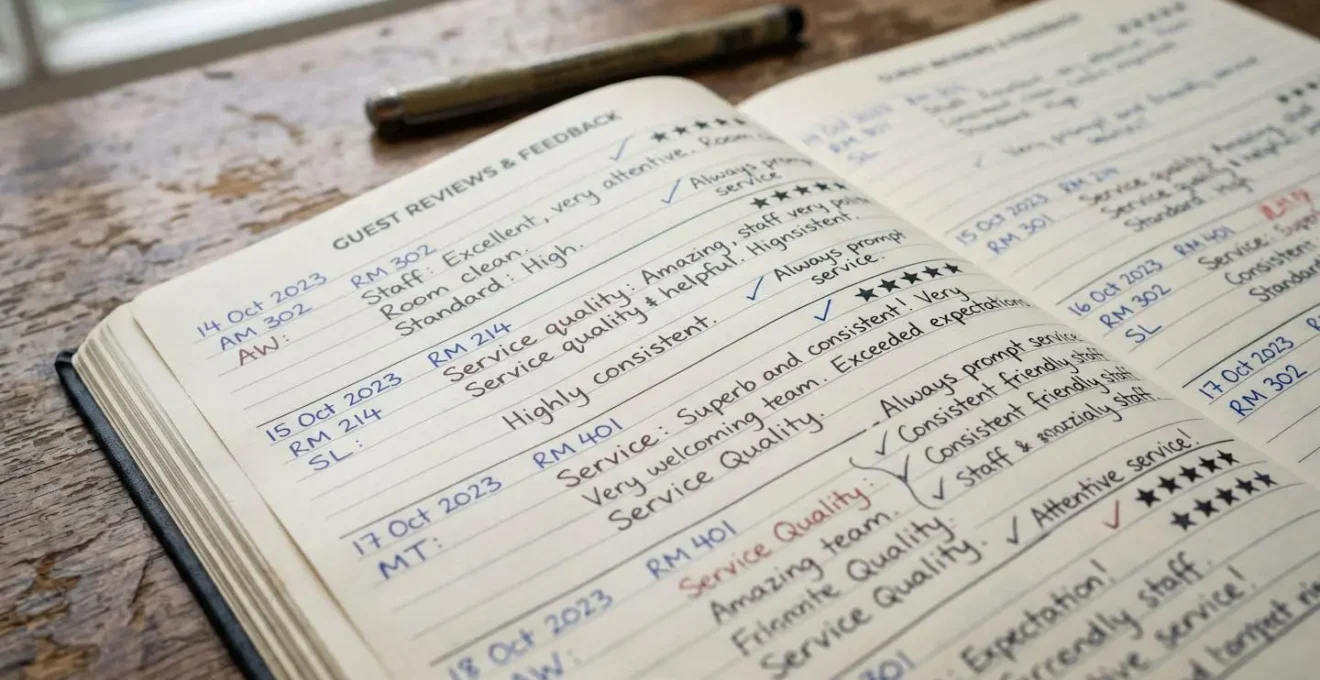
Instead of getting lost in individual stories, focus on identifying these five critical patterns:
- Red Flag 1: Inconsistency Keywords. Scan for phrases like « hit or miss, » « it depends on who you get, » or « inconsistent. » Widespread inconsistency is a far more serious problem than a single bad experience. It points to failures in training, management, and standardisation, suggesting the hotel’s Service DNA is weak and your experience will be a lottery.
- Red Flag 2: Generic Management Responses. Look at how the hotel’s management replies to negative reviews. Robotic, copy-pasted apologies that say « we will share your feedback with the team » are a major red flag. They signal a PR-driven, damage-control culture. A hotel committed to service will offer personalised responses that acknowledge specific issues and outline concrete corrective actions.
- Red Flag 3: Failure of Operational Basics. Complaints about a « disappointing » restaurant meal are subjective. Complaints about chronic billing errors, a chaotic check-in process, or consistently faulty Wi-Fi are objective and far more alarming. These issues indicate that the hotel’s core operational systems are broken, a sign of deep-seated management problems.
- Red Flag 4: Patterns of « Nickel-and-Diming ». Reviews that repeatedly mention unexpected fees, charges for small requests (like extra coffee pods), or a generally transactional feel are symptomatic of a poor service culture. True luxury hospitality is rooted in a philosophy of generosity; a hotel that tries to extract revenue at every turn has the wrong priorities.
- Red Flag 5: A Recent Decline in Review Quality. Pay close attention to the timeline. A hotel with a decade of stellar ratings but a sudden spike in negative reviews over the past 3-6 months may be in trouble. This can signal a recent change in management, high staff turnover, or a cost-cutting measure that is impacting the guest experience.
Learning to identify these patterns allows you to go beyond surface-level reviews and diagnose potential service issues like a professional.
By focusing on these systemic indicators, you can build a much more accurate and reliable picture of a hotel’s true service quality.
How to Request Service Enhancements Without Additional Charges at Check-In
The moment of check-in presents a unique opportunity to subtly enhance your stay. While guaranteed upgrades are rare, front desk staff often have discretion to grant complimentary enhancements, from a room with a better view to a late check-out. The success of such a request hinges almost entirely on your approach. It’s not about demanding more; it’s about collaboratively inviting the hotel to demonstrate its hospitality. This is particularly effective when you understand the hotel’s own motivation: creating a positive experience that fosters loyalty.
The data is clear on this front. Research on hospitality service excellence shows that two-thirds of hotel guests (66%) report they would go out of their way to stay at a particular hotel because of a positive past experience. By making a request, you are giving the hotel a low-cost opportunity to create such an experience. Framing your request with this mutual benefit in mind is key.
Here are three proven techniques rooted in politeness and strategic positioning:
- The Informed and Reasonable Approach: This method shows you are a savvy and respectful guest. Instead of demanding an upgrade, you frame it as a collaborative question. For example: « I know it’s a busy time, but I was wondering if any rooms on a higher floor might have become available? We’d be so grateful if it’s not too much trouble. » This acknowledges their constraints while politely stating your preference.
- Building Pre-Arrival Rapport: Your opportunity to make a good impression starts before you arrive. If you have had a positive and polite email exchange with the concierge or reservations team, you can reference it. « By the way, your colleague [Name] was incredibly helpful when I was making the booking. That level of service is exactly why we chose to stay with you. » This establishes you as an appreciative guest and builds social capital just before you make a small request.
- The Loyalty & Special Occasion Nudge: If you are a returning guest or celebrating a special occasion (and have noted this on your booking), a gentle reminder is perfectly acceptable. « We’re so excited to be back; we loved our last stay here. We’re celebrating our anniversary, and just wanted to say how much we’re looking forward to it. » This allows the staff to connect the dots and proactively offer an enhancement as a gesture of goodwill.
Mastering these techniques is about understanding the psychology of service and how to artfully request enhancements without seeming demanding.
The goal is to be the kind of guest that staff are genuinely happy to help, transforming a simple transaction into a positive human interaction.
How to Conduct Service Quality Audits Before Booking Corporate Hospitality Events
When booking a venue for a high-stakes corporate event, the margin for error is zero. A single failure in service—from a slow coffee refill to a major AV malfunction—can reflect poorly on your organisation. Therefore, the vetting process must go far beyond inspecting the ballroom and tasting the canapés. A corporate booker must adopt the mindset of a professional auditor, conducting a pre-emptive service quality audit. The level of detail in a professional assessment is staggering; Leading Quality Assurance evaluations cover 800 quantitative and qualitative standards during anonymous, multi-day assessments. While you cannot replicate this, you can adopt its principles to probe for a venue’s true execution capabilities.
The sales pitch will always be flawless; your job is to look « behind the curtain » to assess the operational reality. This involves auditing not just the physical space, but the people and processes that will be responsible for your event’s success. Are the key staff members confident, experienced, and empowered to solve problems on the fly? Does the venue have documented, battle-tested contingency plans?
A proactive audit focuses on three critical areas that are rarely visible during a standard site visit. The responses you receive—or the lack thereof—are powerful indicators of the venue’s operational maturity and its ability to handle the pressures of a high-stakes event. A confident, service-oriented hotel will welcome this level of scrutiny; a venue that is evasive or unprepared is revealing a major red flag.
Your Action Plan: Pre-Booking Corporate Event Service Audit
- Points of Contact Audit: Move beyond the sales manager. Insist on brief, five-minute meetings with the Head of Banqueting and the lead AV Technician. Assess their confidence, expertise, and communication style—these are the people who will actually deliver your event.
- Service Recovery Capability Audit: Ask the sales manager for an anonymised example of how they resolved a past event challenge (e.g., unexpected guest numbers, tech failure). A great hotel will have these service success stories ready, demonstrating a problem-solving culture.
- Contingency Chain of Command Audit: Don’t just ask *if* they have backup plans. Ask to identify the single person with on-site authority to make critical financial and logistical decisions during a crisis. The absence of a clear answer is a deal-breaker for high-stakes events.
- Staff Empowerment & Attitude Check: During your tour, observe interactions between staff. Do they seem engaged and collaborative? A team that communicates well internally is better equipped to handle external pressures.
- Document the Plan: Based on the audit, formally document the key contacts, the agreed-upon communication protocol (e.g., a dedicated WhatsApp group), and the final decision-maker for crisis resolution directly into your event contract.
By performing this kind of rigorous, pre-emptive audit, you are not just booking a space; you are actively mitigating risk and ensuring service quality for your event.
This strategic approach significantly increases the probability of a flawless execution, protecting your brand’s reputation and ensuring a return on your event investment.
How to Spot Genuine Five-Star Quality Before Booking a Top-of-the-Range Hotel
Spotting genuine five-star quality before you book requires a fundamental shift in perspective. It means looking past the glossy photos and the star ratings, and learning to identify the subtle but powerful indicators of a superior Service DNA. A top-of-the-range hotel is not simply a collection of luxurious amenities; it is a finely tuned system designed to deliver an intuitive, consistent, and personalised guest experience. Your task is to find evidence of this system in action.
The first principle is to prioritise people over property. A hotel can have marble bathrooms and rooftop pools, but if its staff are poorly trained, disempowered, or apathetic, the experience will be a failure. Therefore, your primary investigation should focus on clues about the staff. As we’ve discussed, this involves testing the concierge with nuanced requests and analysing how management responds to online reviews. Are they defensive, or do they demonstrate accountability and a commitment to improvement? A culture of accountability is a strong positive signal.
The second principle is to look for consistency over moments. A single grand gesture is easy to stage. True luxury lies in the consistent excellence of every small interaction, from the doorman’s greeting to the housekeeper’s attention to detail during turndown service. While you cannot observe this directly before booking, you can hunt for clues in reviews. Ignore vague praise and look for specific comments that mention consistent excellence across different staff members and throughout a multi-day stay. Phrases like « every single member of staff was exceptional » are far more valuable than « we got a free bottle of champagne. »
Finally, understand that true five-star service is proactive, not reactive. It anticipates needs you haven’t yet articulated. Imagine a scenario: you email the hotel asking for a dinner reservation and mention you’re a vegetarian. A standard hotel books the table. A five-star hotel books the table, informs the restaurant of your dietary needs in advance, and perhaps places a note in your file so the breakfast team is also aware. It’s this « next-level » thinking that you are looking for. Evidence of this can be found in detailed reviews or in the hotel’s response to your own pre-arrival inquiries.
Ultimately, spotting genuine quality is an exercise in evidence collection, where you learn to recognise the signs of a superior service culture.
By applying this analytical lens, you replace guesswork with a confident, well-founded assessment, ensuring your investment in a top-tier hotel truly pays off.
Key Takeaways
- True service excellence is defined by staff empowerment and a culture of generosity, not by a list of amenities.
- Discerning travellers can act as « active assessors, » using pre-arrival tests and strategic review analysis to diagnose a hotel’s Service DNA.
- For high-stakes events, auditing a venue’s service recovery processes and chain of command is more critical than inspecting the physical space.
Ensuring Flawless Guest Experience Management for High-Stakes Business Events
For a high-stakes business event, « good enough » is a catastrophic failure. The guest experience for your attendees, particularly key stakeholders and VIPs, is a direct reflection of your company’s brand, competence, and respect for its partners. Ensuring a flawless experience requires a level of planning that transcends typical event logistics. It demands a proactive and deeply integrated approach to Guest Experience Management, where you and the hotel operate as a single, unified team.
The foundation of this approach is a shift from reactive problem-solving to proactive failure-proofing. Before the event, you must work with the hotel’s key operational staff to conduct a « pre-mortem » session. Brainstorm every conceivable point of failure—from registration queues to AV glitches to dietary mix-ups—and document a clear, joint response plan for each. This process not only creates a robust contingency plan but also builds a shared sense of ownership and responsibility between your team and the hotel’s.
Furthermore, managing the VIP experience requires more than just a list of names. It necessitates the creation of brief, actionable guest profiles for your most important attendees. These profiles, shared with all guest-facing hotel staff (concierge, front desk, restaurant managers), should go beyond titles to include simple preferences or context (e.g., « Arriving from a long-haul flight, » « Enjoys sparkling water, » « Key client for our upcoming merger »). This empowers hotel staff to deliver the kind of personalised, intuitive service that makes a VIP feel genuinely recognised and valued, demonstrating a sophisticated level of care that reflects positively on your organisation.
Finally, flawless execution on the day of the event depends on a clear and streamlined communication protocol. The chaos of a live event is no time to be navigating a hotel’s bureaucratic hierarchy. It is critical to contractually establish a single, empowered point of contact at the hotel who has the authority to make immediate decisions. This should be supported by a real-time communication channel, such as a dedicated WhatsApp group for key personnel from both your team and the hotel, ensuring that minor issues can be resolved in seconds, before they have a chance to escalate.
By implementing these protocols, you elevate your role from event planner to a true architect of the guest experience, ensuring every detail reflects the five-star quality you aim to project.
This meticulous, strategic management of the guest journey is the final and most crucial step in guaranteeing your high-stakes event is not just successful, but truly exceptional.