Many affluent families avoid VIP travel services, fearing they’ll raise entitled children. The real issue isn’t the service, but the strategy.
- VIP services are tools for surgically targeting specific family travel ‘friction points’ (like queues and transitions), not blanket status symbols.
- Proactive communication with concierges and reframing experiences for children are critical to turning moments of privilege into lessons in gratitude.
Recommendation: Shift your mindset from ‘buying luxury’ to ‘investing in seamlessness’ by identifying your family’s top three travel stressors and finding the specific service that solves them.
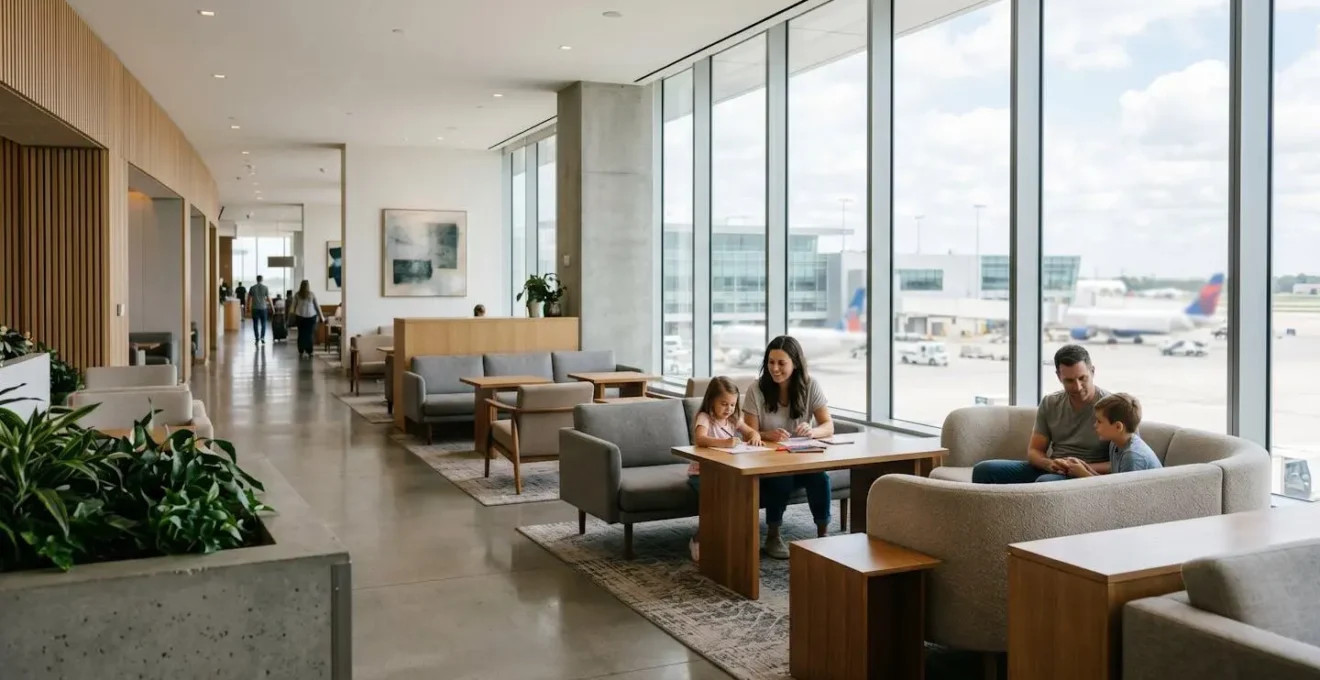
For discerning families, the promise of luxury travel is often a double-edged sword. You envision a seamless, elevated experience, but the reality can be a logistical challenge complicated by the needs of children. There’s a persistent, nagging question: how do we access the benefits of VIP treatment—the saved time, the reduced stress—without inadvertently teaching our children a lesson in entitlement? The common approach is to either forgo these services entirely or use them sparingly, almost apologetically. We scroll through images of serene airport lounges and private transfers, wondering if they are truly compatible with family values.
But what if this binary choice is based on a false premise? What if the true art of luxury family travel isn’t about the services themselves, but about their strategic deployment? The key is to stop thinking of VIP access as a status symbol and start seeing it as a toolkit of precision instruments. Each service—from lounge access to fast-track security—is a tool designed to solve a very specific, predictable point of friction that plagues family journeys. It’s not about skipping the queue to feel important; it’s about skipping the queue to preserve a child’s limited reserve of patience for the museum later that day.
This guide reframes the conversation. We will move beyond a simple catalogue of services to provide a strategic framework for their use. We’ll explore why some ‘perks’ offer disproportionate value to families, how to modify standard offerings to be genuinely child-friendly, and, most importantly, how to frame these experiences to cultivate gratitude rather than entitlement. You’ll learn to become a pragmatic architect of your family’s travel experience, using VIP services surgically to enhance connection and protect that most precious commodity: quality family time.
This article provides a complete framework for strategically integrating VIP services into your family’s travels. Below is a summary of the key areas we will explore to help you master this new approach.
Summary: Securing Family-Appropriate VIP Services That Enhance Rather Than Complicate Travel
- Why Airport Lounge Access Benefits Families 5× More Than Hotel Upgrades
- How to Request Child-Friendly Modifications to Standard VIP Services
- Private Transfers or Fast-Track Services: Which Better Serves Family Travel?
- The VIP Service That Creates Uncomfortable Entitlement Signals for Children
- When to Invest in VIP Services to Target Peak Family Travel Stress Points
- What « Family-Friendly » Actually Means in Destination Marketing Language
- The Reservation Mistake That Ruins 40% of Luxury Hotel Stays
- Protecting Quality Family Time From Common Holiday Friction and Disappointment
Why Airport Lounge Access Benefits Families 5× More Than Hotel Upgrades
In the calculus of luxury travel upgrades, the hotel room often seems like the ultimate prize. A larger suite or a better view feels like a tangible win. However, for families, the strategic value of airport lounge access far outweighs a typical hotel upgrade. The reason lies in understanding the core ‘friction points’ of travel. A hotel is a destination; the airport is a transition, and it’s during transitions that family stress peaks. An upgraded hotel room improves a part of the trip that is already relatively calm. A lounge, by contrast, directly remedies the most chaotic and overstimulating part of the journey.
The benefit goes beyond a quiet seat and a free snack. For children, especially those sensitive to sensory input, the main terminal is an assault of announcements, crowds, and visual clutter. A lounge provides a predictable, low-stimulation environment that acts as a functional accommodation. As one expert notes, it can be the difference between a smooth start and a trip derailed by a meltdown. As occupational therapist Dr. Lena Torres observes in a study on family airport lounge use:
For kids with auditory processing challenges, a lounge isn’t a perk—it’s a functional accommodation. The predictable acoustics, reduced visual clutter, and ability to step into a quiet room mid-stress cycle can prevent meltdowns that otherwise derail entire trips.
– Dr. Lena Torres, Occupational therapist quoted in family airport lounge study
This is the critical distinction: the lounge is a proactive tool for managing a child’s energy and sensory load. It provides clean bathrooms without queues, dedicated spaces for antsy toddlers, and the ability to have a meal without juggling luggage and trays. This controlled environment preserves a child’s (and parent’s) limited capacity for patience, ensuring you arrive at your destination with energy reserves intact. A bigger hotel room is nice; a meltdown-free airport experience is priceless.
How to Request Child-Friendly Modifications to Standard VIP Services
The term « VIP service » often conjures images of champagne and formality, which can feel misaligned with the realities of family life. The secret to making these services work for you is not to accept them as-is, but to act as your family’s ‘Experience Architect’. This means proactively communicating your needs to transform a standard luxury offering into a genuinely bespoke family experience. Most concierges and high-end providers are eager to delight their guests; they simply lack the specific information to do so for children.
Simply stating « we have children » on a booking form is not enough. The difference between a six-year-old and a sixteen-year-old is vast, as are their needs. The key is to provide specific, actionable information that allows the service provider to make ‘invisible modifications’—small changes that children may not notice but which fundamentally improve their experience. This could be anything from a private driver pre-loading a ‘Disney Hits’ playlist to a hotel placing a step-stool in the bathroom before you arrive. It’s about anticipating needs and removing minor obstacles before they become sources of friction.
This proactive approach also extends to framing the service for your children, turning a moment of privilege into a lesson. It’s about teaching them that these services are provided by real people whose time and expertise deserve appreciation. The following checklist provides a concrete framework for this process.
Your Action Plan: Customising VIP Services for Your Family
- Create a ‘Child Rider’: Prepare a one-page document detailing ages, interests (e.g., ‘dinosaurs’, ‘drawing’), dietary needs, and nap times. Send it to concierges 24-48 hours before arrival.
- Use Specific Pacing Language: Instead of asking « Is the tour good for kids? », request « Can the 2-hour tour be condensed into a 45-minute ‘greatest hits’ version for a 7-year-old? ».
- Request ‘Invisible Modifications’: Ask for kid-friendly playlists, step-stools in bathrooms, or healthy, accessible snacks in the minibar before you even check in.
- Frame Services Educationally: Before a private guide arrives, tell children, « We’re lucky that an expert is sharing their time to teach us, » to reframe expectations away from servitude.
- Lead Post-Service Gratitude: After great service, guide your children in writing a thank-you note to reinforce the service as a paid-for human interaction deserving of appreciation.
Private Transfers or Fast-Track Services: Which Better Serves Family Travel?
At the airport, families face a strategic choice between two powerful VIP services: airport fast-track and private transfers. While both aim to reduce stress, they solve fundamentally different problems. Choosing the right one depends on whether you need to buy ‘punctuality’ or ‘seamlessness’. Understanding this distinction is key to making a smart investment in your family’s travel comfort.
Fast-track services, which whisk you through dedicated security and immigration lanes, are a tool for buying punctuality and reducing queue anxiety. The psychological dread of waiting in a slow-moving line with restless children is a significant stressor. For a departure, when the clock is ticking towards your flight, this service is invaluable. As data shows, fast-track can reduce a 30 to 60-minute wait to as little as 5 to 10 minutes during peak times. It’s a surgical strike against a specific, high-stress bottleneck.
Private transfers, on the other hand, are a tool for buying seamlessness and eliminating physical burdens. This service shines upon arrival. After a long flight, when the entire family is exhausted, the last thing you want to do is navigate public transport, haggle with taxis, or figure out where a ride-share is meeting you, all while playing ‘luggage Tetris’. A private transfer with a meet-and-greet service, a pre-installed child seat, and a fixed price removes all these friction points. The driver is waiting, the car is ready, and your journey to the hotel is guaranteed to be smooth. It addresses the cumulative exhaustion of travel. The following table breaks down this choice.
| Criterion | Fast-Track Service | Private Transfer |
|---|---|---|
| Primary Benefit | Buys ‘punctuality’ – reduces risk of missing flight | Buys ‘seamlessness’ – eliminates multiple pain points |
| Best For | Departure (prevents cascade of pre-flight stress) | Arrival (door-to-door service for exhausted family) |
| Solves | Queue Anxiety (psychological dread of waiting with restless kids) | Luggage Tetris & Exhaustion (physical burden of bags and tired bodies) |
| Family-Specific Features | Families with young children often benefit, especially when children under 2 are free at certain airports | Flight tracking, pre-installed child safety seats, meet-and-greet assistance, fixed pricing |
| Cost Range | $50-$100 per person (varies by airport) | Fixed pricing (no meter surprises), typically higher than taxi but predictable |
| Ideal Timing | Departure – saving 30 minutes prevents pre-flight stress cascade | Arrival – door-to-door invaluable when family is exhausted |
The VIP Service That Creates Uncomfortable Entitlement Signals for Children
While most VIP services can be framed positively, one category carries a significant risk of sending the wrong message to children: any service that creates a visible, unexplained, and seemingly arbitrary hierarchy over other people. The classic example is being ceremoniously whisked past a long queue of other families—at a theme park, a popular restaurant, or even a boat launch—without any functional justification that a child can understand.
In a child’s mind, the logic is simple: « We are more important than them, so we don’t have to wait. » This is where the seed of entitlement is planted. It’s different from using a fast-track lane at airport security, which can be explained functionally (« This special lane helps make sure we don’t miss our plane, just like that family is using the special lane because they have a stroller »). It’s the lack of a clear, non-status-based reason that makes a service problematic. The most dangerous VIP service is the one that is purely for ‘show’—the one whose primary benefit is to make the user *feel* important by visibly elevating them above others.
The antidote is twofold: avoidance and framing. First, be wary of services marketed solely on « skipping the line » without a logistical purpose. Second, if you do use such a service, you must actively frame it. This means having a conversation *beforehand*. For example: « The museum is offering us a special timed entry so we can see the dinosaur exhibit before it gets too crowded. We are very lucky they could arrange this for us. » This reframes the benefit from « we are better » to « we are fortunate to have this opportunity. » It also involves modelling gratitude afterwards, perhaps by making a point of thanking the staff member who facilitated the access. By doing so, you shift the lesson from one of privilege to one of appreciation and good fortune.
When to Invest in VIP Services to Target Peak Family Travel Stress Points
The most effective use of a travel budget isn’t about blanketing a trip in luxury; it’s about making surgical investments to mitigate ‘peak stress points’. For families, these friction points are remarkably predictable. Indeed, recent travel stress research reveals that the chief stressors associated with flying are airport procedures and the possibility of flight issues. These are moments of transition, uncertainty, and sensory overload—exactly where a well-chosen VIP service can deliver an outsized return on investment.
Forget the all-or-nothing approach. The savvy family traveller identifies these specific bottlenecks and applies a service as a targeted solution. Is it the two-hour layover in a chaotic hub airport? That’s where you deploy lounge access. Is it the thought of landing after a red-eye flight with two tired children and six bags? That’s the moment for a pre-booked private transfer. The goal is to apply resources where the pressure is greatest. This approach is perfectly illustrated by a real-world example of a family navigating a connection.
Case Study: The Denver International Airport Layover
In March 2024, Maya and James Chen flew from Portland to Orlando with their daughters, ages 5 and 8, with a 2-hour 20-minute layover at Denver International Airport (DEN). By using lounge access strategically during this transition point, the family created a stable ‘base camp’ during a chaotic hub connection. This allowed the children to decompress in a quiet space, have a snack, and use clean facilities without the stress of the main concourse. It demonstrates how VIP services work best during points of transition rather than for extended durations, solving a specific, high-stress problem.
By pinpointing the most stressful 10% of your journey and applying a VIP service directly to it, you can improve the quality of the entire trip. The preserved energy and positive mood carry over long after the service is complete. The result of successfully navigating a friction point isn’t just convenience; it’s the quiet, calm moments of connection that a low-stress environment makes possible.

What « Family-Friendly » Actually Means in Destination Marketing Language
The phrase « family-friendly » is one of the most overused and least defined terms in the travel industry. For many properties, it is a marketing label of convenience rather than a true operational philosophy. To avoid disappointment, discerning parents must learn to decode the language of hotel marketing and distinguish between properties that are merely ‘family-tolerant’ and those that are genuinely ‘family-welcoming’.
A ‘family-tolerant’ property is the one that sees children as a liability to be managed. Their offerings are the bare minimum: a high chair in the restaurant, a generic kids’ menu of chicken nuggets, and perhaps a travel cot. They might use vague phrases like « fun for all ages, » which is often a red flag indicating a lack of specific investment. These hotels tolerate your family’s presence, but they have not thoughtfully considered your needs.
A truly ‘family-welcoming’ property, however, demonstrates its commitment through specific, tangible details. Their marketing and booking information will mention features that show they understand the practical realities of travelling with children. Look for specific green flags such as:
- Room features like ‘blackout curtains’ and ‘soundproofed rooms’.
- The clear availability of ‘connecting rooms’ on the booking screen.
- Staff who are ‘trained to interact with children’.
- A kids’ club that is more than a glorified playroom, perhaps ‘curated by a local artist’ or offering hands-on activities.
- Thoughtful amenities like a ‘teen lounge with gaming consoles’ or ‘supervised swim times’.
The ultimate test is often parent-centric: does the property’s design and service offering give parents a genuine opportunity for guilt-free relaxation? A kids’ club that is so engaging that parents feel comfortable heading to the spa or a quiet dinner is a true hallmark of a family-welcoming establishment. It shows they understand that looking after the children means looking after the parents, too.
The Reservation Mistake That Ruins 40% of Luxury Hotel Stays
For many families, the most critical mistake in luxury travel happens before they even pack their bags. It’s the assumption that a hotel booking is a simple transaction rather than the beginning of a crucial conversation. Simply selecting dates, and a number of adults and children in an online portal, then hoping for the best, is a recipe for disappointment. The single biggest error is failing to communicate the ‘mission’ of your trip.
Hotels, especially at the luxury level, want to create a perfect stay, but they cannot read your mind. An 18-month-old has completely different needs from a 16-year-old, yet on a booking form, they both might just be « +1 child. » This lack of detail prevents the hotel from preparing effectively. A family arriving for a ‘relaxing first international trip’ needs a quiet room away from the lift, whereas a family celebrating a ‘teenager’s graduation’ might appreciate being closer to the action. Without this context, the hotel is just guessing.
This failure to communicate leads to several common, preventable problems that can sour a stay from the outset. The most successful travellers avoid these pitfalls by treating the booking process as a ‘digital handshake’. They understand that the automated pre-arrival email from the concierge isn’t spam; it’s an invitation to a dialogue. Critical mistakes to avoid include:
- Booking a room, not a ‘mission’: Failing to state the trip’s purpose (e.g., ‘Mission: a relaxing post-exam break for our teen, focused on the pool and easy mealtimes’) in the reservation notes.
- Relying on the ‘Number of Children’ field alone: Not specifying the exact ages and needs of your children, which radically changes how a hotel can prepare for you.
- Ignoring the ‘Digital Handshake’: Deleting the pre-arrival concierge email instead of using it to confirm details and send your ‘Child Rider’ document.
- Not checking cancellation policies: Choosing a cheaper non-refundable rate can be a false economy, as these often aren’t eligible for preferred partner benefits (like free breakfast or upgrades) and offer no flexibility if plans change.
- Overlooking hidden fees: Not budgeting for resort fees, extra person charges (even for small children), or exorbitant parking fees that are rarely advertised on the front page.
By proactively communicating your mission, you transform the hotel staff from reactive service providers into proactive partners in the success of your family’s holiday.
Key Takeaways
- Shift your mindset: VIP services are precision tools to solve ‘friction points’, not status symbols to create entitlement.
- Communicate proactively: Use a ‘Child Rider’ document and specific language to transform standard services into bespoke family solutions.
- Frame the experience: Turn moments of privilege into lessons in gratitude by explaining the ‘why’ behind a service and modelling appreciation.
Protecting Quality Family Time From Common Holiday Friction and Disappointment
Ultimately, the goal of any family holiday—and any VIP service used along the way—is to protect and enhance quality family time. Yet, ironically, the pressure to create a ‘perfect’ vacation often becomes the greatest source of friction. As research on vacation mental health shows, for many people the most stressful part of a vacation is the planning and the pressure of a packed itinerary. This leads to overscheduling, conflicting desires, and exhaustion, the very enemies of connection.
Protecting family time requires a conscious, strategic approach to the structure of your holiday. It means building in buffers and creating rituals that allow for both shared experiences and individual needs. One of the most effective strategies is the ‘One Big Thing’ Daily Mandate. Each day, a different family member gets to be the ‘planner’ and chooses the one main activity they want to do. This simple rule prevents battles for control and ensures everyone feels heard. It also naturally prevents overscheduling, leaving space for spontaneity.
Equally important is to schedule ‘Nothing’ as a non-negotiable activity. Actively block out two- or three-hour windows in your calendar and label them ‘Family Downtime’ or ‘Do Nothing Time’. This protects against the relentless pressure of constant activity and creates the space for naps, quiet reading, or the spontaneous fun that often creates the best memories. It also normalizes disappointment; the post-trip ‘Rose and Thorn’ ritual, where everyone shares their favorite and least favorite moment, is a powerful tool. It teaches children that it’s okay for things not to be perfect and turns minor disappointments into valuable lessons for future travel planning.
By implementing simple rules of engagement, you shift the focus from a frantic checklist of activities to the quality of the time spent together. You create a container strong enough to hold both the joys and the minor frictions of travel, ensuring that you return home not just rested, but more deeply connected.
Begin today to re-architect your family’s travel philosophy. Start by identifying the three biggest friction points in your typical journey and challenge yourself to find the one specific service or strategy from this guide that would most effectively solve them.