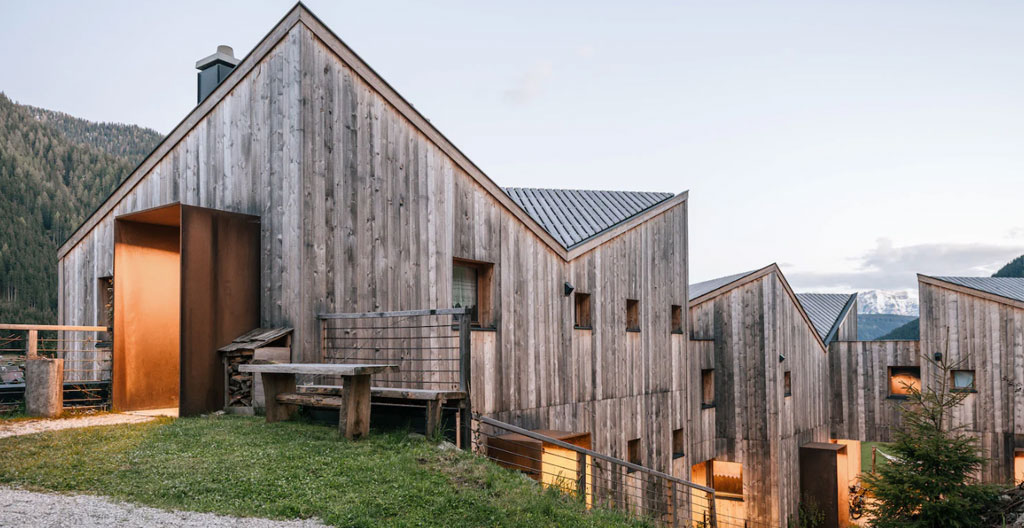
The Mediterranean coastline has always drawn millions seeking sun-soaked escapes, yet the way travelers choose where to stay is undergoing a profound shift. What began as a niche preference for environmentally conscious lodging has evolved into a mainstream movement reshaping the hospitality landscape across Portugal, Spain, Italy, and Greece. This transformation extends far beyond solar panels and recycling bins—it’s rewriting the relationship between tourism, local communities, and the places we visit.
The change is measurable. The 2025 Booking.com Travel & Sustainability Report confirms that 93% of global travelers now say they want to make more sustainable travel choices, a significant jump from 75% in 2024. Perhaps more tellingly, for the first time more than half of travelers—53%—are conscious of tourism’s impact on local communities, not just the environment.
This evolution reflects deeper shifts in travel values that accelerated after the pandemic. Travelers increasingly seek authenticity over formulaic experiences, prioritizing properties that demonstrate genuine environmental care rather than simply displaying certification badges. The question has moved from whether sustainability matters to how to distinguish real commitment from superficial greenwashing—a skill that has become essential for conscious travel planning.
Southern Europe has emerged as the focal point of this transformation for compelling reasons. The region combines mass tourism pressure with fragile ecosystems, creating urgent need for sustainable models. Mediterranean destinations also possess rich vernacular building traditions developed over centuries to work with climate rather than against it—knowledge that contemporary eco-properties are rediscovering and adapting. The convergence of environmental necessity, cultural heritage, and strong policy frameworks has positioned Portugal, Greece, Spain, and Italy at the forefront of Europe’s green hospitality movement.
Why this shift matters for your 2026 travel plans:
- Traveler demand for authentic sustainability has crossed from niche to mainstream, with certification standards catching up to meet it
- Southern Europe leads the transformation, with Portugal and Greece pioneering models that balance environmental care with local economic benefit
- The change goes deeper than eco-labels: genuine properties are reshaping how tourism dollars flow into communities and how destinations preserve cultural identity
- Knowing how to distinguish real commitment from greenwashing has become an essential travel skill in 2026
The quiet revolution in Southern European hospitality
Walk into a boutique property along Portugal’s Alentejo coast or tucked into the hills of southern Italy, and the difference becomes immediately tangible. Natural stone walls regulate temperature without air conditioning. Breakfast features produce from farms within a 20-kilometer radius. Water comes from on-site wells managed to preserve aquifer levels. These aren’t luxury add-ons—they’re fundamental design choices that define a new hospitality model.
The scale of this transformation appears clearly in recent research findings:
93%
Share of global travelers wanting to make more sustainable travel choices in 2025
As highlighted in the European Commission’s March 2026 EU Ecolabel report, tourist accommodation services with the EU Ecolabel are growing faster than in any other sector—a « record-breaking surge » that has brought the total to almost 800 certified accommodations across the EU. The EU Ecolabel team leader described the momentum as unprecedented, driven by conscious travelers actively seeking accommodation with reduced environmental footprint.
This isn’t simply about environmental virtue. Seventy-three percent of travelers want the money they spend to flow back to the local community, according to the Booking.com research. The appetite extends beyond intention: 69% say they want to leave places better than when they arrived. The hospitality industry is responding not to regulation but to market pressure from guests who’ve moved sustainability from the « nice to have » column to a booking criterion.
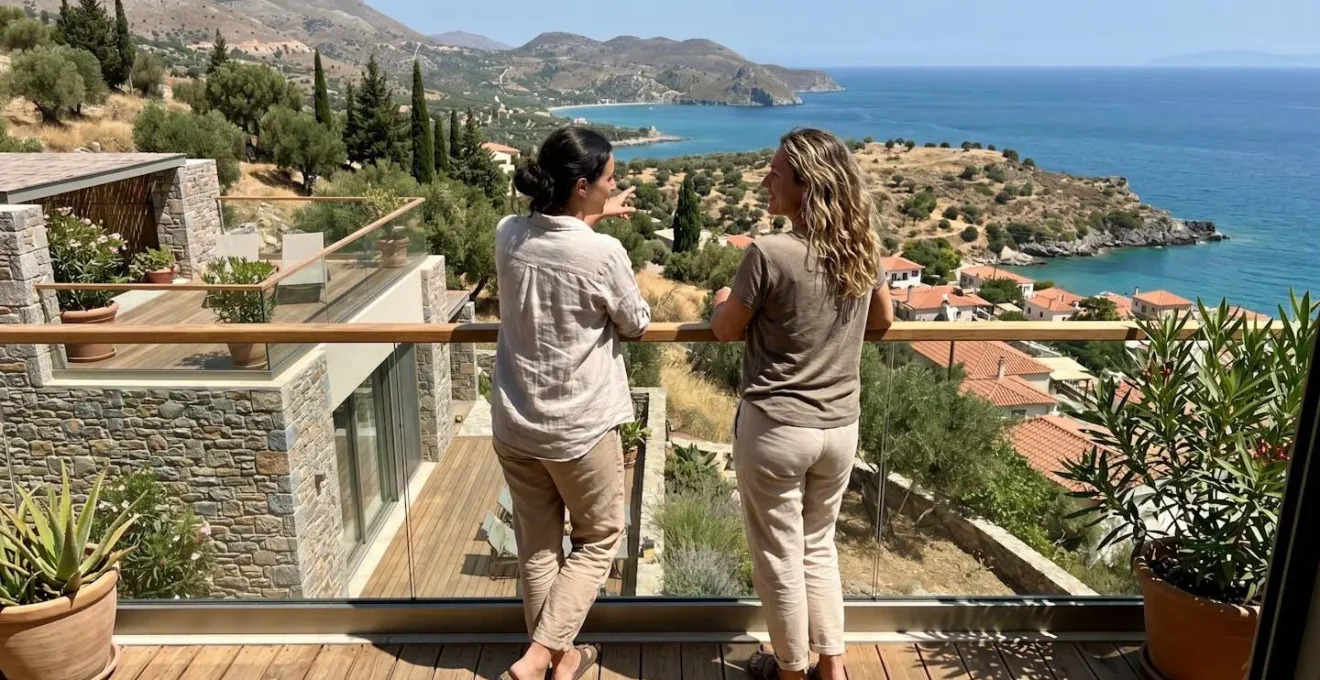
The EU Tourism Platform’s analysis of Southern European green hospitality trends identifies Portugal and Greece as leaders, with both countries prioritizing sustainability to protect environments and tourism industries simultaneously. Portugal has positioned itself at the forefront by promoting eco-friendly accommodations—many certified—and shifting marketing to encourage off-peak travel, reducing pressure on popular areas while spreading economic benefits across seasons.
What defines genuinely sustainable accommodation in 2026?
The surge in traveler interest has predictably triggered a wave of superficial green claims. A property might tout « eco-friendly » credentials based solely on offering guests the option to reuse towels—a cost-saving measure dressed in environmental language. Distinguishing genuine commitment from marketing requires looking past the adjectives to the operational fundamentals.
Common assumption: Eco-friendly accommodation always means basic amenities and rustic comfort levels
Recognized certifications provide one verification layer. The EU Ecolabel requires properties to meet strict criteria across energy consumption, water use, waste reduction, and renewable resources. Green Key assesses everything from staff environmental training to supplier selection. These involve regular audits and measurable performance targets, not rubber stamps.
Beyond official badges, operational specifics reveal commitment depth. Genuine eco-operations source food from nearby farms and fisheries, reducing food miles while supporting regional agriculture. Properties relying entirely on renewable sources—solar thermal for hot water, photovoltaic for electricity, biomass for heating—represent substantial investment beyond token gestures. Comprehensive waste management through composting, recycling, and eliminating single-use plastics requires systems and staff training, not just good intentions.
Distinguishing genuine commitment requires examining specific operational criteria:
- Verify third-party certification (EU Ecolabel, Green Key, or equivalent recognized standard)
- Check energy sources — look for specifics about renewable generation, not vague « green energy » claims
- Ask about water management systems (rainwater harvesting, greywater recycling, low-flow fixtures)
- Identify food sourcing — genuine properties name their local suppliers and specify seasonal menus
- Review waste policies beyond basic recycling (composting, plastic elimination, donation programs)
- Look for community connection — employment of local staff, partnerships with regional artisans, support for cultural preservation
The material palette tells its own story. Properties built or renovated using natural materials—locally sourced stone, sustainably harvested wood, lime-based plasters, clay tiles—demonstrate commitment that extends to fundamental construction choices. These materials often connect to vernacular building traditions developed over centuries to work with the climate rather than fight it.
Portugal’s Alentejo region: where tradition meets innovation
Portugal’s positioning as a green tourism leader becomes concrete in the Alentejo, where the intersection of traditional architecture and contemporary sustainability thinking has created a distinctive hospitality model. The region stretches south from Lisbon toward the Algarve, characterized by cork oak forests, rice paddies, and a coastline that has largely escaped mass development.
The traditional Comporta style—developed in fishing and rice-farming communities—uses natural materials in simple, functional forms. Wooden structures sit lightly on the land, designed for natural ventilation. Thatched or tile roofs provide insulation. Wide verandas create shaded outdoor living spaces. These weren’t environmental statements—they were practical responses to climate and available resources. Contemporary eco-properties are rediscovering this wisdom.
This philosophy of integration is perfectly embodied in the Alentejo’s most innovative projects. For travelers seeking a retreat that honors these vernacular traditions, Quinta Amala Hotel in Melides offers an immersive experience in natural architecture. Situated just 30 minutes from Comporta, this property uses eco-sourced materials to create cabanas that breathe with the landscape. By prioritizing a seamless connection between indoor comfort and the surrounding rice fields and cork oak forests, it demonstrates how luxury can be redefined through simplicity and environmental respect.
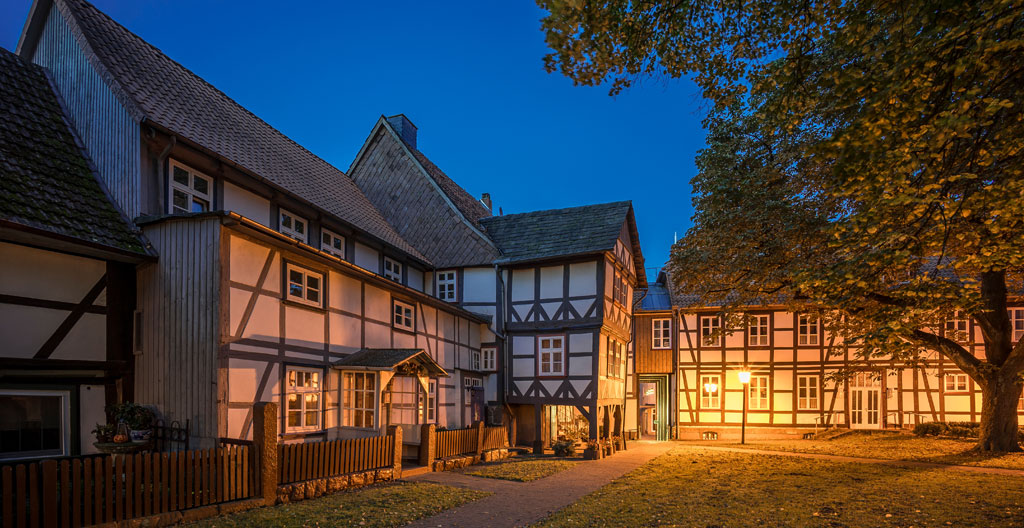
Natural architecture meets modern hospitality in Melides
The name Quinta Amala derives from the Sanskrit word for purity, signaling the core philosophy: authenticity, calm, and connection with nature. The design creates what hospitality increasingly recognizes as essential: a sense of place rooted in the specific location, not an experience that could exist anywhere.
This isn’t heritage preservation for its own sake. Using local materials reduces transport emissions. Natural ventilation and thermal mass from stone walls cut energy needs. Seasonal, organic cuisine sourced from nearby farms and fisheries supports regional food systems while reducing environmental impact. The connection guests form with the surrounding landscape—whether rice fields, cork forests, or Atlantic beaches—creates appreciation that often translates to environmental consciousness beyond their stay.
The Alentejo model demonstrates that eco-accommodation needn’t choose between comfort and sustainability, or between honoring tradition and meeting contemporary expectations. The region’s success has influenced hospitality development across Portugal and provided templates for other Southern European destinations seeking tourism models that preserve rather than consume the qualities that make them distinctive.
How eco-accommodation reshapes local economies and culture
The conversation about sustainable tourism often focuses narrowly on environmental metrics—carbon footprints, water consumption, renewable energy percentages. These matter, but they tell only part of the transformation story. The more profound shift involves how tourism revenue flows through communities and whether hospitality reinforces or erodes local culture.
Traditional mass tourism often creates economic leakage. Large hotel chains import supplies through centralized procurement, employ managers from outside the region, and send profits to distant shareholders. The local economy captures room cleaning jobs and taxi rides, while substantial value escapes. Eco-accommodation, particularly boutique properties, typically inverts this pattern by sourcing food from regional farms, wine from nearby vineyards, linens from local textile producers, and employing staff from surrounding communities. This creates multiplier effects—money spent at the property recirculates through the local economy multiple times rather than disappearing into external supply chains, generating employment beyond direct hospitality jobs.
The cultural dimension operates on similar principles. Properties that incorporate traditional building techniques employ craftspeople who maintain skills that might otherwise disappear. Those that feature regional cuisine in sophisticated forms create markets for heritage ingredients and traditional preparations. When staff share local knowledge about landscape, history, and culture with genuine expertise, they’re performing cultural transmission that has value beyond the immediate guest experience.
Portugal’s strategy of promoting off-peak travel through its green tourism positioning illustrates the broader potential. By extending the season, regions can support year-round employment rather than boom-bust cycles, enabling communities to maintain population and services rather than becoming summer-only tourist zones. The model attracts travelers seeking authentic connection rather than those wanting generic beach resorts, creating a self-reinforcing cycle that rewards maintaining cultural and environmental distinctiveness.
What this means for your next Mediterranean journey?
Understanding the transformation reshaping Southern European hospitality is one thing. Applying that knowledge when planning actual travel requires translating principles into booking decisions. The good news: the growth in genuine eco-accommodation means you’re no longer restricted to a handful of pioneering properties. The challenge: increased options bring increased claims to evaluate.
Start with certification as a baseline filter, but don’t stop there. The property’s own description reveals priorities. Does it provide specific details about energy systems, water management, and sourcing? Or does it rely on vague assertions about being « eco-friendly » and « green »? Genuine commitment shows up in operational specifics, not adjectives.
Do eco-friendly properties cost significantly more than conventional hotels?
Not necessarily. While some luxury eco-properties command premium rates based on location and amenities, many sustainable accommodations fall within standard boutique hotel pricing. The investment in renewable energy and water systems often reduces operating costs over time, which can offset higher initial construction expenses. Comparing like-for-like—boutique eco-property versus conventional boutique property of similar size and location—rates are often comparable. You’re choosing a different operational model, not necessarily a higher price bracket.
How can I verify that a property’s sustainability claims are genuine?
Look for third-party certification from recognized bodies like EU Ecolabel or Green Key—these require audited compliance with specific standards. Ask direct questions: What percentage of energy comes from renewable sources? Where is food sourced? What water conservation systems are in place? Genuine eco-properties will answer with specifics and often enthusiasm. Vague responses or deflection suggest superficial commitment. Online reviews from guests focused on sustainability can also reveal whether operational reality matches marketing claims.
Are eco-accommodations suitable for families with children?
Absolutely, though it depends on the specific property rather than the eco-focus itself. Many sustainable properties in Southern Europe are small boutique operations better suited to couples, but others—particularly rural estates and coastal properties—welcome families and offer spaces for children to explore safely. The emphasis on outdoor connection and natural surroundings often appeals strongly to families seeking alternatives to resort kids’ clubs. Check individual property policies on children rather than assuming eco-friendly means adults-only.
What’s the best time to visit eco-properties in Portugal or Greece?
Shoulder seasons—May to June and September to October—often provide the ideal combination of comfortable weather, fewer crowds, and alignment with sustainable tourism goals. Many eco-properties actively promote off-peak travel to reduce pressure on resources and communities during high season. Spring brings wildflowers and green landscapes; autumn offers harvest season and warm ocean temperatures. You’ll often find better availability, more attentive service, and closer connection to local life when you avoid July and August peaks.
Consider what « sustainable » means in your specific context. For some travelers, it’s primarily environmental—minimizing carbon footprint and resource consumption. For others, it extends to cultural sustainability—supporting communities in ways that help preserve local identity. Most genuine eco-properties address both dimensions, but emphasis varies. Clarify your own priorities to find the best match.
Planning your sustainable Mediterranean journey
- Filter initial searches by recognized certification (EU Ecolabel, Green Key), then investigate operational details
- Book shoulder-season stays to support sustainable tourism patterns while enjoying better availability and often more authentic experiences
- Ask specific questions about energy sources, water systems, and local sourcing—responses reveal depth of commitment
- Look beyond the property itself to its community connections — local employment, regional suppliers, cultural preservation efforts indicate genuine integration
The transformation of Southern European hospitality through eco-friendly accommodation represents something larger than consumer preference shifts or industry adaptation. It’s fundamentally about redefining the relationship between tourism and place—moving from extraction to reciprocity, from standardization to distinctiveness, from environmental cost to potential regeneration.
The data shows momentum: 93% of travelers wanting sustainable choices, certification programs growing faster than in any other sector, leading destinations like Portugal positioning green tourism as core strategy rather than niche offering. Your next booking decision participates in that outcome. The properties you choose to support with your custom—and the ones you don’t—send market signals that shape how the industry evolves. As you plan that Alentejo escape or Greek island retreat, you’re not just selecting where to sleep. You’re voting on what kind of tourism future gets built.