The true cost of a hotel room isn’t the nightly rate, but the hidden « inconvenience tax » you pay in time, money, and stress for a poor choice.
- An apparently « cheap » hotel located far from attractions often costs more per day in transport and lost holiday time than a well-located standard room.
- The raw size of a room is a misleading metric; the functional layout and usable space are what truly determine comfort, especially for couples.
Recommendation: Use your total trip budget as a strategic filter to find hotels where that budget places you in a strong ‘Standard Room’ tier, not as a ceiling to find the absolute lowest price.
For the budget-conscious UK traveller, the process of booking a hotel can feel like a frustrating game of chance. You scroll through endless listings, comparing prices that fluctuate by the minute, trying to decipher cryptic room descriptions. The common advice is to book in advance, read the reviews, and hunt for the lowest price. But this approach often leads to disappointment: a « bargain » room that’s miles from anywhere, a « standard » room that’s barely bigger than the bed, or a night spent listening to the lift machinery through a paper-thin wall.
The core issue is that we are taught to focus on the wrong metric: the nightly rate. This single number tells us nothing about the true value or the total cost of our stay. We instinctively feel that paying for a hotel suite with a conference table and a second bathroom is a waste if we’re only there to sleep and explore the city. Yet, we fall into the trap of its opposite: choosing the cheapest available option without considering the hidden costs.
But what if the key to unlocking real value wasn’t about finding the lowest price, but about mastering a simple cost-benefit analysis? This article presents a strategic framework for the value-driven traveller. We will deconstruct the common myths around hotel rooms and show you how to analyse factors like location, layout, and noise probability. You will learn to identify a genuinely comfortable and well-positioned standard room that provides maximum value, ensuring you only pay for the comfort you actually need, and not a penny more for luxury you’ll never use.
To help you navigate this strategic approach, this guide breaks down the essential criteria for making a smarter hotel choice. The following sections will equip you with a new framework for evaluating rooms, from a city centre bolthole to a suburban base.
Summary: A Value Traveller’s Framework for Hotel Room Selection
- Why City Centre Standard Rooms Often Outperform Suburban Suites for Short Breaks
- How to Assess if a Standard Room Meets Your Essential Comfort Requirements
- Standard Room or Economy Room: Where’s the Actual Difference Worth Paying For?
- The Room Size Mistake That Makes 70% of Standard Rooms Unusable for Couples
- How to Request the Quietest Standard Room Location Without Paying Extra
- Why Suburban Budget Chains Save £60 Nightly Compared to City Centre Budget Hotels
- Why « Cheap » Hotels 5km From Attractions Actually Cost £40 More Daily
- Making Budget Your Strategic Anchor for All Subsequent Hotel Selection Criteria
Why City Centre Standard Rooms Often Outperform Suburban Suites for Short Breaks
The allure of a suburban suite is understandable. For the same price as a standard room in the city centre, you’re offered more space, grander amenities, and the promise of a quiet retreat. However, for a short leisure break, this is often a false economy. The perceived value of extra square footage quickly evaporates when you factor in the « inconvenience tax »—the hidden costs in both time and money required to access the city’s main attractions.
A comprehensive lodging market analysis revealed that downtown hotel locations are, on average, just 1.4 miles from major demand generators like attractions and restaurants, compared to 5.5 miles for their suburban counterparts. That extra distance isn’t just a minor inconvenience; it’s a daily drain on your holiday budget and your most precious resource: time. Two round trips a day via taxi or public transport can easily add £20-£40 to your daily expenses, completely negating the initial saving on the room. This financial reality is supported by academic findings, with research on urban hotel location value showing that a 13% property value decrease per mile from the city centre reflects this trade-off. A centrally located standard room places you in the heart of the action, maximising walkability and spontaneity, which is the true luxury of a city break.
Ultimately, the value-density of a city centre standard room is far higher. You are paying for a strategic position that saves you money, time, and energy, allowing you to experience more of the destination. The suburban suite, in contrast, forces you to spend your holiday commuting.
How to Assess if a Standard Room Meets Your Essential Comfort Requirements
Once you’ve settled on a location, the next challenge is to determine if a « standard » room will actually be comfortable. Relying solely on the hotel’s description or a single wide-angle photo is a recipe for disappointment. A truly strategic assessment goes beyond the checklist of amenities and focuses on the qualitative aspects of comfort and functionality.
Essential comfort isn’t about luxury; it’s about the absence of irritation. It’s having a place to put your suitcase that isn’t the floor, an outlet near the bed to charge your phone, and enough space for two people to get ready simultaneously without a choreographed dance. These details of functional square footage are rarely mentioned in booking descriptions but are critical to an enjoyable stay. Look for guest photos that show the room in use, paying close attention to the space around the bed and between furniture. Is there a dedicated work area, or is the « desk » a tiny shelf? Is there a comfortable chair for reading, or just the edge of the bed?
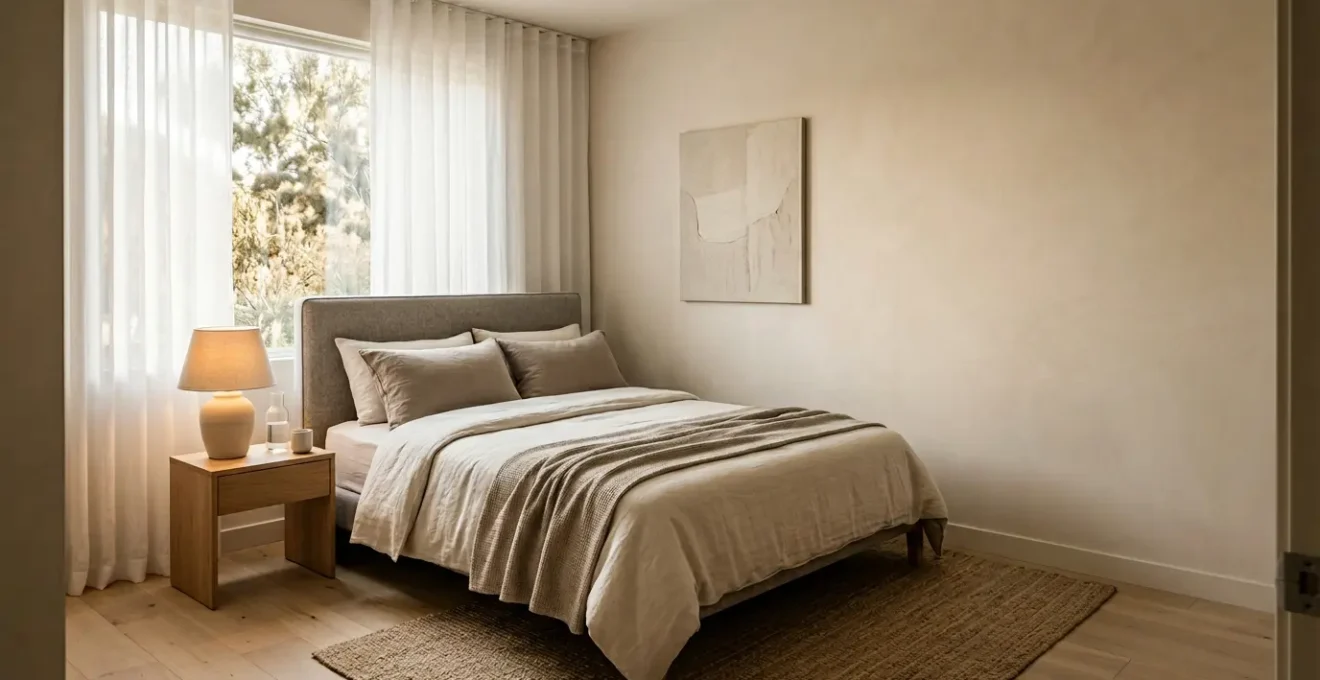
This deeper level of scrutiny requires you to look for signs of thoughtful design. The image below highlights the kind of details that signal quality beyond the superficial: the texture of the linens, the quality of the light, and the intuitive placement of functional elements. These are the hallmarks of a room designed for genuine comfort.

As the image suggests, the quality of a room is often revealed in its micro-details. A well-designed room anticipates your needs. This assessment isn’t about finding a perfect room; it’s about identifying a space that is thoughtfully laid out to support your travel style, ensuring your essential comfort needs are met without paying for features you won’t use.
By shifting your focus from a simple list of amenities to a more holistic evaluation of space and functionality, you can more accurately predict whether a standard room will be a comfortable base or a frustrating compromise.
Standard Room or Economy Room: Where’s the Actual Difference Worth Paying For?
On many booking sites, the « Economy » or « Budget » room is presented as a tempting, cheaper alternative to the « Standard » room. The price difference might only be £15-£25, leading many travellers to question if the upgrade is worth it. The answer, in most cases, is a resounding yes. The difference is rarely just about a few square feet; it’s an insurance policy against a host of potential problems.
While hotels are often coy about the specifics, industry dimensional standards indicate that budget rooms can be up to 100 square feet smaller than standard rooms. But the most significant difference lies in location and assignment. Economy rooms are often the « problem children » of the hotel’s inventory: they are located next to noisy elevators, rumbling ice machines, or service areas. They might have an obstructed view (facing a brick wall), a compromised layout due to structural pillars, or be the last to be refurbished. Booking an economy room essentially places you at the bottom of the priority list for room allocation.
The £20-£40 premium for a standard room is not just for more space; it’s for a higher probability of a good night’s sleep and a more functional stay. You’re paying to remove yourself from the « acoustic lottery » of the hotel’s worst-located rooms and to secure a space with better amenities like a proper desk and comfortable seating. The following table breaks down the key distinctions.
| Feature Category | Economy/Budget Room | Standard Room | Value Difference |
|---|---|---|---|
| Average Size (US) | 175-250 sq ft | 275-350 sq ft | +100 sq ft usable space |
| Location Assignment | Often near elevators, service areas, or with structural compromises | Mid-corridor, better floor positions available | Reduced noise, better sleep quality |
| Typical Amenities | Essential only: bed, basic bathroom, minimal furniture | Essential + desk/work area, seating chair, improved bathroom fixtures | Functional workspace, comfort seating |
| Guest Priority Status | Lowest booking tier | Standard tier with moderate priority for requests | Better likelihood of special request accommodation |
| Price Premium | Baseline | +$20-40 per night typical | Insurance against ‘problem rooms’ |
For a value-driven traveller, the standard room almost always represents the superior choice. It offers a baseline of predictable comfort and functionality that the economy option simply cannot guarantee, making it a smarter and safer investment for your trip.
The Room Size Mistake That Makes 70% of Standard Rooms Unusable for Couples
One of the most common mistakes travellers make is equating room size with comfort, especially for couples. A hotel might proudly advertise a 340 square foot room, but if the layout is poorly planned, it can feel more cramped and dysfunctional than a well-designed 280 square foot room. The raw square footage is often a vanity metric; the critical factor is the usable functional zones within the space.
For two people sharing a room, a good layout is non-negotiable. It requires separate ‘get ready’ spaces, adequate clearance on both sides of the bed, and a designated area for luggage that doesn’t create an obstacle course. When a room lacks these distinct zones, it leads to a constant dance of bumping into each other, tripping over suitcases, and struggling for a free surface to place personal items. The « extra » space in a poorly designed room is often just useless, empty floor in the middle, while the functional areas remain cramped.
This principle highlights the importance of looking past the advertised size and scrutinising the room’s layout, often visible in guest photos or the hotel’s floor plan if available.
Case Study: The Superiority of Layout Over Size
Design analysis consistently shows that a thoughtfully planned 280 sq ft room can deliver higher guest satisfaction than a poorly organised 340 sq ft room. The key difference lies in smart design choices: placing the bathroom as an acoustic buffer between the bed and the corridor, ensuring at least 24-30 inches of clearance on one side of the bed, and providing 36-inch clear pathways for circulation. These elements create a sense of ease and functionality that raw, undivided space cannot match. For couples, this means one person can use the bathroom or get ready without disturbing the other, a small but significant factor in overall comfort.
A room with a clearly defined entryway, a sleeping area, and a small seating or work area, even if compact, will always feel more spacious and liveable than a larger, shapeless room where all functions are jumbled together.
Therefore, when booking as a couple, train your eye to look for evidence of smart zoning. Prioritise a thoughtful layout over a bigger number on the description; it’s the single most important factor for a harmonious stay.
How to Request the Quietest Standard Room Location Without Paying Extra
Even within the « standard room » category, there’s a huge variance in quality, particularly when it comes to noise. Getting stuck in a room near a busy street, a service entrance, or a gaggle of late-night revellers spilling out of the elevator can ruin a good night’s sleep. While some hotels charge a premium for « quiet » rooms, it’s often possible to significantly improve your chances of securing a peaceful location without paying extra, simply by being strategic with your request.
The key is to understand when and how to ask. A vague request like « quiet room, please » added to your online booking notes is easily ignored. Front desk staff are most receptive to specific, knowledgeable, and polite requests made at the right time. Most hotels allocate specific rooms on the morning of arrival, not weeks in advance. A well-timed phone call directly to the front desk on that morning can make all the difference. Frame your request as a preference from an experienced traveller, not a demand. This collaborative approach makes staff more willing to help you find an optimal spot.
Using precise terminology shows you understand how hotels operate and increases the likelihood your request will be taken seriously. The goal is to make it easy for the staff to help you. By providing them with clear, logical criteria, you move from being just another booking number to a guest with reasonable, well-articulated preferences.
Your Action Plan: The Quiet Room Request Protocol
- Timing is everything: Call the hotel front desk directly on the morning of your arrival. This is when room assignments are being finalised.
- Use specific language: Don’t just say « a quiet room. » Ask for « a room on a high floor, in a mid-corridor position, away from the elevators, ice machines, and any service areas. »
- Reference acoustic design: Show your expertise by adding, « A room where the bathroom is positioned between the bed and the corridor would be ideal if possible. » This demonstrates an understanding of hotel layouts.
- Do your homework: Briefly check travel forums or booking site reviews for your specific hotel. Sometimes guests will mention ideal room numbers or wings (e.g., « the rooms in the 50-60 range are quietest »).
- Frame it as a preference: Phrasing your call with « I was hoping to request… » rather than « I need… » makes you an ally of the front desk staff, not an adversary.
This strategic communication transforms you from a passive recipient of whatever room is available to an active participant in securing your own comfort, a crucial skill for optimising your stay without upgrading your budget.
Why Suburban Budget Chains Save £60 Nightly Compared to City Centre Budget Hotels
For travellers with a car or those visiting destinations outside the city core, suburban budget chains like Travelodge or Premier Inn present a compelling value proposition. It’s not uncommon to find a nightly rate that is £60 or more cheaper than a comparable chain hotel in the city centre. This significant saving isn’t a sign of inferior quality but a direct reflection of the hotel industry’s biggest cost factor: real estate.
Hotels in prime city centre locations pay a massive premium for their land, and that cost is passed directly to the consumer. Suburban properties, with their lower land and operating costs, can offer a similar-quality physical product for a fraction of the price. The core of the budget chain model is standardisation. A room in a suburban Super 8 or La Quinta is designed to meet predictable quality metrics—from the specific mattress and cleaning protocols to noise control measures. This predictability is their core feature.
While an independent city centre budget hotel might be a gamble, a suburban chain offers a known quantity. This equation shifts the definition of « convenience » based on your trip’s purpose. If you are attending an event at a suburban conference centre or visiting family in the outskirts, the suburban chain becomes the most convenient and cost-effective choice. In this context, the city centre hotel is the expensive, inconvenient option that would require additional transport and parking fees. The 2026 budget hotel market analysis reveals that this price differential is a stable feature of the market, with suburban rooms often priced 50-60% lower than their urban counterparts.
The strategic traveller knows when to leverage this advantage. When your itinerary doesn’t revolve around a walkable city core, the suburban budget chain isn’t a compromise; it’s the smartest financial move you can make.
Why « Cheap » Hotels 5km From Attractions Actually Cost £40 More Daily
The £30-per-night saving on a hotel located 5km from the city centre can seem like a savvy financial move at the booking stage. However, this upfront saving is often a mirage, quickly erased by the very real and cumulative « inconvenience tax » you pay every single day. When you factor in transportation, lost time, and other hidden costs, that « cheap » hotel can easily end up costing you more than a better-located alternative.
The most obvious cost is transportation. A 5km journey might require a taxi or rideshare, which can cost £10-£20 each way. Two round trips per day could add up to £40 or more, completely wiping out your initial saving. Even with public transport, the cost and, more importantly, the time, add up. A 45-minute commute each way consumes 1.5 hours of your precious holiday time daily. This is time you’re paying for but spending on a bus or tube instead of at a museum or cafe. Indeed, corporate travel expense analysis indicates that ground transportation can add an extra £40 to £120 to a traveller’s daily costs depending on the city.
Beyond direct transport costs, the inconvenience tax has other components:
- Meal Displacement Costs: Being far from your room means you can’t just « pop back » for a quick snack or to drop off shopping. This forces you to eat every meal and snack in expensive tourist-zone cafes and restaurants.
- Energy Drain: The physical and mental toll of daily commuting is significant. Starting and ending your day with a long journey saps energy that could be spent enjoying your destination.
- Reduced Spontaneity: A distant hotel locks you into a rigid schedule. You can’t easily go back to the hotel to change for an evening out or to rest for an hour in the afternoon.
This isn’t to say a peripheral hotel is always a bad choice. In a city with exceptional, cheap public transport like Paris, 5km might be a quick 15-minute metro ride. But in a sprawling, car-dependent city like Los Angeles, that same distance could be a 45-minute, £25 taxi journey. Context is everything.
By performing this quick, realistic calculation, you can make an informed decision and avoid the common trap of choosing a hotel that is cheap on paper but expensive in practice.
Key takeaways
- True hotel value is measured not by the nightly rate, but by the total cost of your stay, including the hidden « inconvenience tax » of a poor location.
- A room’s functional layout and smart design are far more critical to comfort than its raw square footage, especially for couples.
- Use your budget as a strategic anchor: aim to find a hotel where your budget secures a solid ‘Standard Room’, rather than just finding the cheapest possible price.
Making Budget Your Strategic Anchor for All Subsequent Hotel Selection Criteria
For too long, budget-conscious travellers have been taught to use their budget as a ceiling—a hard limit under which they must find the cheapest acceptable option. This approach is fundamentally flawed because it forces you into the weakest position in any hotel’s inventory. A truly strategic approach flips this on its head: your budget should not be a ceiling, but an anchor. It becomes the central, immovable point around which all other decisions—location, comfort, and amenities—are made.
This is the ‘Value Triangle’ principle: for any given stay, you can typically optimise for only two of three factors: Price, Location, and Comfort. The strategic anchor approach means you fix the ‘Price’ point first. For example, with a £150/night budget, the goal is not to find a room for £120. The goal is to find a hotel where £150 puts you comfortably into their ‘Standard Room’ or even ‘Superior Room’ category. This ensures you are treated as a core customer, not a bargain-hunter to be allocated the least desirable room.
This framework forces you to align your budget with your travel style. As the table below illustrates, the priority for your budget changes dramatically depending on the purpose of your trip. A fast-paced city explorer should anchor their budget to location, accepting a smaller room. A couple on a romantic getaway should anchor their budget to room quality and ambiance, compromising on a slightly less central location if necessary.
| Travel Style | Budget Priority 1 | Budget Priority 2 | Acceptable Compromise | Typical Room Size Needed |
|---|---|---|---|---|
| Fast-paced city exploration | Location (walkable to attractions) | Basic comfort (clean, quiet, functional) | Smaller room size (250-280 sq ft acceptable) | 250-300 sq ft |
| Relaxed/extended stay | In-room comfort (workspace, seating, layout) | Amenities (kitchenette, separate zones) | Peripheral location with good transit access | 325-400 sq ft |
| Business travel | Functional workspace (desk, ergonomics, connectivity) | Location (proximity to office/convention center) | Minimal leisure amenities | 280-350 sq ft |
| Couples romantic getaway | Room quality and ambiance | Privacy and noise control | Distance from some attractions if property is exceptional | 325+ sq ft with layout separation |
| Family travel | Space and practical layout | Value (cost per person) | Non-central location if family-oriented area | 350-500+ sq ft or connecting rooms |
By using your budget as a filter to qualify the right *tier* of hotel, you escape the race to the bottom. You position yourself to receive better service, have your requests taken more seriously, and secure a room that genuinely enhances your travel experience.
Apply this framework on your next trip: define your budget, identify your travel style’s top priority, and filter for hotels where your budget makes you a valued standard guest. This is the ultimate strategy for ensuring you get the comfort you need without paying for luxury you don’t.