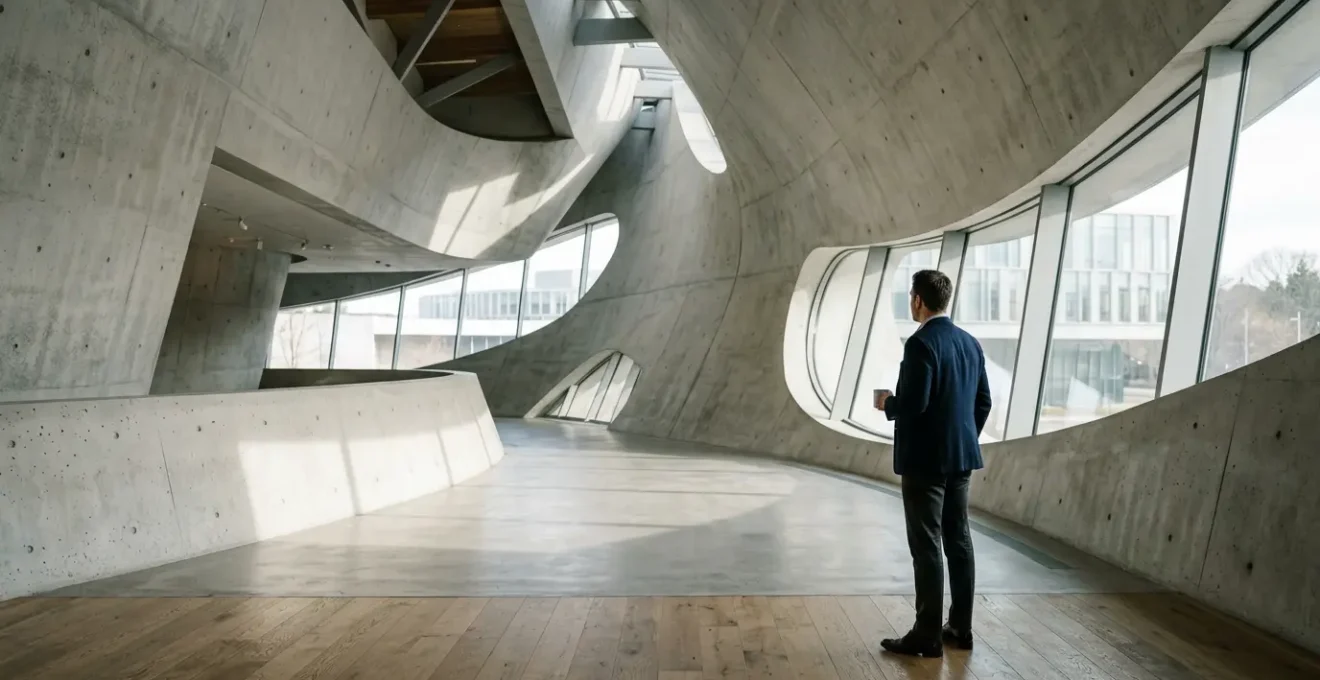
A change of scenery isn’t about luck; it’s a strategic process of dismantling cognitive habits to engineer breakthroughs.
- Specific environments amplify different creative phases: bustling cities for ideation, tranquil nature for focused execution.
- The wrong novel environment—bland and generic—can be more cognitively draining than your familiar workspace.
Recommendation: Audit your daily sensory input to consciously select an opposing environment as a precision tool for creative problem-solving.
For any creative professional, the feeling is unpleasantly familiar: a mental block that clamps down, turning vibrant ideas into a frustrating blank slate. The standard advice often feels inadequate— »take a walk, » « travel more, » or « work from a café. » While well-intentioned, this approach treats a change of scenery as a game of chance, a passive hope that inspiration will randomly strike. It fundamentally misunderstands the relationship between our minds and the spaces we inhabit.
The truth is that our familiar environments build a powerful but invisible ‘cognitive scaffolding’ around our thinking. This framework of routines, sensory inputs, and mental shortcuts is efficient for daily tasks but becomes a cage when we need to generate something truly new. To break free, we don’t just need a different view; we need a targeted environmental strategy. The key isn’t simply to change your location, but to consciously select and engineer a new setting as an active cognitive tool.
This guide moves beyond the clichés. We will explore a systematic approach for using environmental displacement to deconstruct creative blocks and trigger fresh perspectives. You will learn not just why new settings work, but how to calibrate them for your specific discipline, project phase, and cognitive needs. We will deconstruct which environments fuel creativity and which ones accidentally sabotage it, providing you with a framework to turn any destination into a catalyst for your next breakthrough.
This article provides a complete framework for strategically selecting environments to enhance creativity. Explore the sections below to learn how to turn travel into a tool for innovation.
Summary: Selecting Novel Environments for Creative Breakthroughs
- Why New Settings Increase Creative Problem-Solving by 50% Over Familiar Spaces
- How to Select Environments That Amplify Your Specific Creative Discipline
- Urban Stimulation or Rural Tranquility: Which Environment Boosts Creativity?
- The Setting Type That Fragments Attention for 80% of Creative Workers
- When to Schedule Creative Retreats to Align With Your Productive Cycles
- How to Identify Optimal Scenery Contrast Based on Your Home Environment
- How to Practice Daily Reflection Rituals That Strengthen Memory Consolidation
- Choosing Destinations That Visually Oppose Your Daily Environmental Context
Why New Settings Increase Creative Problem-Solving by 50% Over Familiar Spaces
The profound impact of a new environment on creativity isn’t just a feeling; it’s a documented cognitive phenomenon. Our brains are wired for efficiency, building mental models and shortcuts based on familiar surroundings. This cognitive scaffolding helps us navigate daily life with minimal effort. However, for creative work, this efficiency is a trap. It encourages pattern-based thinking and stifles the divergent thought required for a breakthrough. A novel environment systematically dismantles this scaffolding, forcing the brain into a more alert, observant, and open state.
This disruption is not about chaos, but about introducing ‘perceptual friction’—new sights, sounds, textures, and social dynamics that your brain cannot automatically process. As the Frontiers in Human Neuroscience Research Team notes in their Real World Problem-Solving study:
A crucial feature of RWPS is that it involves continuous interaction with the environment during the problem-solving process. In this process, the environment can be seen as not only a source of inspiration for new ideas but also as a tool to facilitate creative thinking.
– Frontiers in Human Neuroscience Research Team, Real World Problem-Solving study
This concept of the environment as a ‘tool’ is critical. It reframes travel from a passive vacation to an active creative strategy. The simple act of touching an unfamiliar surface or navigating a non-grid street layout primes the brain for new connections. This is supported by findings that demonstrate a clear link between environmental characteristics and creative output. For instance, research on environmental psychology demonstrates that high- and medium-perceived naturalness environments consistently lead to superior creative performance compared to artificial, low-naturalness settings.
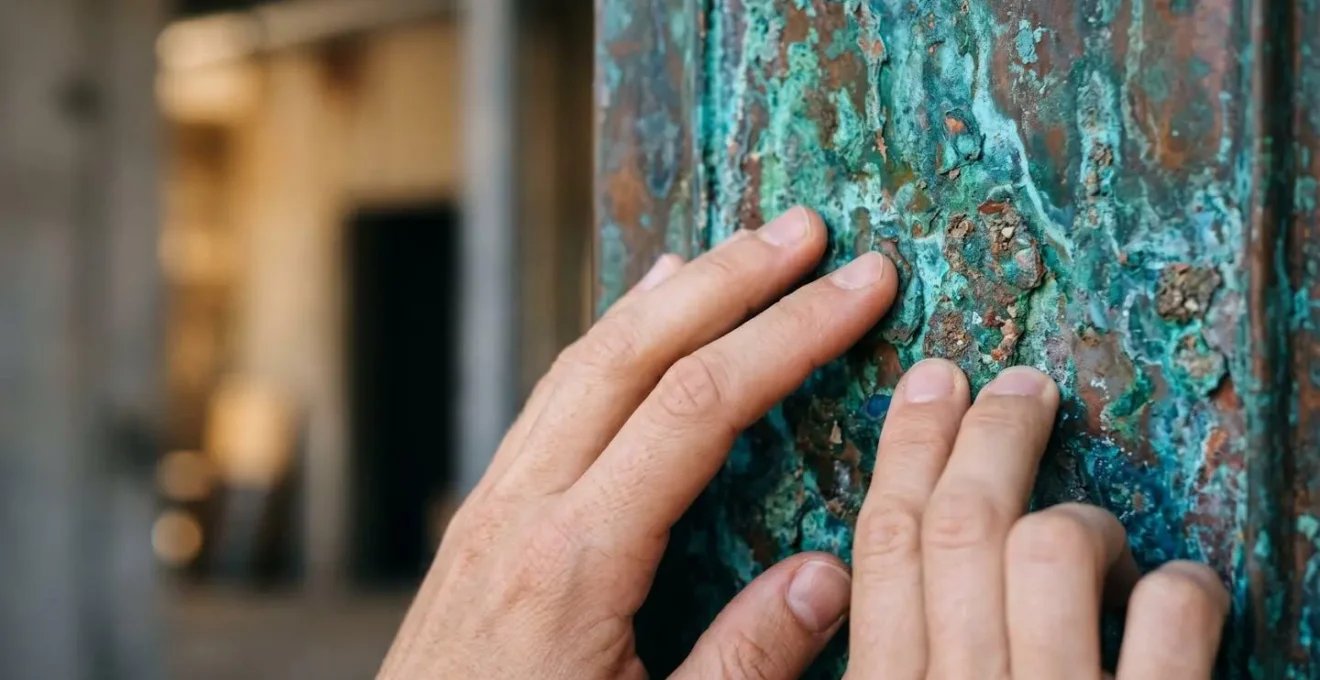
By stepping into a new setting, you are not just changing your view; you are rebooting your perceptual system. This cognitive reset breaks down rigid thinking patterns, allowing for the serendipitous connections and fresh perspectives that are the very essence of a creative breakthrough. The 50% increase is not a fixed number but a representation of the quantum leap in problem-solving ability when we move from a state of automatic processing to one of engaged discovery.
How to Select Environments That Amplify Your Specific Creative Discipline
The idea that any new environment will universally boost creativity is a myth. A novelist’s ideal retreat is likely a counter-productive space for a user interface designer. The key is environmental calibration: the deliberate selection of a setting whose sensory inputs directly support the cognitive demands of your specific creative discipline. You must move beyond thinking of places as « good » or « bad » and start analyzing them as specialized instruments.
For disciplines requiring deep, linear focus and intricate world-building—like writing, composing, or strategic planning—the ideal environment minimizes external social and visual noise. These roles benefit from settings that promote introspection and sustained concentration. Think of isolated cabins, monastic libraries, or quiet coastal towns where the sensory input is consistent and non-demanding, allowing the internal world to become the primary focus. The goal is to create a ‘sensory vacuum’ that the creative work itself can fill.
Conversely, disciplines that thrive on synthesis, trend-spotting, and connection-making—such as brand strategy, fashion design, or journalism—are amplified by environments rich in complex, novel stimuli. These professionals should seek out high-stimulation zones: bustling city centers, vibrant market streets, or major cultural hubs. The constant flow of diverse people, architectural styles, and unexpected interactions provides a rich dataset for the brain to mine for new patterns and ideas. For a UI/UX designer, observing how people navigate a poorly-designed train station can be more valuable than a week in a silent forest.
Finally, visually-driven disciplines like architecture, photography, or graphic design require a focus on ‘formal novelty.’ This means seeking out environments with a starkly different design language, color palette, or geometric structure from your norm. A comprehensive Human Spaces study revealed that workplaces incorporating natural light, greenery, and organic materials (biophilic design) significantly increased employee creativity. This shows how specific visual elements, not just the location itself, can be calibrated to foster new aesthetic insights.
Urban Stimulation or Rural Tranquility: Which Environment Boosts Creativity?
The debate between city and countryside for creative work is often framed as a simple preference. In reality, they are two different cognitive tools designed for two different stages of the creative process. Choosing the right one depends entirely on what you need to achieve: generating a wide array of new ideas (divergent thinking) or refining and executing a single concept (convergent thinking).
Urban environments are unparalleled ideation engines. A city’s density creates what sociologists call ‘creative collisions’—unexpected encounters with people, ideas, and aesthetics. The sheer volume of information—from street art and architectural juxtapositions to snippets of conversation and diverse fashion—forces the brain to make novel connections. This high-stimuli setting is perfect for the beginning of a project when the goal is to generate a maximum number of possibilities. For a team brainstorming a new product, a few days in a vibrant district of Tokyo or Berlin will yield more raw material than a month in a quiet retreat.
Rural tranquility, on the other hand, is the ultimate tool for deep work and execution. Once an idea has been chosen, the primary challenge becomes focus and refinement. Natural environments excel at this. The ‘Attention Restoration Theory’ (ART) suggests that nature engages our « soft fascination » with stimuli like rustling leaves or flowing water. This process allows the brain’s « directed attention »–the kind we use for intense focus on tasks–to rest and recover. As environmental psychology research confirms, the attention restoration benefits of high-naturalness environments directly improve creative problem-solving by fostering flexibility and imagination.
The most effective creative professionals don’t choose one over the other; they alternate between them strategically. They use the city to fill the well with new ideas and then retreat to the countryside to draw from it, shaping that raw material into a finished product. The city is for input; the countryside is for output. Understanding this rhythm allows you to stop asking « which is better? » and start asking « which is right for this specific task? ».
The Setting Type That Fragments Attention for 80% of Creative Workers
There exists a particularly dangerous type of environment for creative work, one that is more damaging than a distracting office. It is the ‘non-environment’—the bland, generic, and characterless space that is neither comfortably familiar nor stimulatingly novel. Think of the soulless corporate hotel, the sterile airport lounge, or the cookie-cutter conference center. These settings induce a state of attentional fragmentation, a low-grade cognitive drain that depletes mental resources without providing any creative benefit.
The problem with these spaces is that they sit in an ‘uncanny valley’ of stimulation. They are just unfamiliar enough to prevent your brain from operating on autopilot, forcing you to expend mental energy on trivial navigation (Which of the 100 identical doors is mine? How does this generic shower work?). Yet, they are so devoid of unique character or sensory richness that they offer no perceptual friction or novel data to spark new ideas. You are paying the cognitive cost of novelty without reaping any of the creative rewards. This leads directly to decision fatigue, a state of depleted willpower from making too many trivial choices. The cost is enormous; a 2023 World Economic Forum study estimated that decision fatigue costs the global economy $400 billion annually in lost productivity.
Case Study: The Parole Board Judges
A landmark study on decision fatigue provided a stark illustration of this effect. It analyzed the rulings of parole board judges over the course of a day. The findings were dramatic: judges granted parole to around 70% of cases heard in the morning. However, for cases heard late in the afternoon, the approval rate plummeted to below 10%, even for inmates with similar offenses. The judges’ cognitive resources were so depleted by the repetitive, high-stakes decisions that they defaulted to the easiest, safest option: denial. This demonstrates how a cognitively taxing, repetitive environment systematically degrades the quality of judgment.
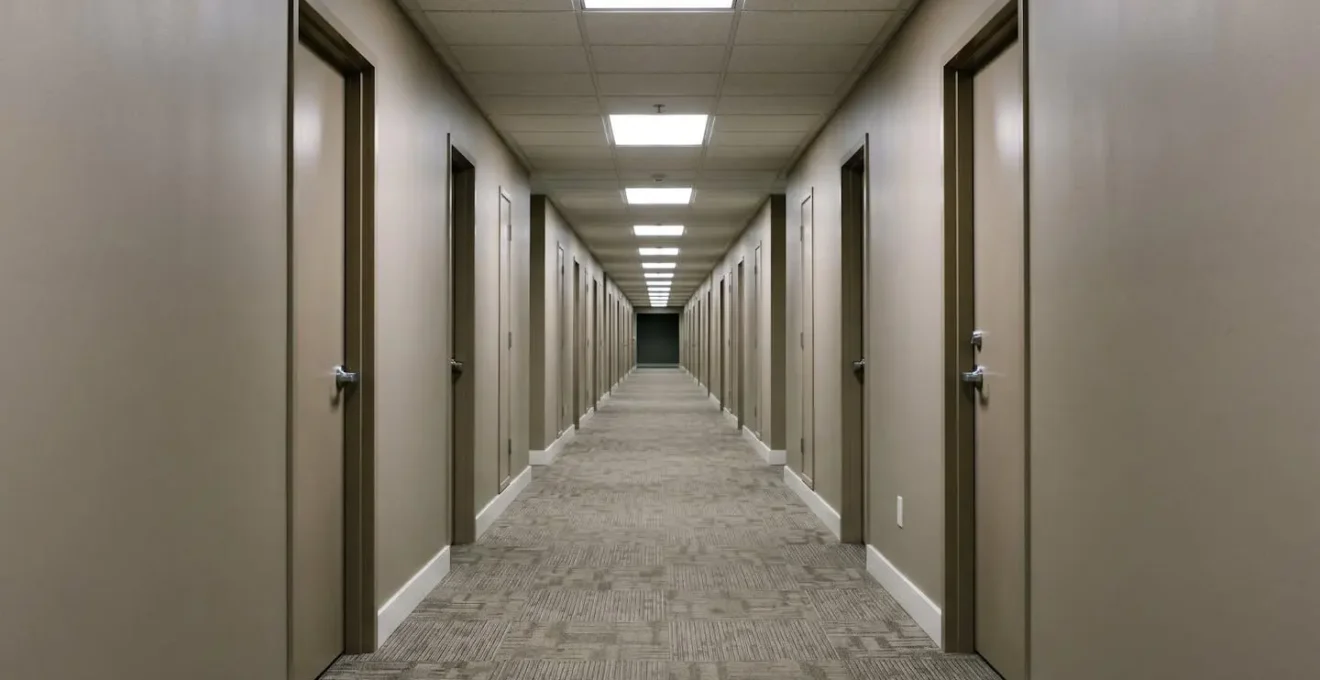
For a creative professional, this is a critical warning. Choosing a bland, generic hotel for a « creative retreat » is an act of self-sabotage. You are placing yourself in an environment perfectly engineered to fragment your attention and drain your cognitive battery. It is far better to remain in your familiar (but efficient) home office than to decamp to a space that actively works against deep thought. The first rule of environmental selection is to ruthlessly avoid the ‘non-environment’.
When to Schedule Creative Retreats to Align With Your Productive Cycles
Timing a creative retreat is as crucial as choosing the destination. An ill-timed retreat, even in a perfect location, can feel like a waste of resources. To maximize impact, you must align your environmental shifts with the natural cycles of your projects and your own biological rhythms. This transforms a retreat from a simple « break » into a scheduled, high-impact intervention.
The most effective framework is to map retreats to the distinct phases of a project: Ideation, Focus/Execution, and Refinement. Each phase has different cognitive requirements and thus benefits from a different type of environment. An Ideation retreat, at the very start of a project, should be in a high-stimulation urban environment to maximize new inputs. A Focus retreat, during the « messy middle » of execution, requires a low-distraction rural setting for deep work. A Refinement retreat, just before a deadline, benefits from a calm but inspiring location (like a coastal or mountain lodge) that encourages high-level polishing and critical evaluation.
This macro-scheduling should be complemented by micro-retreats. These are recurring, short-duration environmental shifts within your regular work week. Scheduling a half-day every Tuesday afternoon to work from a local museum, botanical garden, or architectural library can provide a consistent drip-feed of novel stimuli that prevents cognitive stagnation. A 2024 Future Workplace report found that teams with access to both collaborative and quiet work areas were 29% more productive and 24% more creative.
Here is a practical framework for scheduling your creative getaways:
- Map Your Project Phases: Clearly identify the Ideation (kickoff), Focus/Execution (messy middle), and Refinement (pre-deadline) stages of your current project.
- Schedule Ideation Retreats: At the very beginning of a project, book a short trip to a dense, urban environment to generate a wide range of possibilities.
- Plan Focus Retreats: For the long « messy middle » where deep work is required, schedule a retreat in a rural, low-distraction setting.
- Book Refinement Retreats: Before final deadlines, opt for a calm, inspiring location that supports polishing work and critical final checks.
- Implement Weekly Micro-Retreats: Block out a recurring 3-4 hour slot each week to work from a different local environment like a library, museum, or park.
How to Identify Optimal Scenery Contrast Based on Your Home Environment
The effectiveness of a new environment is not absolute; it is relative to your daily baseline. The goal is to create sensory opposition—a deliberate and significant shift from the default sensory inputs of your home and work life. A graphic designer living in a minimalist, monochrome apartment in a quiet suburb will gain little creative friction from a minimalist hotel in another quiet suburb. For true cognitive disruption, they need the vibrant, noisy, visually dense environment of a city like Marrakech. The key is to first audit your daily reality and then select a destination that intentionally inverts it.
This process of sensory auditing isn’t complex. It involves a conscious evaluation of your everyday environment across a few key dimensions: visual complexity, sound level, color palette, social density, and natural geometry. By rating your baseline on these scales, you can create a ‘sensory fingerprint’ of your daily life. The most powerful creative retreats will be found in locations that offer a mirror-image profile on at least three of these five scales. This isn’t just about seeking difference for difference’s sake; it’s about providing your brain with a new dataset that is fundamentally incompatible with its existing shortcuts.
This intentional contrast stimulates well-being, which is a direct precursor to creative performance. As a global workplace research analysis showed, perceptions of well-being can increase by up to 15% when people are in surroundings with engaging natural elements, a stark contrast to many sterile office environments. To systematically identify your optimal contrast, you need a clear audit process.
Your Action Plan: The Sensory Contrast Audit
- Identify Contact Points: List all the primary sensory channels that define your daily environment: Visual Complexity, Soundscape, Color Palette, Social Density, and Architectural Geometry.
- Collect Your Baseline: For each channel, audit your current environment by rating it on a simple scale. (e.g., Soundscape: Quiet 2/5; Geometry: Rigid Grid 5/5). This creates an objective inventory of your sensory reality.
- Assess for Coherence: Confront your baseline with your creative goal. To disrupt cognitive patterns, you must define a contrasting profile. Identify at least three channels you want to intentionally invert.
- Prioritize for Impact: From a list of potential destinations, score them based on how well they create this sensory opposition. Prioritize locations that offer memorable, high-impact contrast over those that are merely different.
- Create an Integration Plan: Based on your audit, create a priority list of contrasting destinations and strategically integrate them into your project calendar to align with creative needs.
How to Practice Daily Reflection Rituals That Strengthen Memory Consolidation
Choosing the perfect environment is only half the battle. The most profound insights from a novel setting often emerge not in the moment, but through the deliberate process of reflection. Without a structured ritual to capture and connect your observations, the creative potential of a trip can evaporate upon your return. A daily reflection practice acts as a bridge, transforming fleeting sensory experiences into durable creative assets.
The neurological basis for this is compelling. The brain regions responsible for memory recall are deeply intertwined with those that generate new ideas. As neuroscience research explains:
The same regions of the brain that enable reconstruction of past experiences are also critical during creative thought. Default network regions involved in reconstructing past experiences form the building blocks for new ideas.
– Neuroscience Photography Research, The Neuroscience of Creativity analysis
A daily reflection ritual is, therefore, a workout for your creative muscle. It trains your brain to actively scan, capture, and connect new data points to your existing challenges. This doesn’t have to be an onerous task. A simple, structured « Three-Act » framework—a perceptual mission in the morning, a brief sensory check-in at midday, and an evening journaling session—can be incredibly effective. The goal is not to document everything, but to capture specific, resonant details and explicitly ask how they might relate to your work.
Here is a simple framework for integrating daily reflection into your creative travel:
- Morning Perceptual Mission: Start the day by setting a simple, specific observational goal. For example: « Today, I will only notice circular forms, » or « I will focus on the texture of doorways. » This primes your brain to look more deeply.
- Midday Sensory Check-in: Take five screen-free minutes to close your eyes and mentally catalog three distinct, non-visual sensory details from your morning (e.g., the smell of baking bread, the sound of a specific tram, the feeling of a cold stone bench).
- Evening Connection Journal: Before sleep, write down one new observation from the day. Crucially, then write one open-ended question that explicitly connects that observation to your primary creative project. (e.g., « The way this ancient olive tree has been grafted multiple times… how could that inform our company’s merger strategy? »).
This process of active observation and forced connection is where the magic happens. It turns a passive observer into an active participant in their own creative process, ensuring that the value of a new environment is consolidated, not lost.
Key Takeaways
- Creativity isn’t random; it can be engineered by treating environments as tools to disrupt cognitive patterns.
- Match your environment to your creative task: use urban chaos for ideation and rural calm for focused execution.
- Avoid ‘non-environments’—generic, soulless spaces that drain attention without providing stimulation.
Choosing Destinations That Visually Oppose Your Daily Environmental Context
The most potent environmental shifts are often the most visually dramatic. After auditing your daily sensory input, the final step is to translate that data into a destination choice. The principle of visual opposition provides a powerful and practical filter for selecting locations. It’s a simple method: identify the dominant visual characteristic of your everyday life and seek its direct opposite. This targeted contrast maximizes cognitive disruption and forces your brain to build new visual models.
This is not about aesthetic preference but about strategic tool selection. The goal is to choose an environment whose visual language is so different from your norm that your brain cannot rely on its usual shortcuts. As recent research on environmental design and neuroscience found that visual complexity with coherent environmental geometry correlates with improved focus and problem-solving—key ingredients for creativity. Seeking out visual opposition is a way to find this productive complexity.
By framing your destination selection as a deliberate creative choice rather than a simple vacation preference, you take control of the process. You are no longer hoping for inspiration; you are creating the precise conditions for it to emerge. This proactive stance is the hallmark of a professional who understands that creativity is not just an art, but a practice that can be systematically cultivated.
Here are some practical examples of visual opposition pairings to guide your selection:
- If you live in a flat, grid-based city: Seek verticality and organic layouts, such as Italian hill towns like Positano or terraced mountain landscapes in Southeast Asia.
- If your daily palette is muted corporate grays: Select destinations known for vibrant primary colors, like the streets of Guanajuato, Mexico, or the blue and white of a Greek island.
- If you work in a modern glass-and-steel office: Immerse yourself in a contrasting design language, such as the Art Deco of Miami Beach or the traditional Japanese aesthetics of a Kyoto ryokan.
- If you inhabit a high-density urban core: Experience the generosity of open, low-density space in a desert retreat or a coastal location with expansive sea views.
Stop waiting for inspiration to strike and start engineering the conditions for its arrival. The first step is not to book a flight, but to perform a conscious audit of the environment you are in right now. Begin today by analyzing your daily sensory inputs and identifying the visual and cognitive patterns you can strategically disrupt. Your next creative breakthrough depends on it.